15 Gravel Landscaping Ideas That Save Water
Water is becoming one of the most precious resources a garden can consume, and across much of the world, long dry summers and hosepipe restrictions are making traditional lawn-and-border gardening increasingly difficult to sustain.
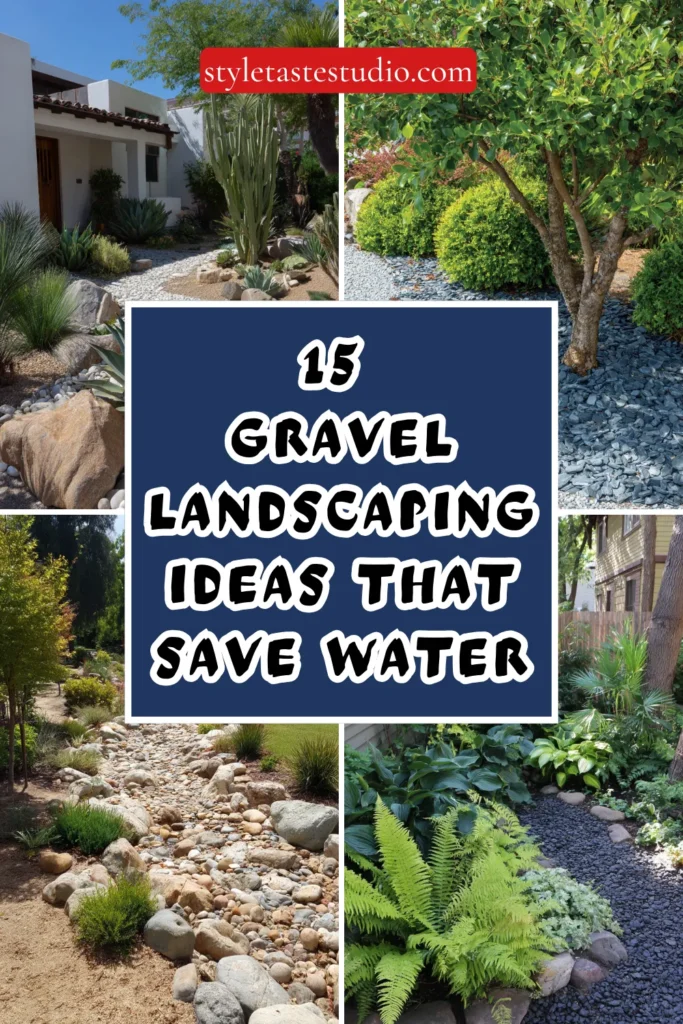
Gravel offers a genuinely elegant solution. It suppresses weeds, retains soil moisture beneath its surface, allows rainwater to percolate naturally into the ground, and requires almost no maintenance once it is laid. Better still, it looks beautiful.
Far from the bleak grey car park aesthetic that the word gravel sometimes conjures, a well-designed gravel garden can be one of the most serene, textured, and seasonally interesting spaces imaginable. The fifteen ideas below show just how versatile this material can be when it is used thoughtfully.
1. The Dry River Bed
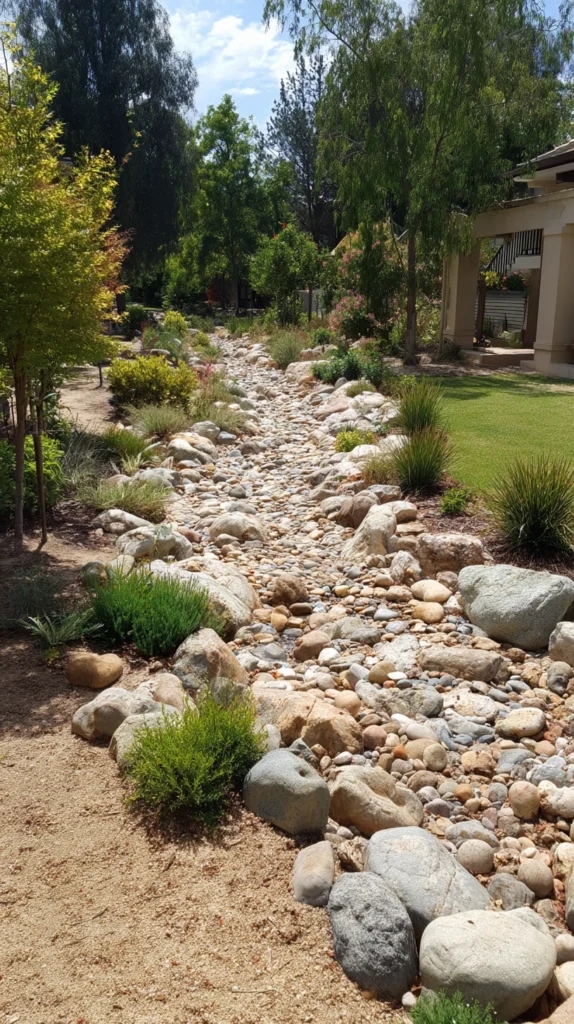
One of the most naturalistic ways to use gravel in a garden is to create the impression of a dry river bed winding through the space. Using a combination of large smooth boulders at the edges, medium cobbles through the middle, and fine gravel filling the gaps, you can replicate the look of a stream bed with remarkable convincingness.
Plant the banks with ornamental grasses, sedums, and low-growing thyme, and the whole feature will look as though it belongs to the landscape rather than having been imposed upon it. During heavy rain, a dry river bed can also serve a genuine drainage function, channeling water away from the house and into a soakaway at the garden’s lowest point.
2. Gravel and Lavender Pathways
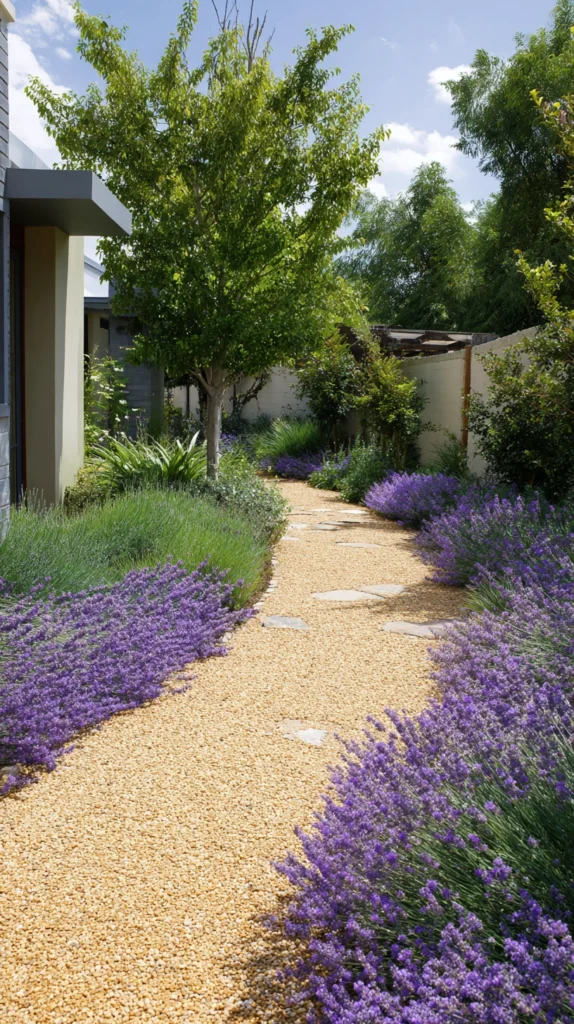
Few planting combinations are as reliably beautiful or as water-efficient as gravel and lavender. Lavender is native to the stony, sun-baked hillsides of the Mediterranean, and it actively thrives in the free-draining conditions that a gravel mulch provides.
Lay a wide gravel path through a border and plant lavender in bold, generous drifts on either side, and you will have a pathway that looks extraordinary from late spring through to late summer, smells wonderful, and requires almost no watering once the plants are established. Choose a warm buff or golden gravel to complement the silver-grey foliage and purple flower spikes.
3. Japanese-Inspired Gravel Garden
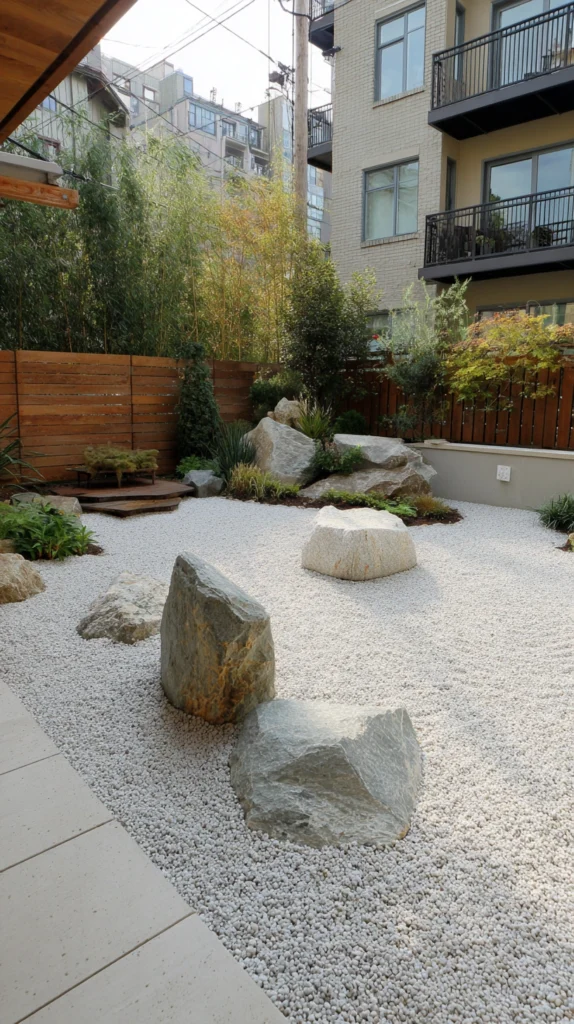
The Japanese raked gravel garden, or karesansui, is perhaps the most refined expression of gravel as a design material. In its traditional form, fine white or pale grey gravel is raked into patterns that suggest the movement of water, surrounding carefully placed rocks that represent islands or mountains. You do not need to replicate the full formality of a temple garden to borrow its principles. Even a small square of raked gravel with three or five well-chosen stones and a clipped evergreen shrub at the corner can bring a profound sense of stillness and order to a contemporary urban garden, and it will use no water whatsoever beyond what falls naturally from the sky.
4. Gravel Mulch Around Trees and Shrubs
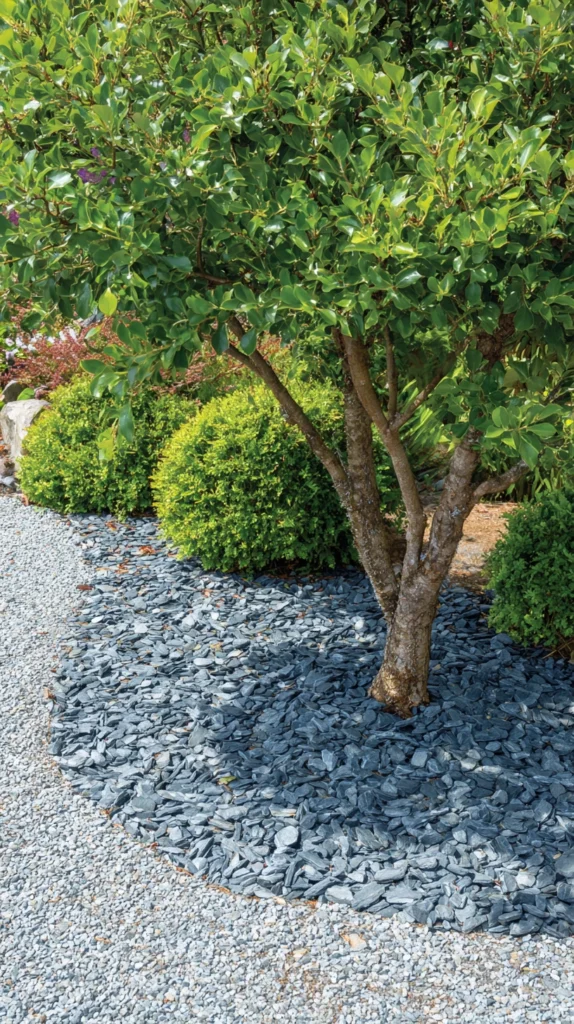
One of the simplest and most effective ways to save water in an existing garden is to replace the bare soil around the base of trees and shrubs with a thick layer of gravel mulch. A depth of at least three to four inches of gravel will dramatically reduce evaporation from the soil surface, suppress competing weeds, and regulate soil temperature through both hot and cold spells.
Unlike organic mulches, gravel does not break down and needs replacing every year, making it a genuinely low-maintenance investment. Choose a gravel colour that complements your planting — a dark slate chipping works beautifully around the base of silver-leafed plants, while warm pea gravel suits Mediterranean herbs.
5. Gravel Courtyard with Container Planting
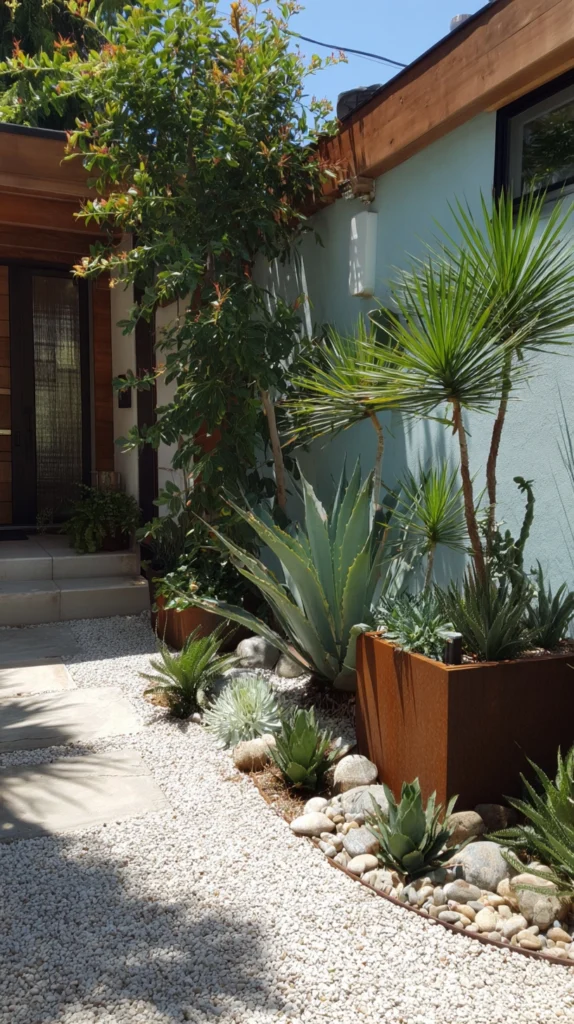
Replacing a lawn or planted border with a gravel courtyard does not mean sacrificing lush planting. In fact, some of the most beautiful gravel gardens rely almost entirely on container planting to provide height, colour, and seasonal interest.
Large terracotta pots, weathered zinc planters, and simple concrete urns grouped on a gravel surface create a wonderfully relaxed and flexible arrangement that can be reconfigured whenever the mood takes you.
Because containers concentrate water directly at the roots rather than spreading it across open soil, they are inherently more water-efficient than open borders, particularly when planted with drought-tolerant specimens like agaves, pelargoniums, and olive trees.
6. Gravel Prairie Planting
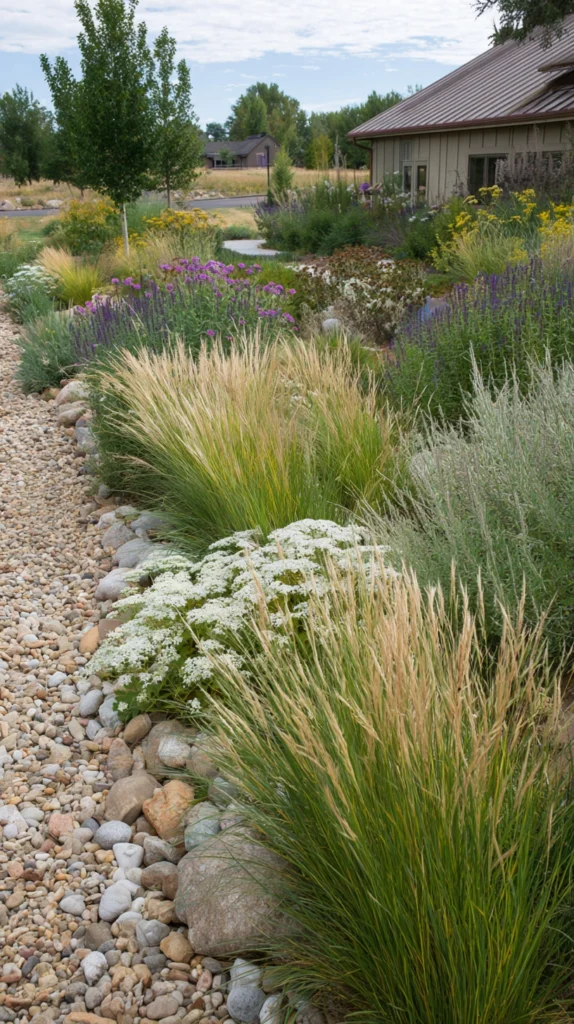
The naturalistic prairie planting movement — inspired by the work of designers like Piet Oudolf — translates wonderfully into a gravel setting. The idea is to plant grasses and perennials in loose, flowing drifts through a gravel bed, mimicking the way plants colonise stony ground in the wild.
Species like Stipa tenuissima, Echinacea purpurea, Verbena bonariensis, and Salvia nemorosa are all exceptionally drought-tolerant once established, and they look spectacular moving in the wind against a gravel backdrop. The gravel mulch keeps root moisture consistent, meaning that once the plants are through their first season, supplementary watering can be reduced to almost nothing.
Getting the Planting Right
The key to successful gravel prairie planting is to choose species that genuinely thrive in free-draining conditions rather than simply tolerating them. Avoid plants with fleshy, moisture-hungry roots, and focus instead on species with deep tap roots or fine fibrous systems that are adapted to seeking moisture at depth.
Plant through the gravel rather than removing it, making individual planting pockets just large enough for the rootball, and water thoroughly at planting time to help roots establish downward rather than relying on surface moisture.
7. Gravel Roof Terrace or Balcony
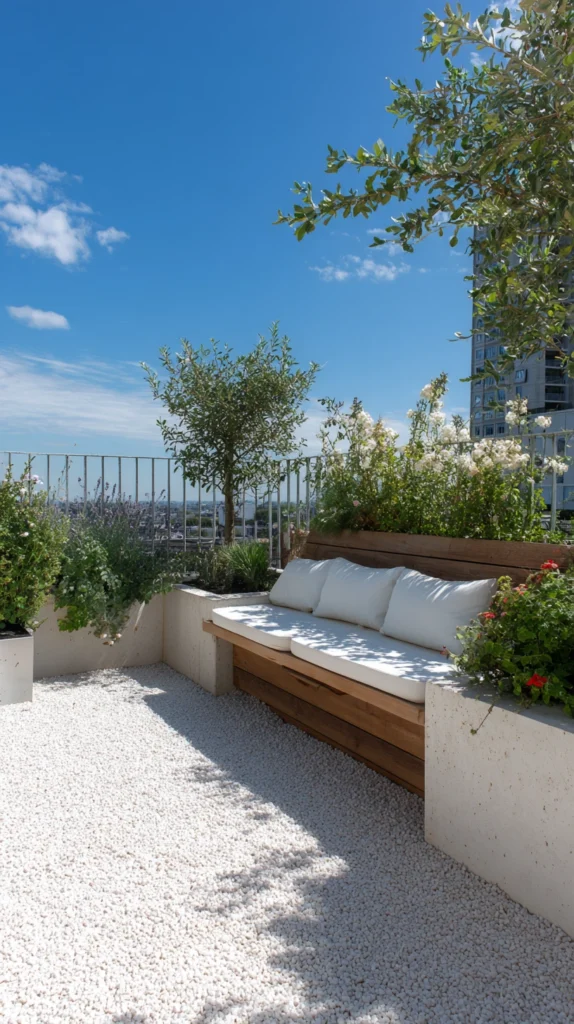
On a roof terrace or large balcony, gravel serves multiple functions simultaneously. It provides a clean, low-maintenance surface underfoot, it adds thermal mass that helps regulate temperature, and it creates a visually coherent backdrop for container planting.
Ballast gravel — the heavy, angular stone used as structural weight on flat roofs — is already present on many roof terraces and can simply be raked level and used as the garden surface.
Add a few large architectural containers planted with drought-tolerant specimens, a simple timber bench, and a weatherproof outdoor rug, and you have a genuinely beautiful outdoor space that will need minimal watering through even the hottest summer.
8. Gravel and Succulent Rock Garden
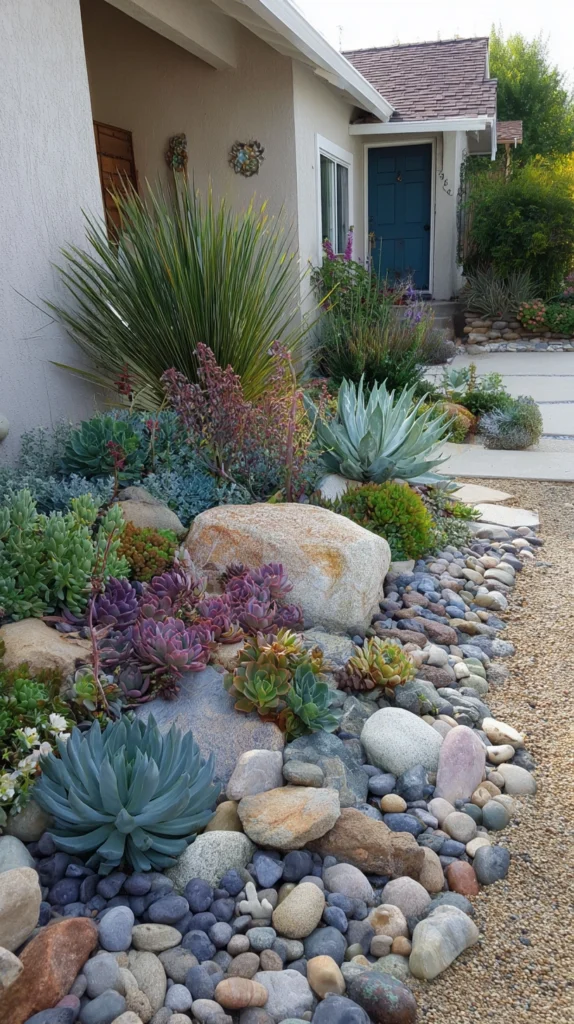
Succulents and gravel are one of the most naturally compatible pairings in all of gardening. These extraordinary plants have evolved to store water in their fleshy leaves and stems, and they positively resent the wet, dense conditions of ordinary garden soil.
Plant a collection of sedums, sempervivums, echeverias, and agaves into a well-drained gravel bed built up over a layer of rubble or coarse grit, and you will have a planting that looks lush and colourful through the growing season while consuming almost no water at all. Tuck in a few interesting stones and a piece or two of driftwood, and the result has the quality of a miniature landscape.
9. Permeable Gravel Driveway
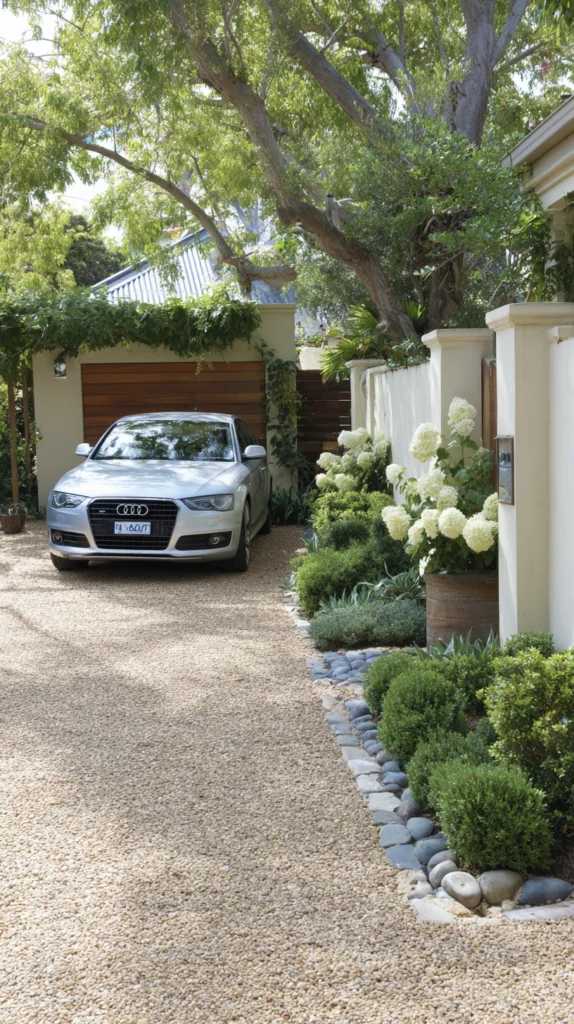
The front garden is often where the most water-hungry surfaces lurk, in the form of impermeable tarmac or concrete driveways that send rainwater rushing into the drains rather than back into the ground. Replacing a solid driveway surface with a deep gravel bed laid over a permeable membrane allows every drop of rain to percolate back into the soil below, recharging groundwater and reducing the risk of localised flooding.
A gravel driveway also costs significantly less to install than tarmac or block paving, requires no specialist equipment to maintain, and can be refreshed simply by topping up the gravel every few years.
10. Gravel Herb Garden
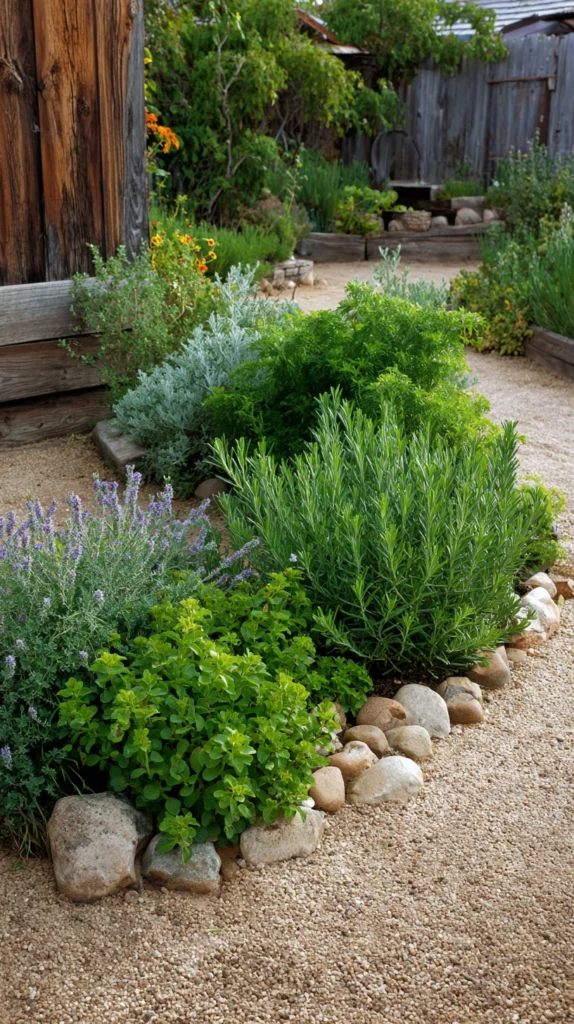
Herbs and gravel are a supremely practical pairing in a kitchen garden context. The majority of culinary herbs — rosemary, thyme, sage, oregano, marjoram, and lavender — are native to the dry, stony regions of southern Europe and the Middle East, and they perform far better in a gravel bed than in rich, moisture-retentive soil.
Lay a formal grid of gravel paths between small raised planting pockets, or simply scatter herbs through a large gravel bed in an informal arrangement, and you will have a productive and beautiful herb garden that needs watering only during the most extreme summer droughts.
11. Shade Garden with Dark Gravel and Ferns
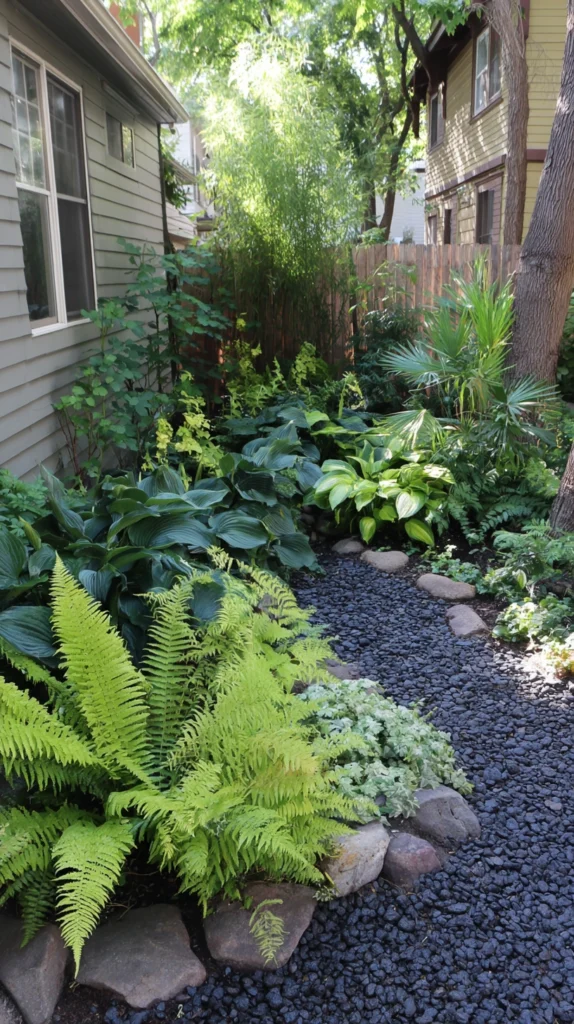
Gravel gardens are often assumed to be purely a sunny, Mediterranean proposition, but they work beautifully in shade too. In a north-facing courtyard or beneath a tree canopy, replace bare compacted soil with a layer of dark slate chippings or fine black gravel, and plant through it with shade-tolerant species like ferns, hostas, epimediums, and hellebores.
The dark gravel retains moisture more effectively than pale varieties, keeps roots cool through summer, and creates a dramatic, moody backdrop against which the lush green foliage of shade plants looks genuinely spectacular.
12. Gravel Garden with Reclaimed Stone Features
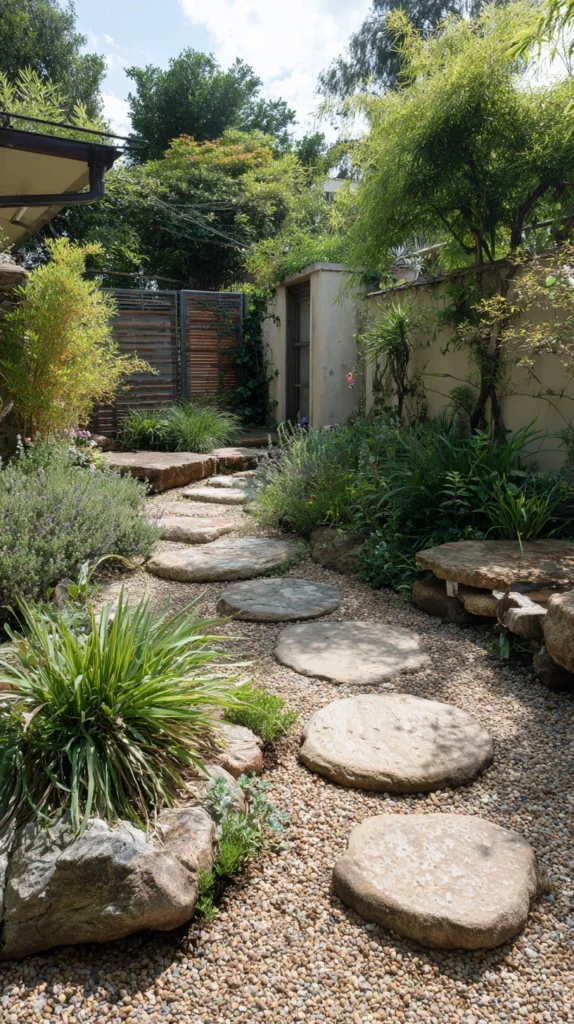
Combining gravel with reclaimed stone — old flagstones, worn brick, salvaged cobbles, or broken chimney pots — creates a garden that feels as though it has been there for decades rather than having been installed last weekend.
Lay irregular stepping stones through a gravel bed, leaving planting pockets between them for creeping thyme or mind-your-own-business, and edge the whole area with a low border of reclaimed brick. The combination of textures is wonderfully rich, and the entire garden will use a fraction of the water that a planted border of equivalent size would require.
13. Gravel and Ornamental Grass Border
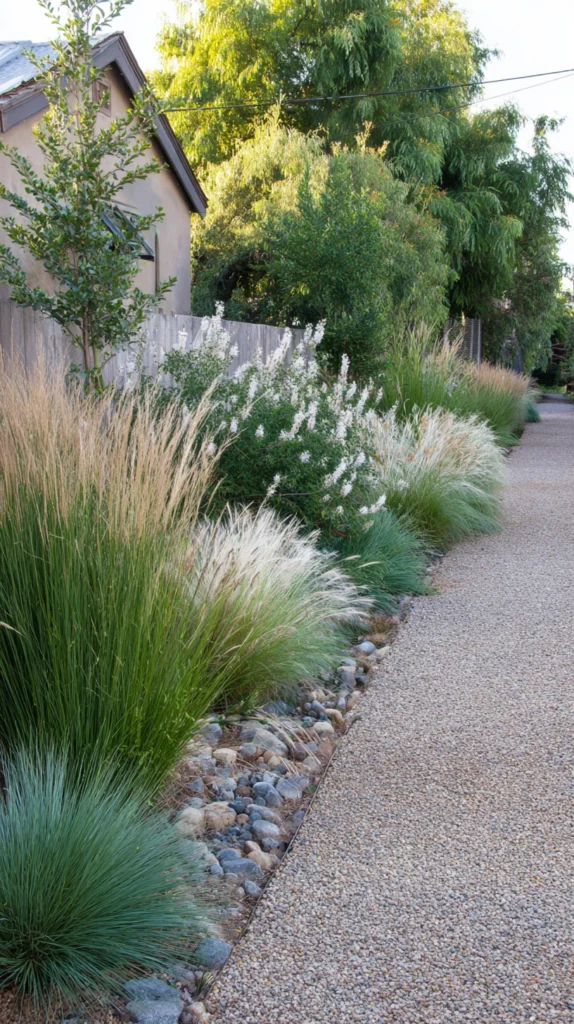
Ornamental grasses are among the most water-efficient plants available to the garden maker, and they look magnificent rising out of a gravel mulch. The fine texture of the gravel echoes the narrow blades of the grass, and the contrast between the stillness of the stone and the constant movement of the planting creates a border that is endlessly watchable.
Mix species of varying height — tall Miscanthus at the back, mid-height Pennisetum through the middle, and low-growing Festuca at the front — and underplant with drought-tolerant bulbs like alliums and camassia for additional seasonal interest.
14. Moonscape Gravel Garden with Architectural Plants
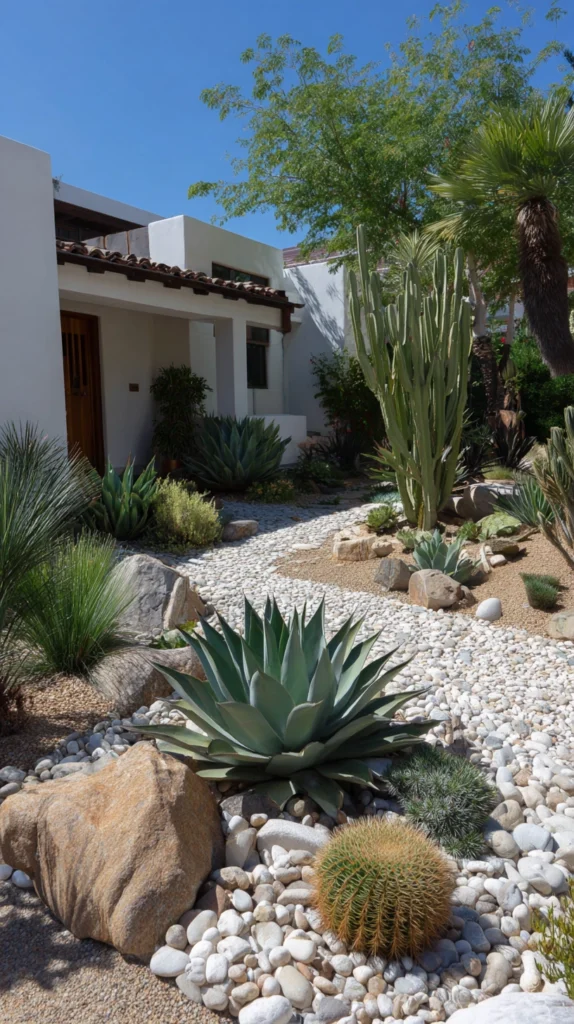
For a more dramatic and sculptural approach, consider a moonscape-style gravel garden in which the planting is reduced to a handful of bold, architectural specimens placed with the deliberate intention of a still life. A single large Agave americana, a sculptural multi-stemmed olive tree, and a cluster of tall columnar cacti rising from a sea of pale quartz gravel create a garden that is as much about space and silence as it is about plants. This style draws heavily on the landscapes of the American Southwest and the Canary Islands, and it produces a garden that is genuinely striking in all seasons while consuming almost no water at all.
15. Gravel Children’s Play Area
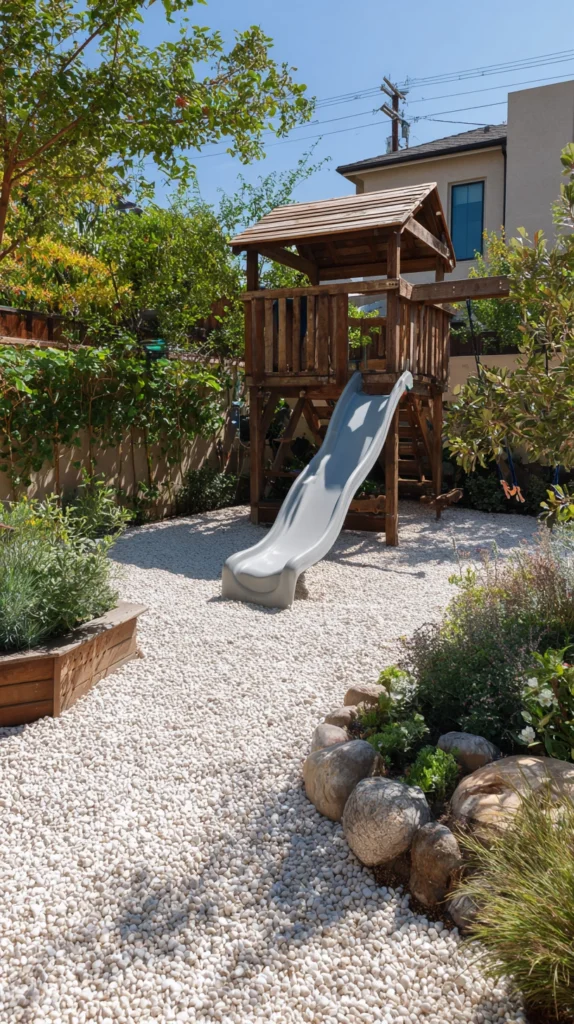
Finally, fine rounded pea gravel makes a surprisingly good surface for a children’s play area, and one that is far more water-conscious than the irrigated lawn it typically replaces. Unlike bark chips, which break down quickly and harbours slugs and fungi, gravel lasts indefinitely, drains instantly after rain, and can be raked level after vigorous play without difficulty.
Choose a well-rounded, smooth variety with no sharp edges, lay it to a depth of at least six inches over a permeable membrane, and edge it with robust timber or steel edging to keep it contained. The children will enjoy the texture and the satisfying crunch underfoot, and you will enjoy a garden surface that needs no watering, no mowing, and almost no maintenance whatsoever.
Gravel is not a compromise or a consolation prize for gardeners struggling with drought. Used well, it is one of the most versatile, beautiful, and ecologically responsible materials available, capable of creating gardens that are not only water-efficient but genuinely extraordinary to spend time in. The ideas above are a starting point — take one, adapt it to your space and your climate, and discover for yourself just how much a few tonnes of stone can transform a garden.