15 DIY Wooden Sink Ideas for a Natural Beautiful Bathroom
A wooden sink is one of those bathroom features that stops people in their tracks. In a world of identical white ceramic basins and mass-produced vanity units, a sink made from real timber communicates something immediately and unmistakably about the person who chose it. It says that this bathroom was designed with genuine intention, genuine craft appreciation, and a genuine preference for natural materials over manufactured convenience.

The practical reality of wooden sinks is more reassuring than most people initially assume. Properly sealed and properly maintained, a wooden sink is completely waterproof, completely hygienic, and genuinely durable. The key is proper sealing — the right sealant applied correctly and maintained regularly transforms timber from a moisture-sensitive material into a genuinely water-resistant surface capable of handling daily bathroom use.
Here are 15 DIY wooden sink ideas that bring genuine natural beauty to any bathroom.
1. Carved Solid Wood Bowl Sink
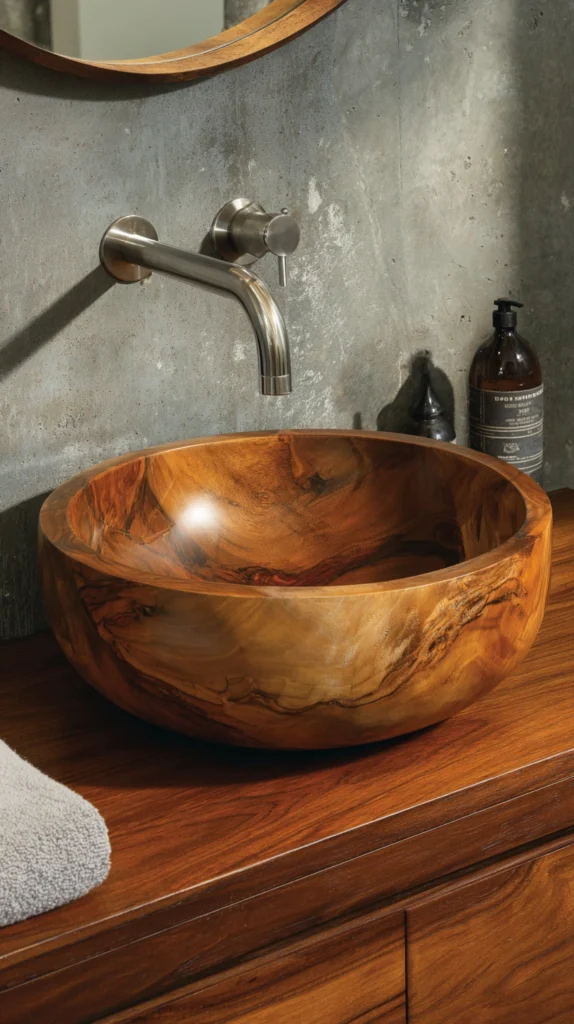
A single piece of thick hardwood carved into a deep basin form and sealed with a waterproof finish is simultaneously a functional sink and a piece of sculptural craft. Choose dense close-grained hardwood — teak, iroko, or wenge — that provides excellent water resistance and carves cleanly. Rough-shape the exterior, refine with carving gouges, and finish to a smooth sealed surface through progressively finer sandpaper grits.
Pro Tip: Carve the interior bowl to a minimum depth of 15 centimetres for a sink that is genuinely functional rather than decoratively shallow. Shallow carved bowls that look beautiful as static objects become frustrating in daily use — water splashes out during hand washing and the shallow volume makes face washing genuinely difficult.
2. Timber Trough Sink
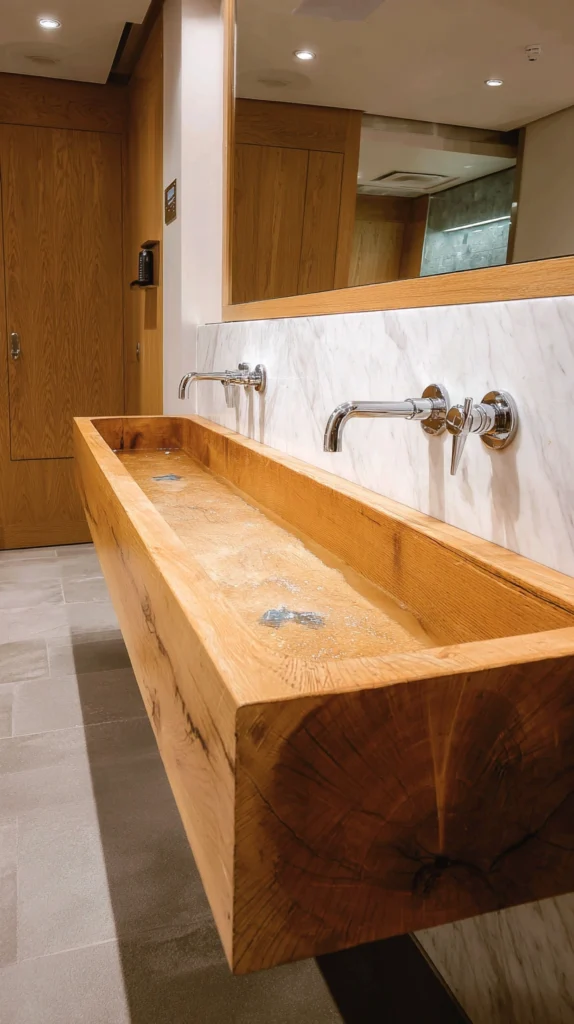
A long rectangular vessel constructed from thick timber planks creates a generous trough-like washing basin of great natural simplicity. Constructed from planks of at least 35mm thickness joined with waterproof adhesive and stainless steel screws, then routed to create the internal basin form. The trough format suits double vanity arrangements where two people need simultaneous access.
Pro Tip: Apply multiple thin coats of marine-grade epoxy resin to the interior rather than attempting adequate waterproofing in a single thick application. Each thin coat cures completely before the next is applied — building a continuous pinhole-free waterproof membrane. A single thick application creates runs, sags, and uneven coverage that compromises the waterproofing integrity of the finished surface.
3. Live Edge Slab Sink Vanity
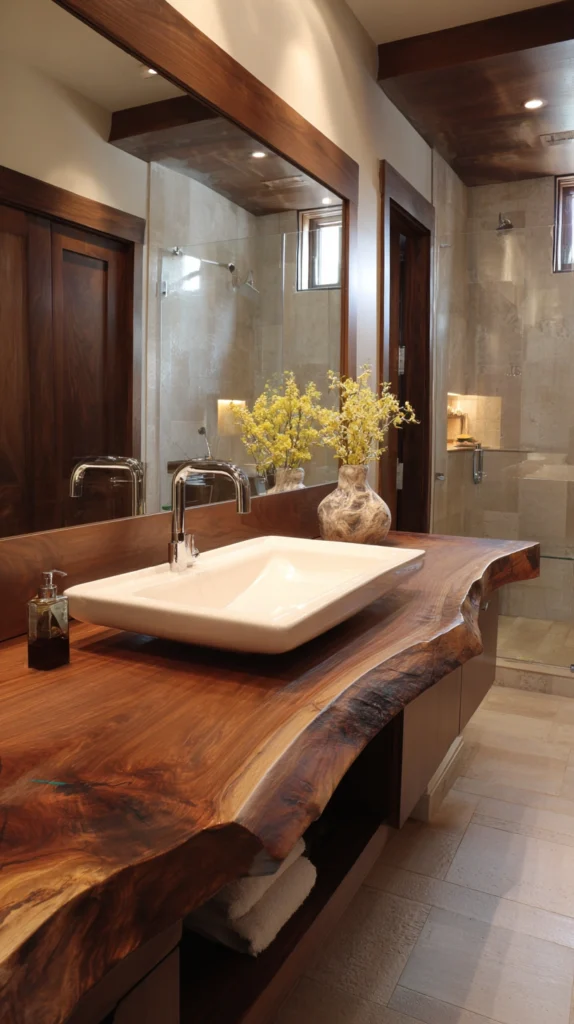
A single thick plank retaining its natural uncut edge used as the vanity top with an integrated or undermounted basin creates a bathroom feature of extraordinary natural beauty and completely individual character. Every live edge slab is unique — the specific curve of the natural edge, the particular figure of the grain, the individual character of the timber — creating a genuinely one-of-a-kind vanity. Sources from a local sawmill — walnut, oak, elm, and ash all create spectacular results.
Pro Tip: Stabilize a live edge slab with a framework of timber battens or steel brackets beneath to prevent natural timber movement from causing cracking at the sink cutout. Solid timber slabs expand in humid conditions and contract in dry ones — a stabilizing framework allows this natural movement without concentrating stress at the cutout edges where cracking is most likely to initiate.
4. Reclaimed Timber Vanity Unit
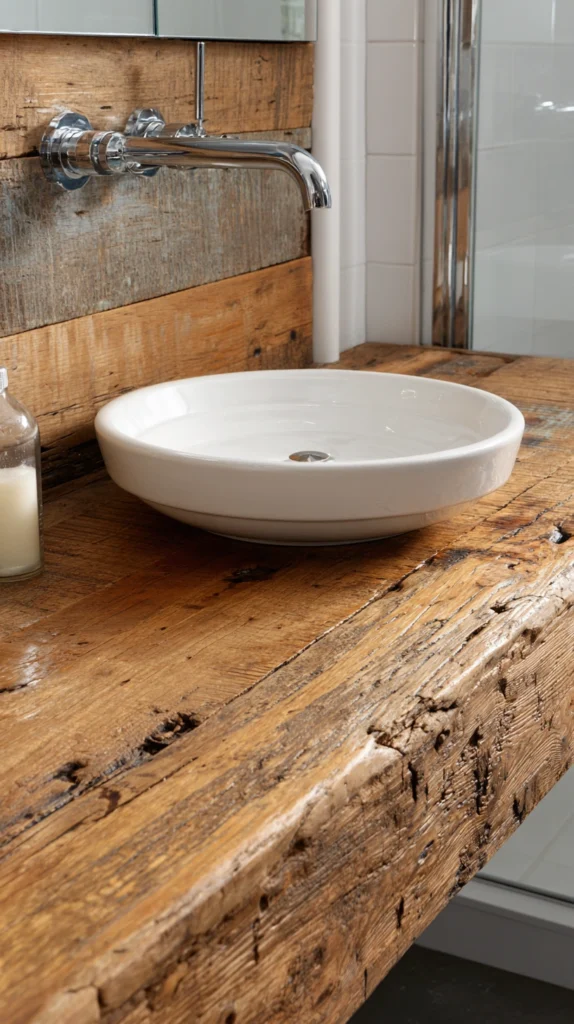
A vanity unit constructed from reclaimed timber — old scaffolding planks, salvaged barn timber, or demolition boards — creates a bathroom storage and sink housing of genuine character. The nail holes, the worn paint, and the grain revealed by years of use give reclaimed timber a warmth and authenticity that new timber construction cannot replicate. Pair with a ceramic or stone sink basin dropped into a cutout in the reclaimed timber top.
Pro Tip: Check all reclaimed timber for protruding nails and fixings before cutting and constructing the vanity. Hidden fixings damage saw blades, create dangerous projectiles during cutting, and create sharp protrusions in the finished vanity. A thorough check and removal of all fixings before any cutting begins prevents entirely avoidable accidents during the construction process.
5. Wooden Vessel Sink on Timber Vanity
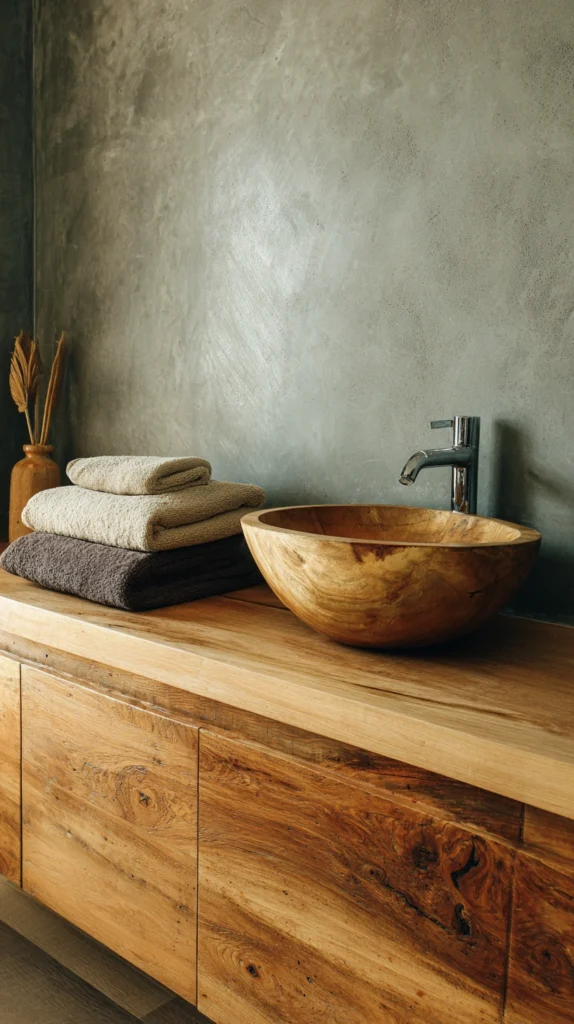
A separate wooden bowl sitting above the vanity counter surface — rather than integrated within it — allows the wooden bowl to be displayed and appreciated as the beautiful object it is. Elevated above the counter, seen from all sides, it requires no cutout in the vanity top. Source teak vessel sinks from Southeast Asian craft producers for genuine handmade quality at accessible price points.
Pro Tip: Apply teak oil to the exterior of a wooden vessel sink at monthly intervals for the first year of use and quarterly thereafter. The exterior is not protected by the interior waterproof coating and is exposed to humidity and incidental water contact that will cause the timber to grey and crack without regular oil maintenance. Monthly oiling during the first year establishes the deep oil saturation that makes subsequent maintenance intervals progressively longer.
6. Floating Timber Vanity with Stone Basin
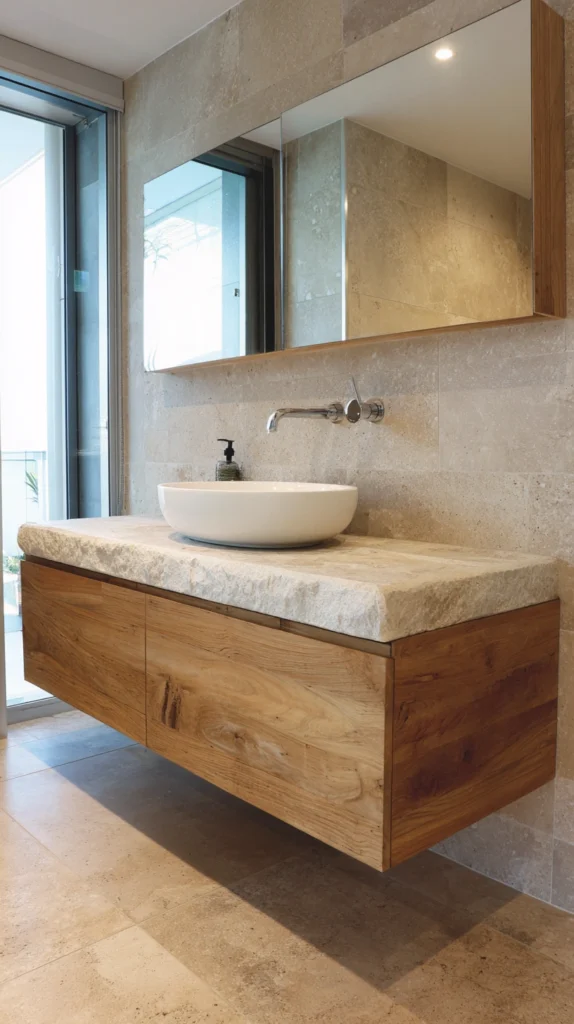
A wall-mounted timber vanity with no legs touching the floor paired with a stone basin creates a bathroom of clean contemporary aesthetic and genuine natural material richness. The floating format exposes the full bathroom floor surface, making the room appear larger and more open. Mount to the wall using heavy-duty concealed brackets fixed into the structural wall studs — a floating vanity bearing a stone basin requires a genuinely robust wall mounting.
Pro Tip: Seal the back face and top surface of a floating timber vanity particularly thoroughly before installation — these surfaces are the most difficult to access after the vanity is wall-mounted. Inadequate sealing on the back face allows moisture from the wall surface to penetrate the timber from behind — causing swelling, discoloration, and structural deterioration that is extremely difficult to remediate without removing the entire installation.
7. Japanese Ofuro-Inspired Wooden Sink
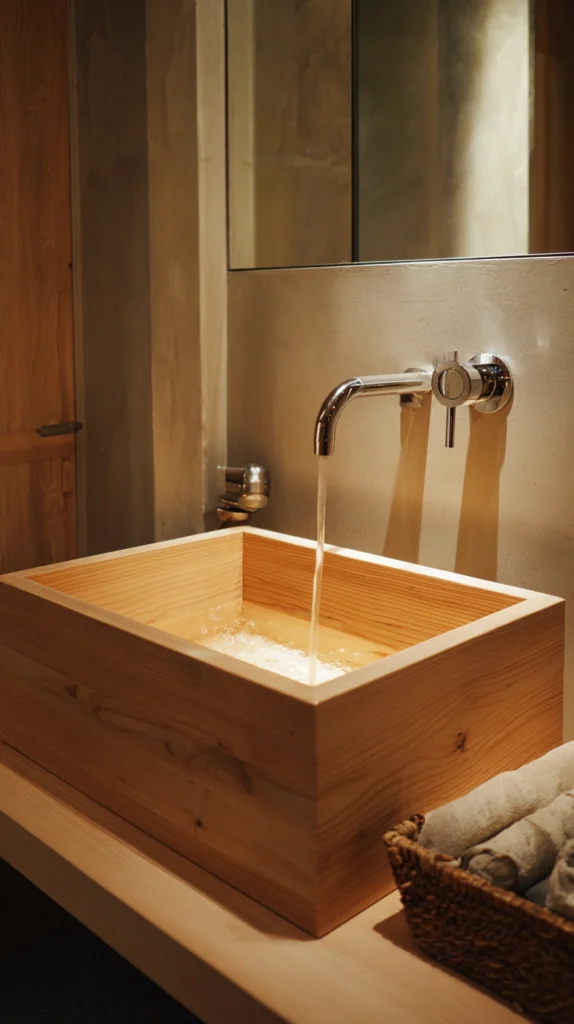
Based on the deep soaking tub tradition of Japanese bath culture translated into a washbasin format, the ofuro-inspired sink creates a bathroom feature of extraordinary depth, simplicity, and meditative calm.
Constructed from hinoki cypress — the traditional Japanese bath timber, prized for its natural antimicrobial properties, its gentle fragrance, and its extraordinary water resistance — for an authentic result. The simple deep basin form requires minimal woodworking skill beyond accurate cutting and careful assembly.
Pro Tip: Source hinoki cypress from Japanese timber importers for an authentic result that replicates the genuine sensory qualities — the fragrance, the smooth grain, the characteristic warm color — of the traditional Japanese material. Western timber substitutes provide the functional form but lack the specific sensory qualities of hinoki that make the ofuro bathing tradition so specifically beautiful in practice.
8. Tree Stump Sink
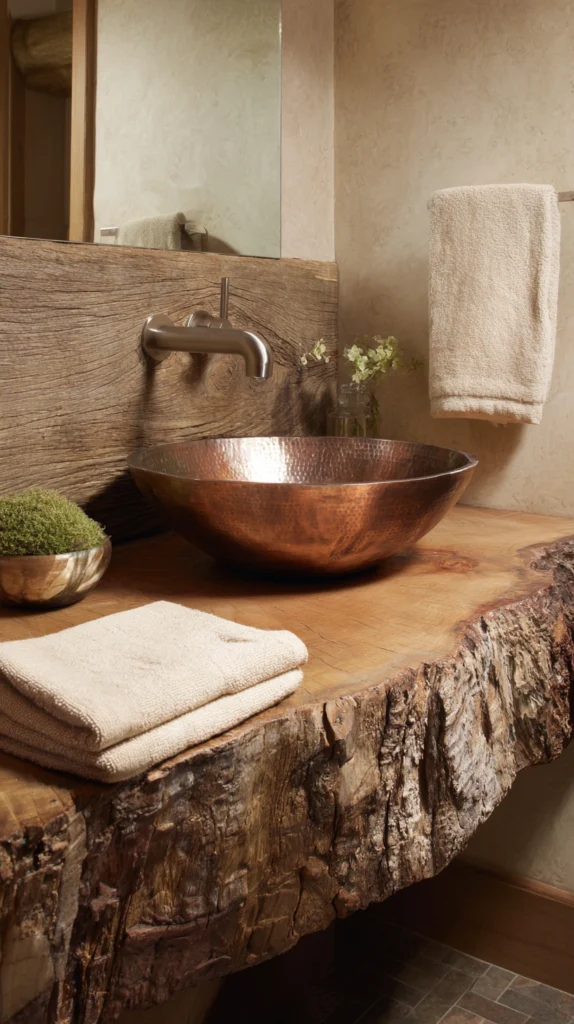
A substantial tree stump hollowed at the top and sealed internally creates a genuinely unique bathroom feature of completely organic beauty. The bark, the growth rings, and the natural irregularity of the stump form create a sink that no manufactured object can replicate. Source dense rot-resistant hardwood — oak, sweet chestnut, yew, or elm — and allow the stump to dry thoroughly for at least six months before beginning the hollowing and sealing process.
Pro Tip: Drill the drain hole through the stump base before hollowing the basin interior — working from below through the full stump height. Attempting to drill the drain hole after the interior basin has been created risks cracking the relatively thin basin base at the drill entry point. Through-drilling from beneath before hollowing creates a clean accurate drain hole without any risk of splitting the finished basin.
9. Timber Plank Undermount Sink Surround
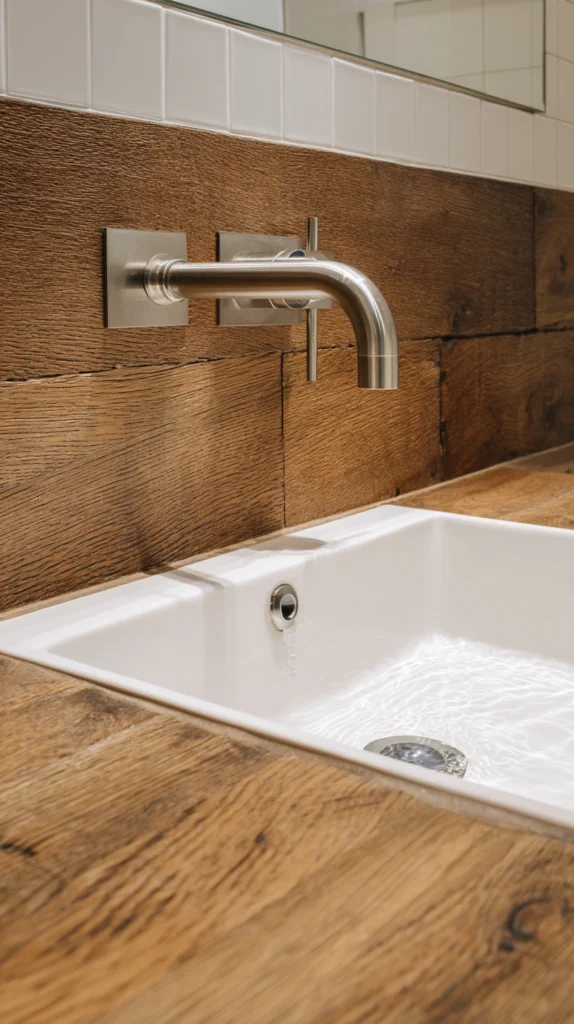
Thick hardwood planks fitted around and over an undermounted ceramic basin create the visual warmth of a wooden sink with the practical performance of a conventional ceramic surface. The timber provides beauty. The ceramic provides the hygienic waterproof zero-maintenance sink surface. This hybrid approach is the most practical wooden sink solution — the timber surround never contacts water directly and therefore never requires the intensive sealing and maintenance that fully timber sink surfaces demand.
Pro Tip: Create a slight overhang of the timber surround over the undermounted basin rim — at least 5mm on all sides — to create a clean visual transition that conceals the mounting hardware and creates the impression of a fully integrated timber sink surface. A surround that sits flush with the basin rim reveals the mechanical junction between the two materials and loses the seamless considered quality that makes this approach so visually beautiful.
10. Driftwood Sink Base
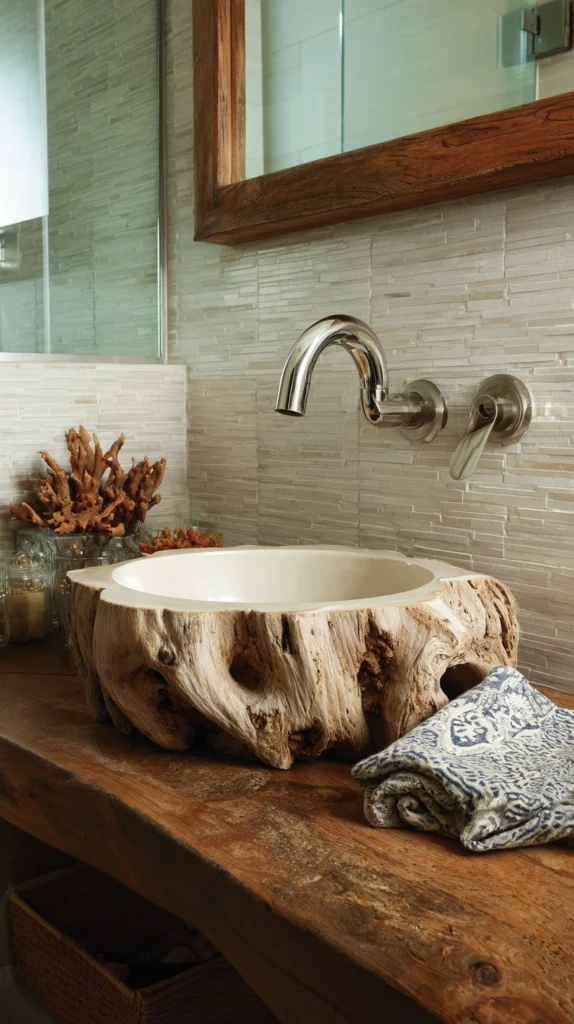
A weathered salt-bleached driftwood branch or trunk section used as the base support for a vessel basin creates a bathroom sink of completely found-object beauty and organic coastal character. Select driftwood with a flat stable base surface that will support the vessel basin without rocking — stability is a safety requirement for any sink installation. Clean thoroughly, dry completely, and treat with a clear exterior preservative before installation.
Pro Tip: Fix the vessel basin to the driftwood base using a clear silicone adhesive applied around the base perimeter rather than relying on the weight of the basin alone. A gravity-fixed vessel basin is vulnerable to displacement during vigorous use — particularly in a family bathroom. A silicone-fixed basin maintains its precise position permanently and creates a genuinely safe and stable sink installation.
11. Spalted Timber Sink
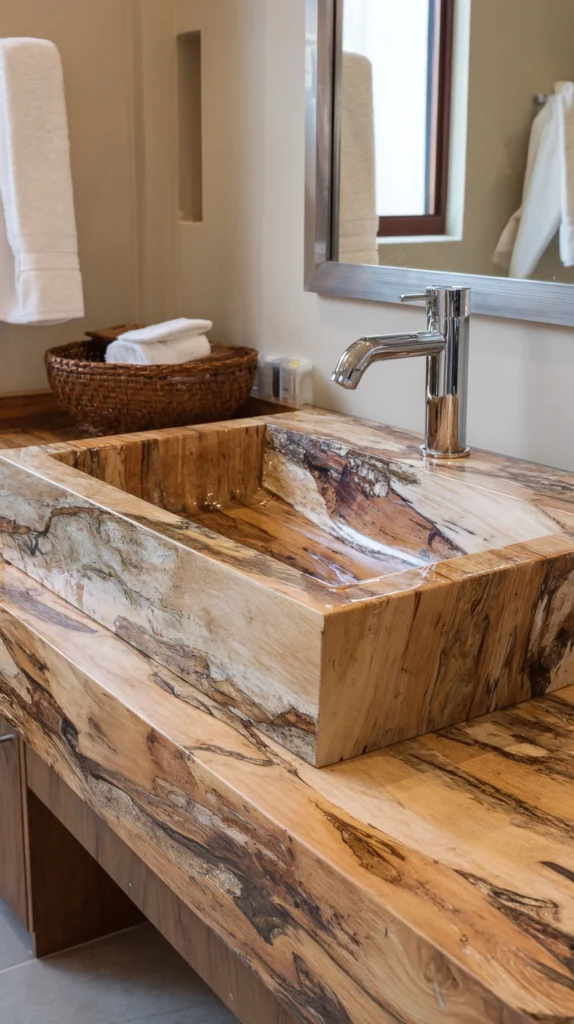
Spalted timber — wood that has developed distinctive black line patterns and unusual coloration through partial fungal decay — creates sink and vanity surfaces of extraordinary abstract natural beauty. The spalting patterns look more like works of art than construction materials. Spalted timber requires stabilization before wet environment use — vacuum-impregnating with a liquid resin system creates a dense moisture-resistant material that retains the extraordinary visual character of the spalted pattern.
Pro Tip: Source stabilized spalted timber from specialist timber merchants rather than attempting to stabilize raw spalted timber without professional equipment. The vacuum impregnation process requires specialist equipment not practically available for DIY use. Surface-applied treatments alone create a surface that looks stable but retains the structural weaknesses of the unstabilized timber beneath.
12. Copper and Timber Sink Combination
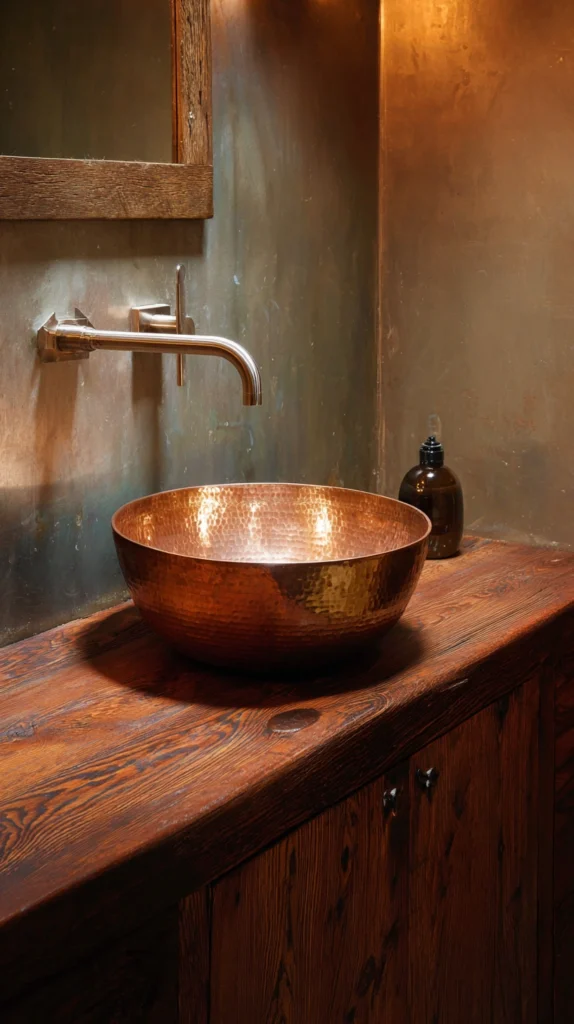
A hand-hammered copper basin paired with a dark hardwood vanity creates a bathroom of extraordinary material richness and artisan warmth. Copper and dark timber belong to the same family of warm aged patinated materials. Copper develops a natural patina over time — shifting from bright polished copper through warm brown to eventual verdigris in high-moisture environments. This natural aging is part of the beauty — each stage produces a different aesthetic quality.
Pro Tip: Decide at the outset whether to embrace natural patina development or maintain a polished appearance — and choose a maintenance approach accordingly before installation. Attempting to switch approaches after patina has developed creates a patchy inconsistent surface that looks worse than either a fully patinated or a fully polished alternative.
13. Teak Root Sink Base
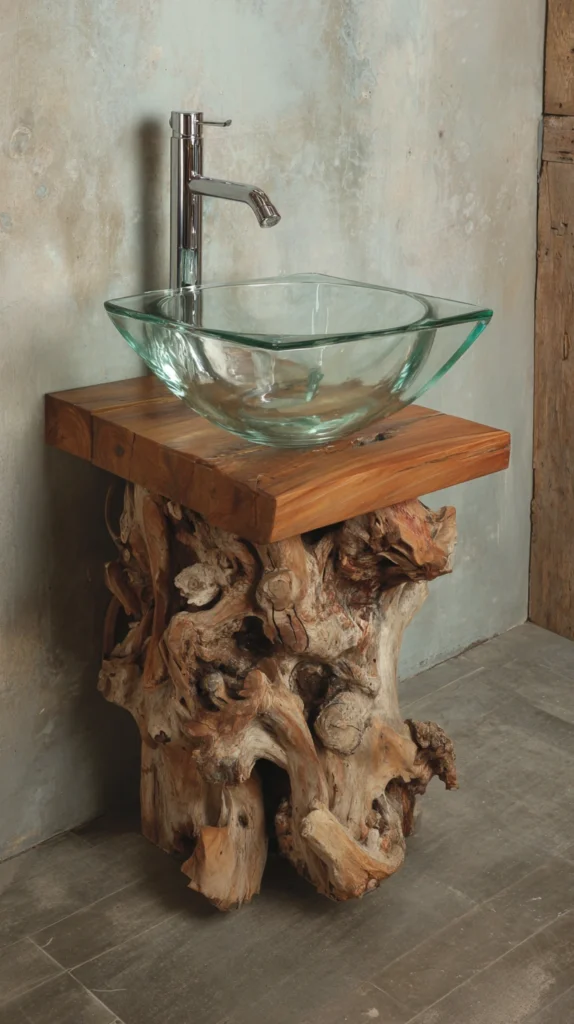
The root section of a teak tree — with its complex intertwining root forms and extraordinary natural figure — used as the base of a bathroom sink display creates a feature of genuinely organic sculptural beauty. Pair with a glass or ceramic vessel basin that allows the extraordinary form of the root base to be fully visible beneath the transparent basin above it. Teak root objects are widely available from Southeast Asian craft exporters.
Pro Tip: Seal teak root bases with teak oil rather than a film-forming surface sealant. Teak root surfaces have complex three-dimensional forms that are extremely difficult to coat evenly with surface sealants — achieving complete coverage of every crevice and contour of a complex root form is practically impossible. Penetrating teak oil soaks into the timber from every surface simultaneously providing complete moisture protection.
14. Pebble and Timber Mosaic Sink Surround
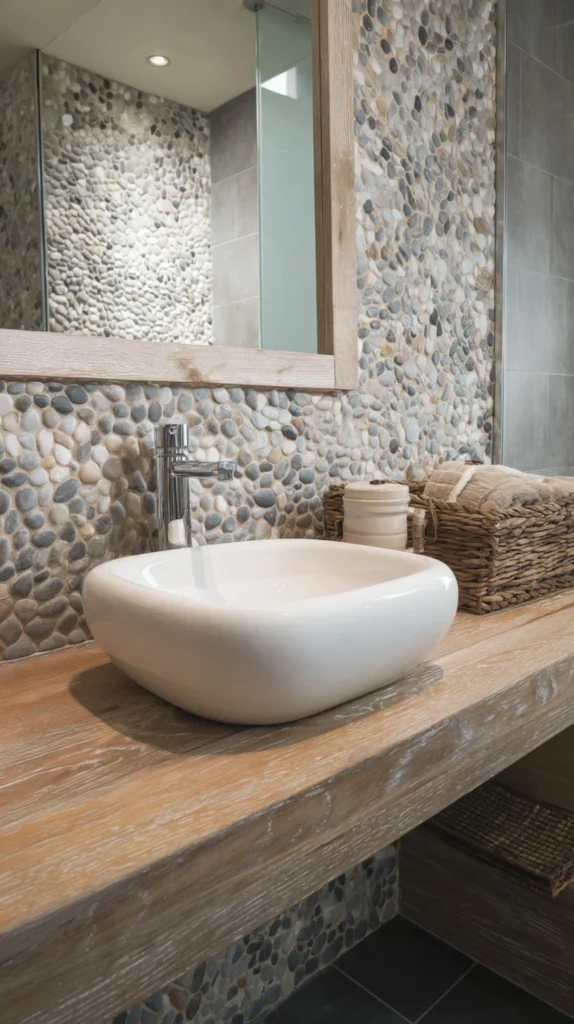
Smooth river pebbles set in a timber framework — pebbles filling the backsplash and countertop surface surrounding a ceramic sink basin, held within a framework of hardwood timber strips — creates a surface of extraordinary natural texture. Set the pebbles in waterproof tile adhesive applied to a solid timber or cement board substrate and grout with a waterproof grout. The timber framework provides the visual order that prevents the pebble surface from appearing chaotic.
Pro Tip: Select pebbles of genuinely consistent thickness — sorting by depth before installation — for a smooth continuous surface rather than an uneven lumpy surface of varying depths. Pebbles of inconsistent thickness catch water in the low points and are uncomfortable to rest items on. Consistent thickness pebbles create a smooth level working surface that is as practical as it is beautiful in daily bathroom use.
15. Bamboo Sink and Vanity
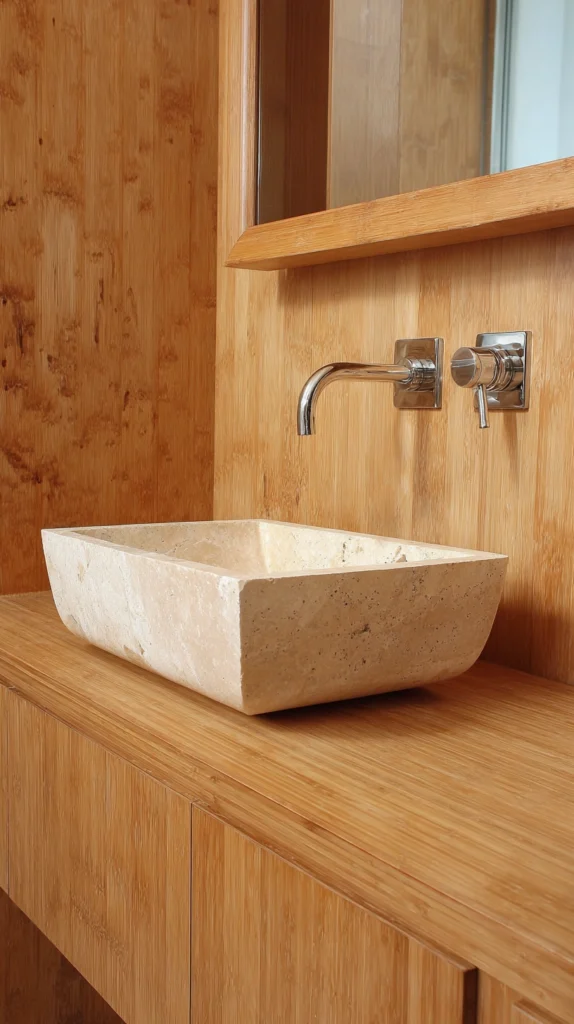
Bamboo — one of the hardest and most moisture-resistant natural materials available — creates bathroom sink and vanity surfaces of extraordinary hardness and a warm pale exotic aesthetic distinct from conventional hardwood timber.
Construct the vanity from a strand-woven bamboo composite board and pair with a ceramic or stone basin. Strand-woven bamboo is significantly denser than laminated bamboo — more resistant to moisture penetration and more durable under the daily contact of regular bathroom use.
Pro Tip: Choose strand-woven bamboo rather than laminated bamboo for all bathroom applications. Laminated bamboo can delaminate at exposed edges in consistently humid bathroom conditions — the layers separating as the adhesive between them is progressively weakened by moisture penetration. Strand-woven bamboo has no lamination layers to separate and maintains its structural integrity through years of bathroom humidity exposure.
Wood in the Bathroom Is Worth Every Effort
A wooden sink requires more thought, more skill, and more ongoing maintenance than a ceramic alternative. It is not the easy choice. It is the right choice for anyone who values the warmth, the beauty, and the completely individual character that natural timber brings to the most personal room in the home. Seal it properly. Maintain it regularly. And discover that the bathroom with real wood in it is the bathroom you most want to spend time in.