15 DIY Fabric Storage Bins and Organizers
There is something deeply satisfying about a storage solution you made yourself. It fits exactly where you need it to fit, holds exactly what you need it to hold, and looks exactly the way you want it to look.
Fabric storage bins and organizers occupy a particular sweet spot in the world of DIY because they require no specialist tools, no advanced skills, and a relatively modest investment in materials.

Yet the results are genuinely beautiful, endlessly customizable, and far more durable than most people expect from a sewn or glued fabric project. Here are 15 DIY fabric storage bins and organizer ideas to bring both function and personality to every room in your home.
1. The Classic Fabric Storage Bin

The classic fabric storage bin is the foundation of every fabric organization project and the single most useful thing you can sew for your home. Made from two rectangles of exterior fabric and two of lining, interfaced for structure and box-cornered at the base for stability, it is a project that can be completed in under two hours even by a beginner. The finished bin stands upright on a shelf, holds its shape when loaded, and collapses flat when empty for easy storage.
Choose a medium-weight cotton canvas or linen for the exterior and a coordinating quilting cotton for the interior lining. Fuse a layer of fusible fleece to the wrong side of the exterior pieces before construction to give the finished bin genuine body and structure. Make a set of three or four in coordinating fabrics for a shelf display that looks deliberately designed rather than accidentally organized.
2. Fabric Drawer Organizers
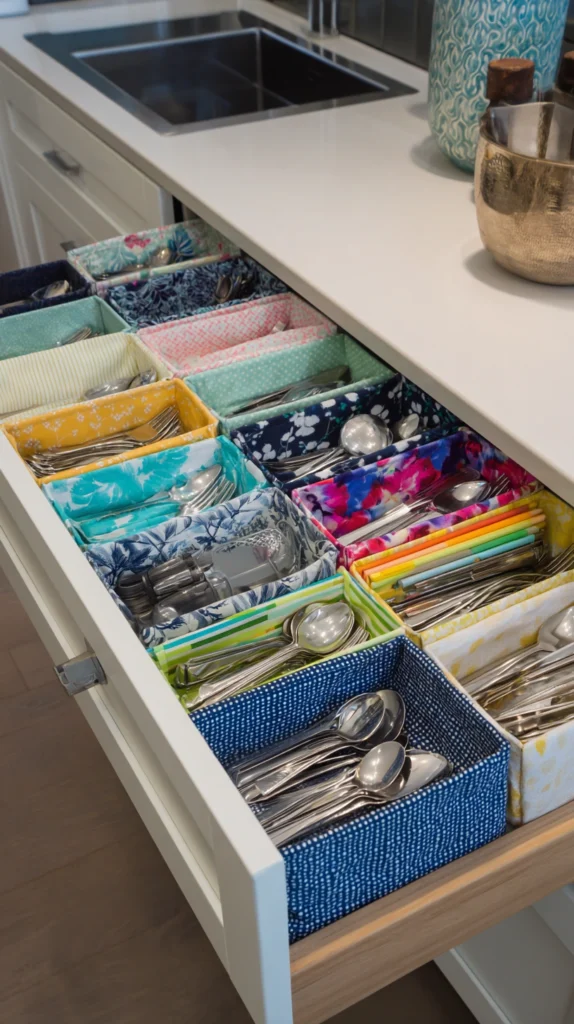
Fabric drawer organizers are among the most immediately transformative DIY storage projects you can undertake, turning chaotic kitchen, bathroom, and bedroom drawers into calm, efficient systems. The construction is a miniaturized version of the basic bin — small rectangular fabric boxes in varying sizes made to fit specific drawers and specific items. A kitchen cutlery drawer might need one long narrow organizer for forks, a shorter one for spoons, and a small square one for butter knives.
Use a stiffer interfacing like Pellon 71F for drawer organizers so they hold their shape against the pressure of items being placed in and retrieved from them. Choose a wipeable fabric like waxed cotton or oilcloth for kitchen and bathroom drawers where spills are inevitable. A coordinating set of drawer organizers across an entire kitchen makes the inside of drawers as considered and intentional as the exterior surfaces of the room.
3. Hanging Pocket Organizer
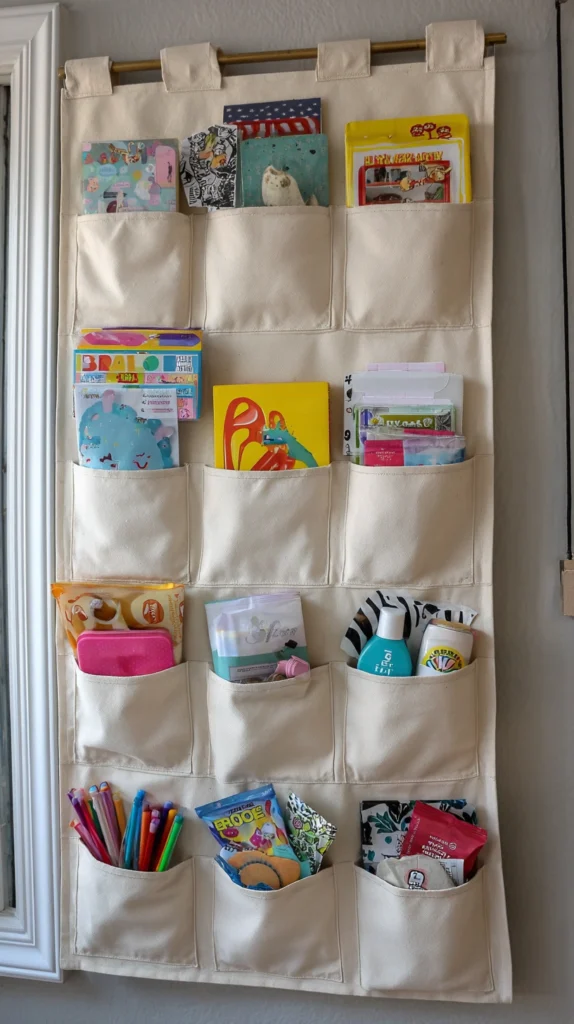
A hanging fabric pocket organizer is one of the most versatile storage solutions in the DIY fabric repertoire, working equally well in nurseries, home offices, wardrobes, and kitchens. A length of sturdy canvas or heavy linen forms the backing, onto which pockets of varying depths and widths are stitched in rows. In a nursery it holds nappies, wipes, and small essentials within reach during night feeds. In a home office it organizes stationery, notebooks, and cables with quiet efficiency.
Finish the top edge with a channel through which a wooden dowel or curtain rod is threaded, creating a rigid, stable hanging point. Add a length of leather cord or ribbon at each end of the dowel for wall hanging. Divide wider pockets into sections with a single vertical seam to prevent items from sliding together and becoming difficult to retrieve.
4. Fabric Baskets with Leather Handles
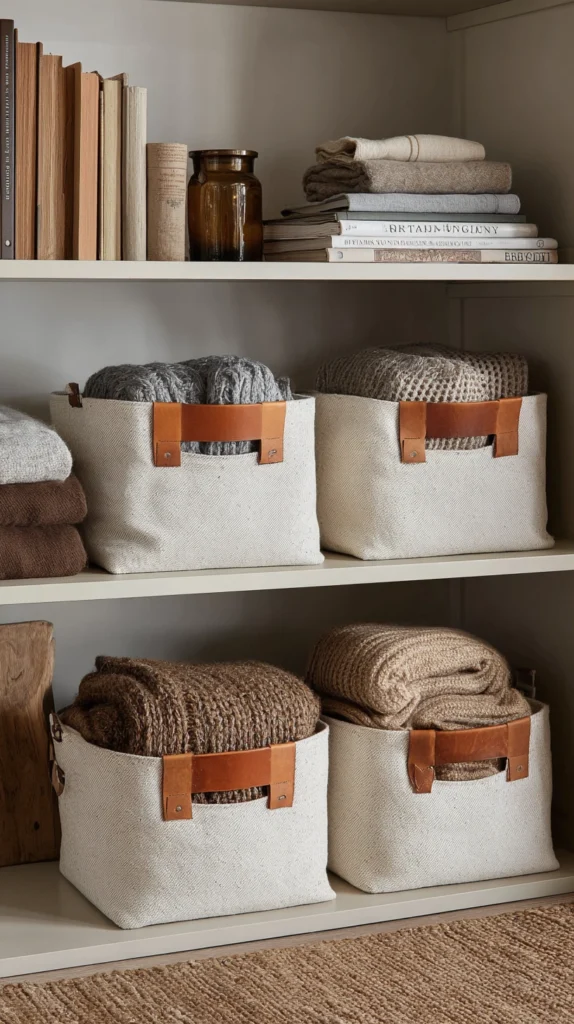
Adding leather handles to a fabric storage basket transforms it from a purely functional object into something genuinely beautiful and worth displaying openly on a shelf or the floor. Purchase a length of leather strap from a craft supplier or repurpose an old leather belt cut to two equal handle lengths. Attach the handles to the exterior of the fabric basket using copper rivets or strong metal eyelets, positioned symmetrically on opposite sides at a comfortable carrying height.
The leather handle detail works particularly beautifully on a basket made from natural undyed linen or raw canvas, where the warm tone of the leather against the neutral fabric creates a combination that feels expensive and considered.
These baskets work in living rooms, bedrooms, bathrooms, and kitchens with equal ease. They develop a genuine patina over time that makes them look better with age rather than worse.
5. No-Sew Fabric-Covered Box Organizers
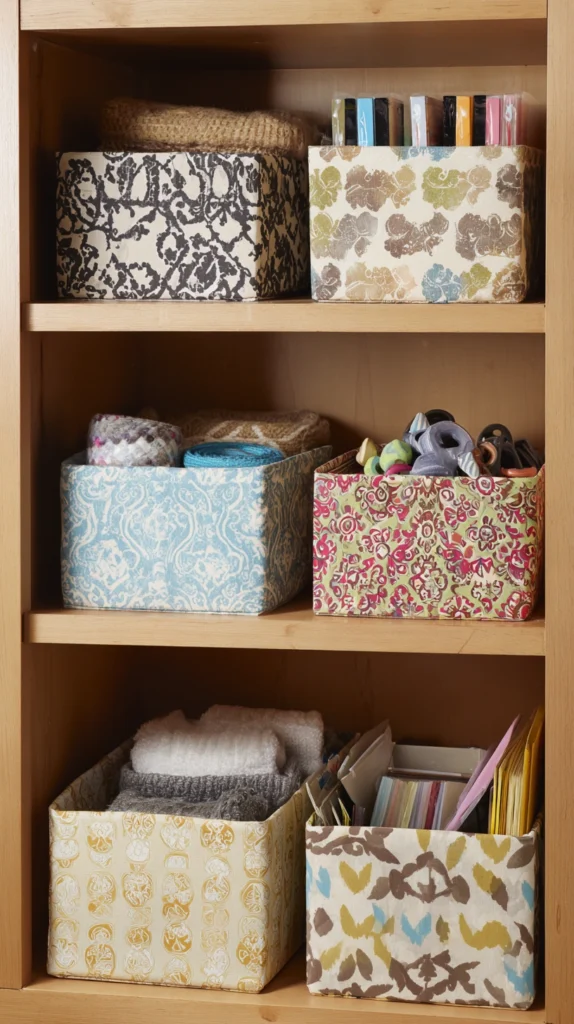
Not every fabric storage project needs to be sewn, and the no-sew fabric-covered box is among the quickest and most satisfying organizational DIY projects available. Rigid cardboard or wooden boxes — shoeboxes, wine boxes, and cereal boxes all work beautifully — are wrapped in fabric using a strong craft adhesive or Mod Podge, creating a storage solution that looks polished and intentional on any shelf. Cut the fabric with enough excess to wrap around all edges and overlap neatly on the interior.
Apply a thin, even layer of glue to the exterior of the box and smooth the fabric onto it, working out any bubbles with your fingers as you go. Fold the corners neatly like wrapping paper and finish the interior with a contrasting lining fabric glued flat to the inside surfaces. Make a coordinating set in the same fabric family for a shelf display that reads as deliberately designed.
6. Fabric Cube Storage Inserts

Cube storage units are among the most popular shelving systems in modern homes, but the standard fabric inserts sold as accessories are often flimsy, poorly constructed, and available only in a limited range of colors.
Making your own fabric cube inserts gives you complete control over fabric choice, structure, and finish at a cost that is often lower than purchasing ready-made alternatives. Use a heavy canvas or upholstery fabric for the exterior and interface generously for the sharp, defined edges that make a cube insert look professional.
The construction follows the same box-corner principle as the basic bin but sized precisely to the interior dimensions of your cube unit. Make the base slightly smaller than the cube opening so the insert slides in and out smoothly without forcing. A coordinating set in a fabric that suits the room transforms a standard cube shelving unit into a genuinely considered piece of storage furniture.
7. Fabric Magazine and Mail Organizer
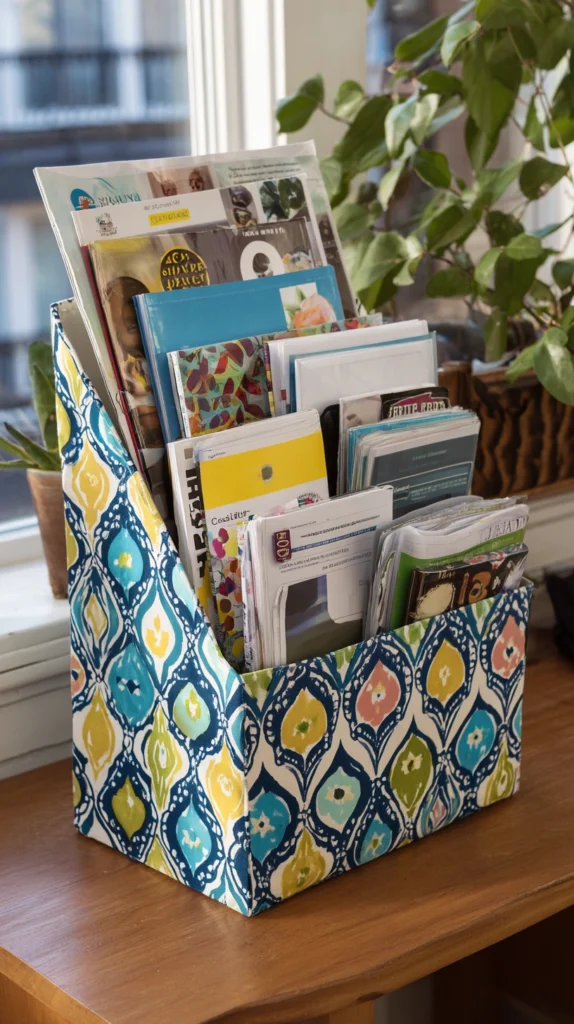
A fabric magazine organizer brings order to the paper chaos that accumulates in most homes, organizing magazines, notebooks, mail, and documents in a wall-mounted or desk-standing format that looks far more beautiful than a wire or plastic equivalent.
The construction uses a structured pocket format reinforced with stiff interfacing or a thin wooden insert slipped into a channel sewn into the base for self-supporting stability. Make the organizer wide enough to accommodate standard magazine dimensions and deep enough that the contents do not fall out when the organizer is moved.
A front pocket in a contrasting fabric at a shallower depth creates a useful secondary compartment for mail and smaller papers. Mount the finished organizer on the wall using two small brass hooks inserted through reinforced eyelets at the top corners. In a home office, kitchen, or hallway, this single piece eliminates one of the most persistent sources of household paper clutter with a solution that looks genuinely beautiful.
8. Fabric Toy Storage Bins for a Nursery or Playroom
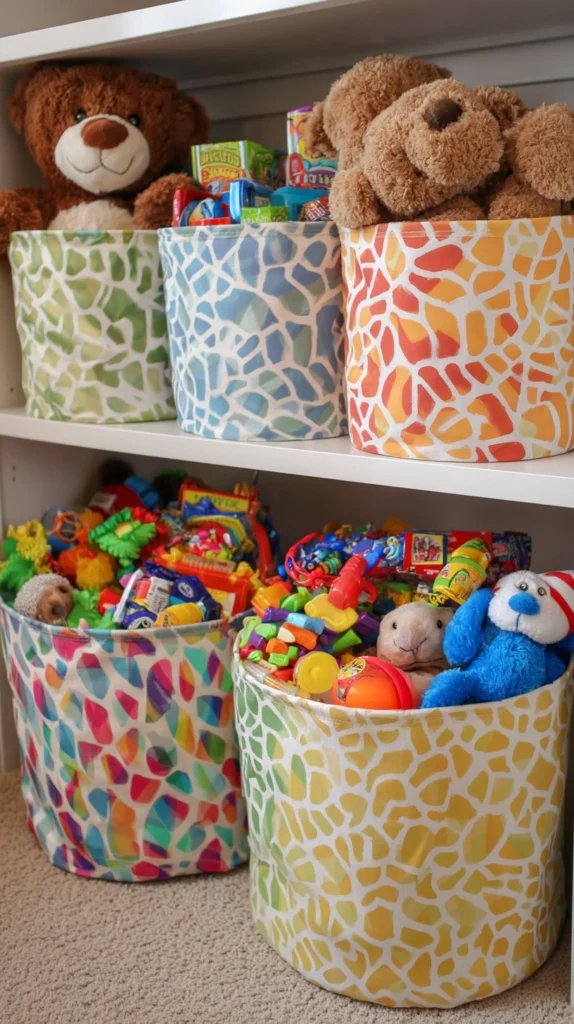
Fabric toy storage bins are one of the most practical and visually rewarding projects a parent can make for a child’s room. Large, generously proportioned bins in bright or softly patterned fabrics hold building blocks, soft toys, dress-up clothes, and art supplies in a way that makes tidying up feel manageable rather than overwhelming.
The soft sides of a fabric bin mean no sharp corners for small children to encounter, and the lightweight construction means children can move and carry their own bins independently from a young age.
Make each bin in a different fabric pattern but within a coordinating color palette so the room looks organized even when the bins are in use rather than neatly on their shelves. Add a simple appliquéd initial or a small embroidered motif to the front of each bin to identify its contents without a formal label. These bins grow with the child, transitioning from toy storage to book storage to craft supply storage as interests evolve.
9. Fabric Utensil and Desk Caddy
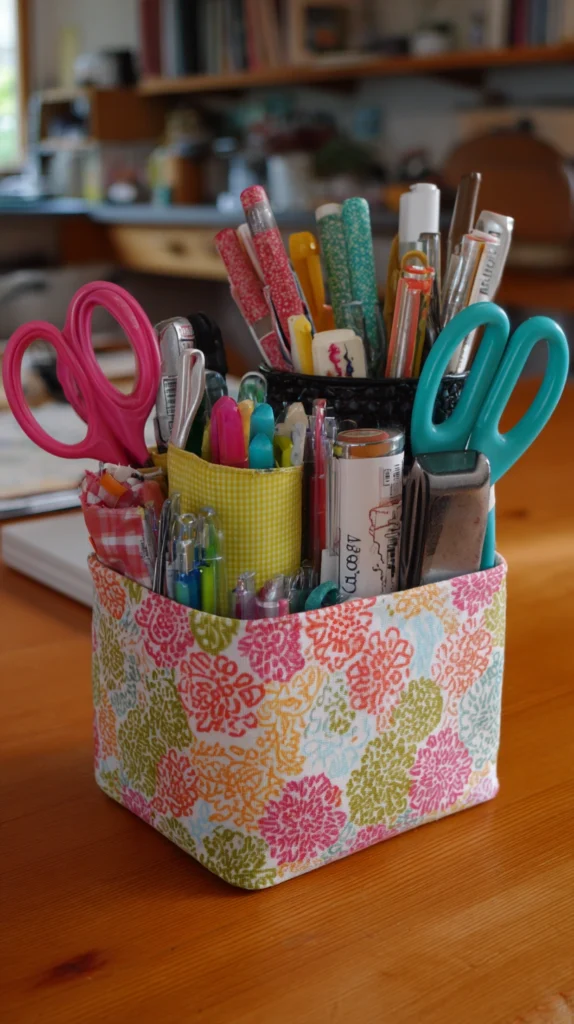
A fabric caddy — a multi-compartment organizer that stands upright on a desk or kitchen counter — is one of the most useful small-scale fabric storage projects available. Divided internally into three or four sections of varying widths, it holds pens, scissors, and rulers on a desk or wooden spoons, spatulas, and whisks in a kitchen with equal effectiveness. The construction begins with a fabric-covered cylindrical or rectangular base weighted with a piece of thick cardboard or thin plywood cut to size.
Interior dividers are created from additional fabric rectangles stitched vertically across the interior of the caddy at measured intervals. Choose a stiff, sturdy fabric for this project — upholstery canvas or heavy denim ensures the dividers stand upright and hold their position under the weight of the items stored within them.
A fabric caddy on a desk or kitchen counter brings the warmth and personality of textile into a functional zone where it is rarely expected and always welcome.
10. Fabric Laundry and Hamper Bags

A fabric laundry bag is one of the most used and least considered items in any home, and making your own from a durable, washable fabric is a project that pays for itself almost immediately in longevity alone.
Heavy cotton canvas, thick linen, or a sturdy cotton-linen blend all make excellent laundry bag fabrics, able to withstand both the weight of a full load of laundry and repeated washing at high temperatures. The construction is straightforward — a large rectangular bag with a drawstring casing at the top through which a length of cotton cord or ribbon is threaded.
For a hanging laundry bag that attaches to the back of a wardrobe or bathroom door, add two short fabric loops at the top corners through which a hook or door hanger is threaded. Make separate bags in different fabrics for lights, darks, and delicates to bring genuine sorting organization to the laundry routine. A well-made fabric laundry bag lasts for years and makes the least glamorous domestic task feel slightly more considered.
11. Fabric Shelf Dividers
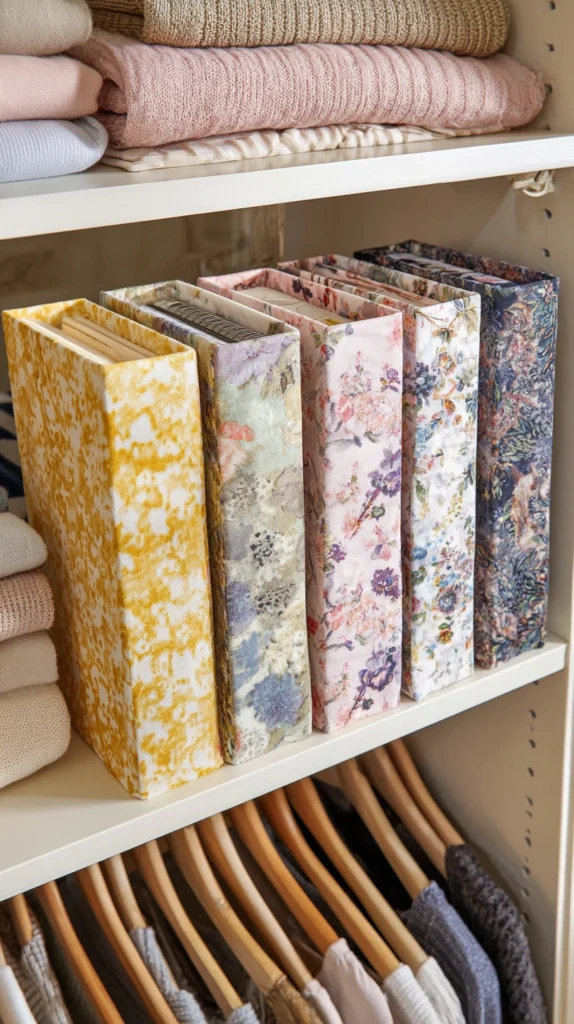
Wardrobe shelves stacked with folded jumpers, jeans, and knitwear have a persistent tendency toward collapse — the neat stack that began the week as a tidy column dissolves by Wednesday into a lateral sprawl that makes finding anything a frustrating exercise. Fabric shelf dividers solve this problem elegantly and inexpensively.
Each divider is a fabric-covered rectangle of stiff cardboard or thin plywood with a notch cut into the bottom edge that slots over the shelf, holding the divider upright without any fixing or hardware.
Cover the cardboard or plywood with a tightly stretched fabric glued or stapled at the back, choosing a fabric that coordinates with the wardrobe interior or the room’s overall palette. Make four to six dividers per shelf for a wardrobe that stays organized through even the most chaotic week. The investment in time is minimal and the organizational return is immediate and genuinely significant.
12. Fabric Cable and Cord Organizers
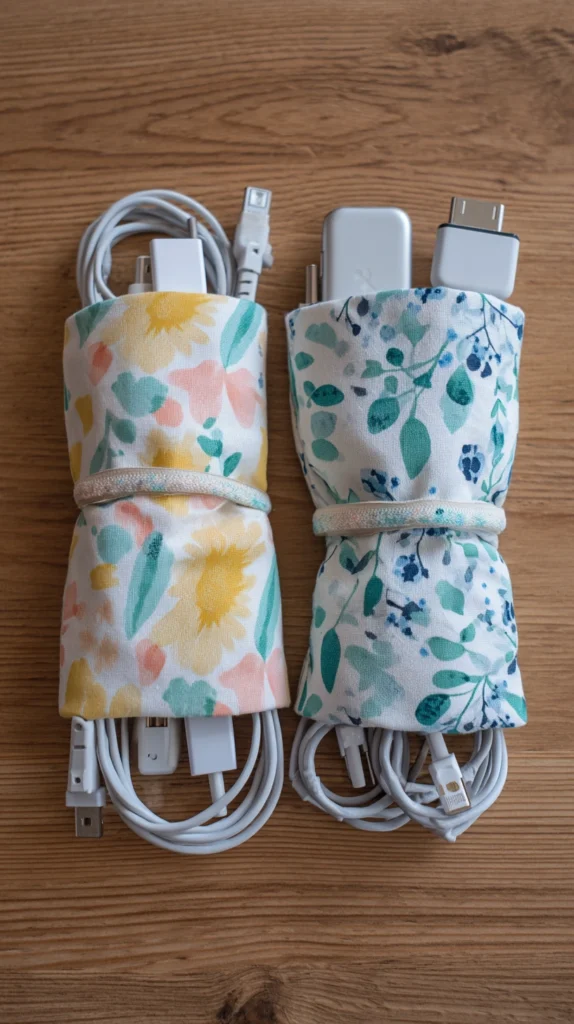
Cable management is one of the most universally frustrating organizational challenges in the modern home, and a set of fabric cable organizers is a simple, beautiful, and effective solution. Small fabric tubes — essentially miniature fabric bins elongated into a cylindrical or rectangular roll format — wrap around individual cables and power cords, keeping them contained, protected, and visually tidy. Secure each roll with a small strip of hook-and-loop fastener so it can be opened, adjusted, and reused indefinitely.
For desk cable management, make a larger fabric channel that runs along the back edge of a desk surface, gathering multiple cables into a single contained pathway that disappears visually against the desk.
Choose a fabric in a dark, neutral tone — charcoal, navy, or black linen — so the cable organizers recede rather than draw attention to themselves. This small project transforms the area beneath and behind a desk from a chaotic tangle into something that looks deliberately managed.
13. Fabric Pantry and Kitchen Bin Liners

Pantry baskets and kitchen storage bins lined with fabric are both more hygienic and significantly more beautiful than their unlined equivalents. A fabric liner made from a food-safe, washable cotton sits inside a wicker or wire basket, preventing small items from falling through gaps, protecting the basket from staining, and making the entire contents easy to remove and clean in one action.
Cut the liner to the interior dimensions of the basket with a generous overlap at the top edge that folds down over the rim for a neat, finished appearance.
For dry goods storage, a simple unlined cotton works perfectly. For producing baskets where moisture is a factor, choose a quick-drying cotton canvas or a cotton-linen blend. Make a set of coordinating liners for every basket in the pantry in the same fabric family. This single detail unifies a pantry full of mismatched baskets into a cohesive, considered storage system.
14. Fabric Bedside Caddy
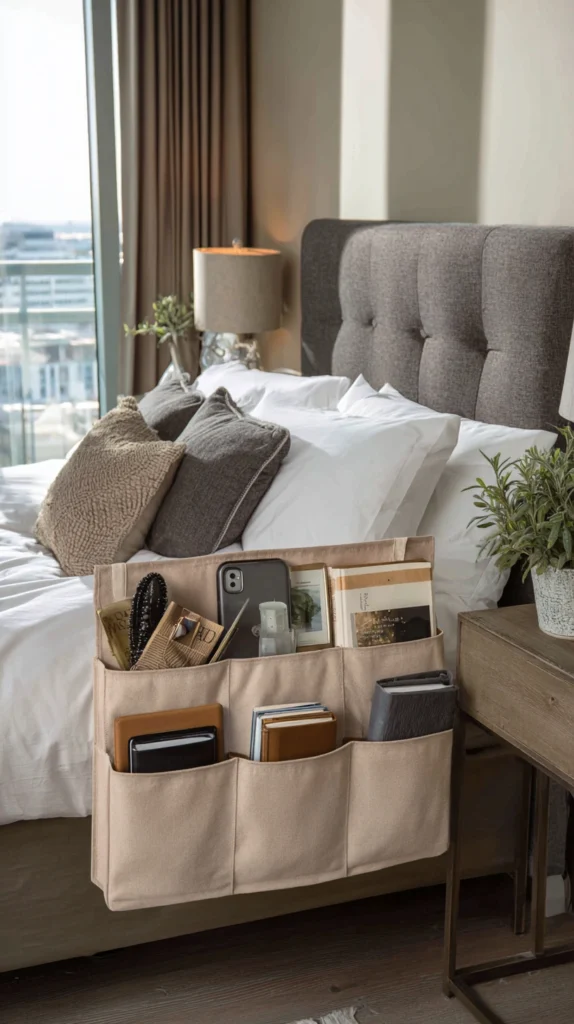
A fabric bedside caddy is a hanging organizer that attaches to the side of a mattress between the mattress and the bed base, providing a soft pocket organizer at the perfect height for bedside essentials. A phone, book, reading glasses, a notepad, and a hand cream all have a designated home within arm’s reach without requiring a bedside table at all. This makes it an ideal solution for small bedrooms, children’s rooms, or guest rooms where a conventional bedside table would crowd the space.
The construction requires a long horizontal panel of sturdy fabric that slides between the mattress and base to anchor the caddy in place, with one or more pockets of varying sizes stitched to the portion that hangs down the side of the mattress.
Use a double layer of canvas for the anchor panel so it is strong enough to stay firmly in position under the weight of a mattress. Choose a fabric that coordinates with the bedding for a finished result that looks intentional rather than improvised.
15. Fabric Storage Ottoman Cover
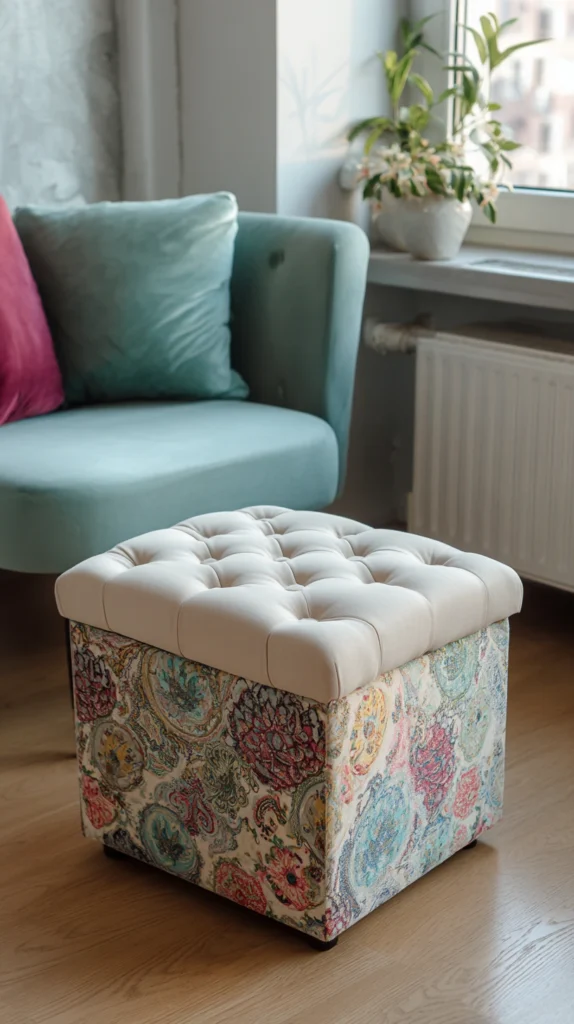
A fabric storage ottoman is one of the most dual-purpose pieces of furniture a living room or bedroom can contain, providing both seating or a footrest surface and generous concealed storage within. Rather than purchasing a ready-made storage ottoman, making a fabric cover for an existing rigid storage box or repurposed chest gives you complete control over fabric choice, scale, and finish.
A tightly upholstered lid covered in a durable fabric — a heavy linen, a bouclé, or a woven cotton blend — with piped or corded edges gives the finished piece a professional, considered quality.
Attach the fabric cover to a piece of thick upholstery foam cut to the dimensions of the lid for comfortable seating, and secure the foam and fabric together with strong adhesive and staples at the underside. The storage box beneath can be lined with a coordinating fabric using the no-sew method for a completely finished interior.
This project represents the intersection of fabric storage and furniture making, and the result is a piece that earns its place in the room on both functional and aesthetic grounds every single day.
The Case for Making Your Own
A home organized with fabric storage solutions made by hand has a warmth, coherence, and personality that no amount of purchased organization products can fully replicate. Every bin, basket, and organizer reflects a deliberate choice of fabric, color, and scale that suits the specific room and the specific household it serves.
The skill threshold is genuinely low, the material investment is modest, and the satisfaction of living alongside something you made yourself is one that compounds quietly every single day.