15 DIY Backyard Games Ideas for Endless Outdoor Fun
A backyard without games is a backyard that gets half the use it deserves. The difference between an outdoor space that the whole family gravitates toward every weekend and one that sits pleasantly empty most of the time is often nothing more than the presence of something genuinely fun to do within it.
Games create the reason to be outside, the excuse to stay longer, and the particular quality of shared outdoor enjoyment that is one of the most reliable sources of genuinely good memories available to any family or group of friends.
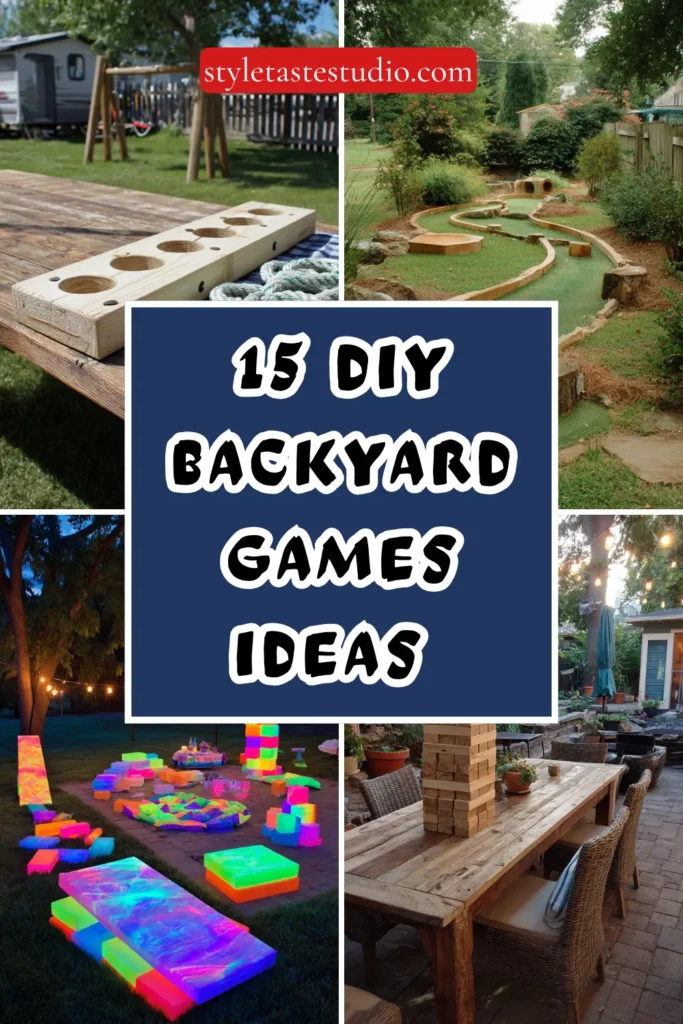
The best backyard games are the ones built with your own hands from materials that are affordable, widely available, and satisfying to work with. A homemade game has a character and a personal quality that a purchased alternative lacks — it carries the investment of the maker and the particular imperfections that make it genuinely yours. And the building of the game, done together or alone on a weekend afternoon, is often as enjoyable as the playing of it.
Here are 15 DIY backyard games ideas that bring genuine fun, genuine challenge, and genuine outdoor pleasure to every gathering.
1. Giant Jenga
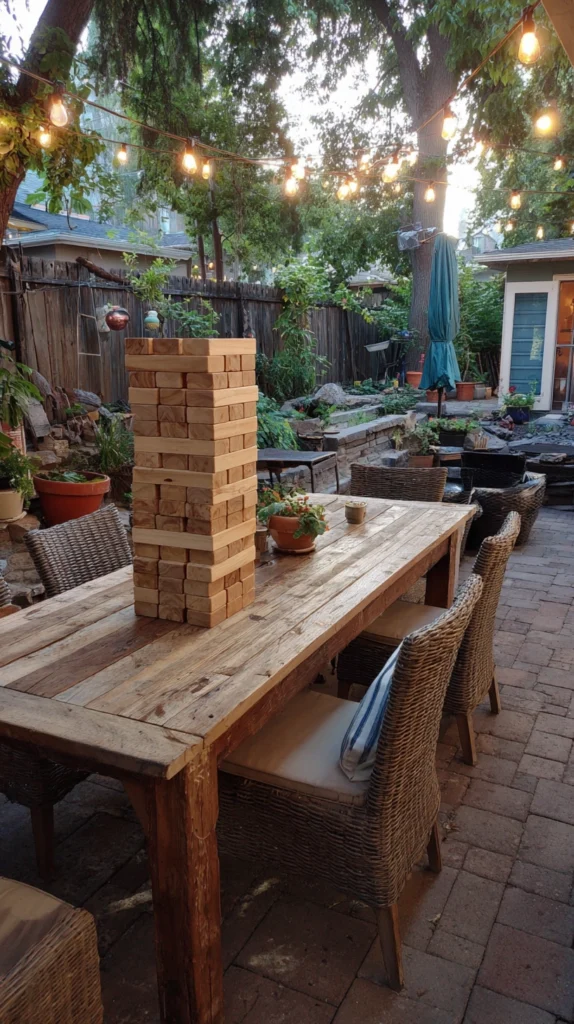
Giant Jenga — a scaled-up version of the classic tower-stacking game built from smooth, uniformly sized timber blocks — is the most universally loved and most widely played of all DIY backyard games.
The tension of each block removal, the growing instability of the tower as the game progresses, and the spectacular collapse that ends every game creates a playing experience of genuine suspense and shared delight that suits every age group and every social gathering equally well.
Cut 54 blocks from 90mm x 45mm construction timber — each block exactly 270mm long — and sand every surface thoroughly to a smooth, splinter-free finish. The uniformity of the block dimensions is critical for a tower that stacks properly — measure and cut each block carefully and check all dimensions before sanding. Finish with exterior decking oil for blocks that will live outdoors and store in a purpose-built timber crate or a canvas bag between games.
Pro Tip: Sand the long faces of each block very slightly — a pass or two with fine sandpaper along the face rather than across the grain — to reduce the friction between stacked blocks and make individual block removal possible without disturbing the tower prematurely.
Blocks that are too rough create excessive inter-block friction that makes the game frustratingly difficult. Blocks that are too smooth create insufficient friction and make the tower too unstable. A moderate, consistent surface smoothness on the long faces creates the ideal playing balance.
2. Cornhole
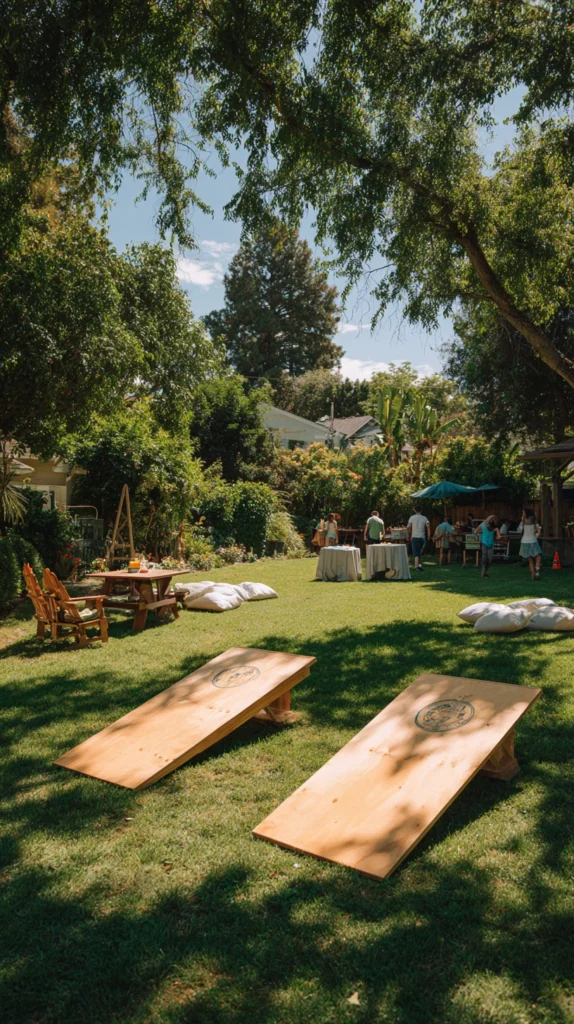
Cornhole — the classic American lawn toss game in which players throw fabric bags filled with corn or bean filling at angled boards with a target hole — is the most socially engaging and most accessible of all DIY backyard toss games. The game suits players of all ages and abilities, requires minimal physical space, and creates the particular kind of relaxed, competitive social dynamic that makes outdoor gatherings genuinely enjoyable rather than simply pleasant.
Build two boards from 12mm exterior plywood — each 60cm x 90cm with a 15cm diameter hole centered 23cm from the top edge — mounted on a simple timber frame that angles the board surface at approximately 10 degrees from horizontal.
Sand all surfaces thoroughly, apply two coats of exterior paint in complementary colors, and finish with a coat of exterior varnish for weather resistance. Sew eight fabric bags — four in each team color — filled with dried corn, beans, or plastic pellets for the complete game set.
Pro Tip: Cut the target hole in each cornhole board with a jigsaw or a hole saw after painting rather than before — painting around a pre-cut hole creates drips and uneven coverage at the hole edges that are difficult to correct and that look unfinished.
Paint the complete board surface including the area that will become the hole, allow it to dry completely, then cut the hole cleanly through the painted surface for a perfectly finished edge with no paint drips or bare timber visible at the hole perimeter.
3. Lawn Bowling
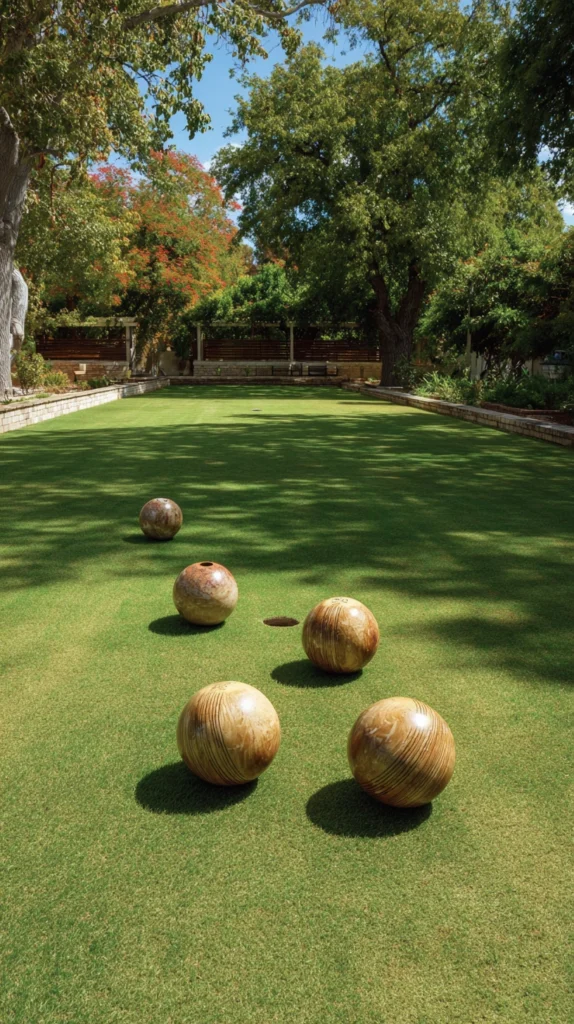
A DIY lawn bowling set — a collection of smooth, uniformly weighted wooden balls and a smaller target ball — creates a backyard version of the ancient game of boules or pétanque that can be played on any reasonably flat grass or gravel surface.
The game combines the physical pleasure of throwing weighted balls with the strategic pleasure of reading the ground and judging distances — a combination of skill elements that makes it genuinely engaging for adults while remaining accessible and enjoyable for children.
Turn or source eight wooden balls of approximately 7cm diameter — four in a natural finish and four in a stained darker color for the two player sets — and one smaller 3cm target ball in a contrasting color.
Ensure all balls are sealed with exterior varnish for weather resistance and that the weight distribution within each ball is as uniform as possible for consistent playing performance. Store in a canvas drawstring bag for easy transport between the storage location and the playing area.
Pro Tip: Weight the wooden bowling balls slightly by drilling a shallow cavity in the base of each ball, filling with a small amount of lead shot or heavy metal granules, and plugging the cavity with a timber dowel and waterproof glue before finishing.
Unweighted wooden balls are significantly lighter than traditional metal boules and roll with a bouncy, unpredictable quality that makes the game less satisfying to play. A small amount of added weight creates a playing experience much closer to the genuine pétanque experience.
4. Ring Toss
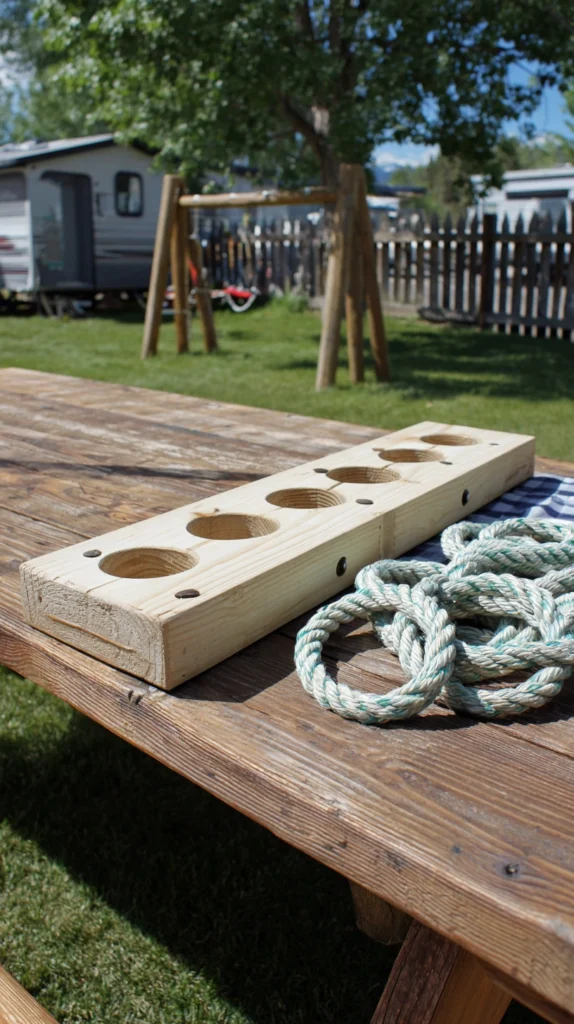
A DIY ring toss game — a series of timber stakes or dowel pegs arranged in a scoring pattern on a timber base, with rings made from rope, rubber, or timber rings tossed from a set distance — creates a backyard game of satisfying skill and competitive simplicity that suits children and adults equally well. The game scales naturally from easy close-distance tosses for younger children to genuinely challenging long-distance throwing for adults.
Cut a base board from 18mm exterior plywood — approximately 60cm x 90cm — and drill holes for five timber dowel pegs of varying heights arranged in a pattern on the surface. Number each peg with its point value — higher pegs worth more points for the greater difficulty of ringing them — and finish the complete set with exterior paint. Make the throwing rings from thick natural rope formed into circles approximately 15cm in diameter with the ends joined by a tight whipping of thinner rope.
Pro Tip: Vary the height of the ring toss pegs significantly — from a short 10cm peg to a tall 30cm peg — to create a genuine range of difficulty within the single game. All pegs at the same height create a game with only distance as the difficulty variable — boring for adults once the optimal throwing technique is established.
Varied peg heights create a game where both distance and trajectory must be judged simultaneously for each target — a much more interesting and more consistently challenging playing experience.
5. Oversized Connect Four
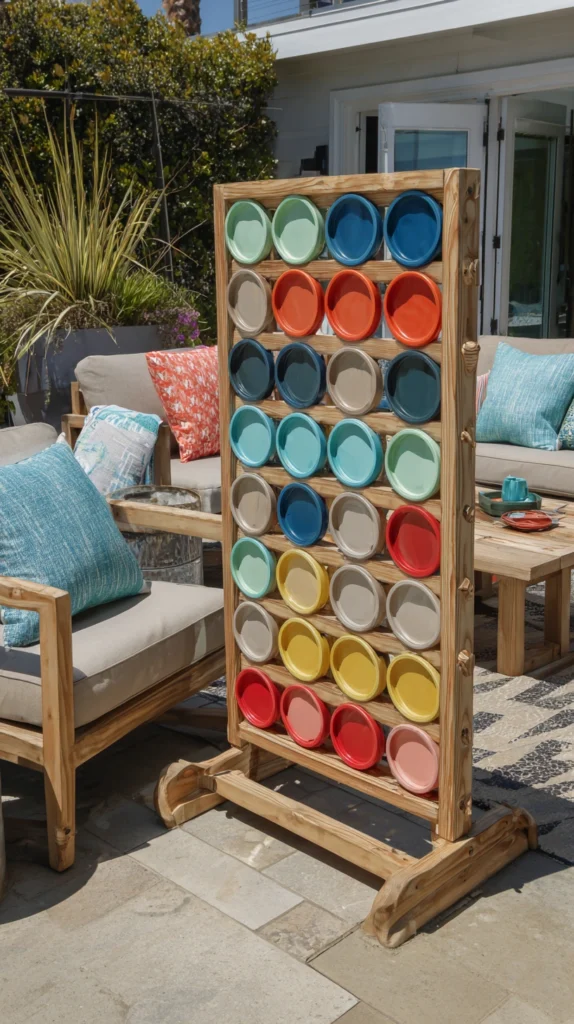
A giant Connect Four game — a large standing timber grid of seven columns and six rows into which oversized discs are dropped from the top — creates a backyard strategy game of genuine intellectual engagement and satisfying physical scale. The oversized format transforms a familiar tabletop game into a garden installation of considerable visual impact and genuine playability for all ages.
Build the grid frame from 45mm square timber battens with 70mm diameter PVC pipe sections as the disc guide tubes — cut to length and fixed vertically within the timber frame at the correct column spacing.
Make 42 discs — 21 in each of two colors — from 65mm diameter, 18mm thick timber circles cut with a hole saw and painted with exterior paint. The discs drop through the PVC guide tubes and stack naturally within each column for a self-organizing game mechanism that requires no complex internal structure.
Pro Tip: Drill a small drainage hole through the base of each PVC column guide tube before assembly to prevent rainwater from pooling within the tubes and causing the timber discs to swell and stick within the guides.
Timber discs that have absorbed moisture expand slightly and can jam within the guide tubes — making disc removal for game reset difficult or impossible without force that risks damaging the game structure. A drainage hole prevents moisture accumulation entirely and keeps the discs moving freely through the guides in all weather conditions.
6. Ladder Toss
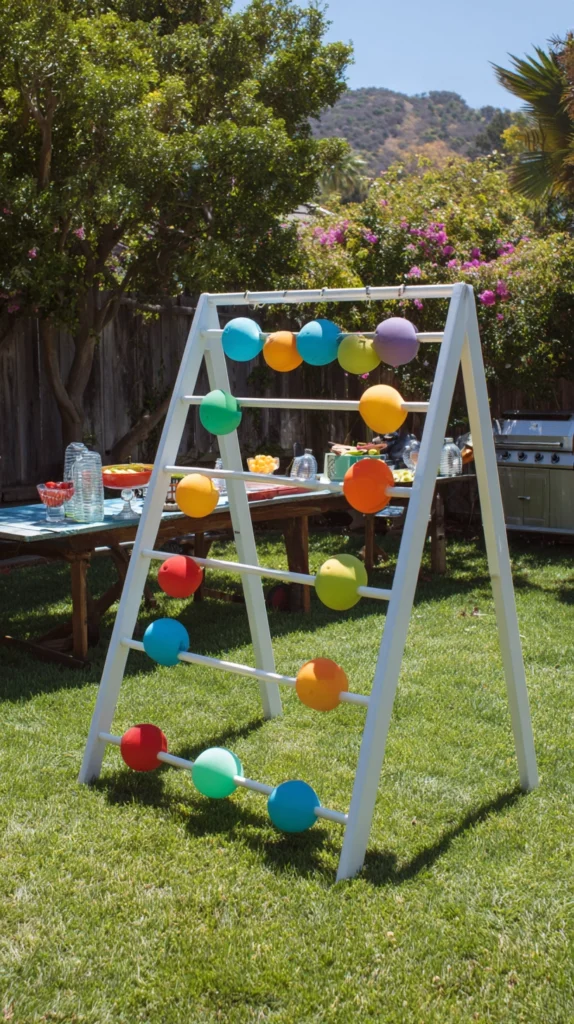
Ladder toss — a game in which players throw bolas of two weighted balls connected by a length of cord at a three-rung ladder target, scoring points based on which rung the bola wraps around — is one of the most skilful and most genuinely competitive of all DIY backyard games. The throwing technique is simple to learn but difficult to master and the scoring system creates close, contested games between players of different ability levels.
Build two ladder frames from 32mm PVC pipe — three horizontal rungs spaced 30cm apart on two vertical side rails, the whole structure approximately 60cm wide and 90cm tall — connected with PVC fittings and secured with PVC cement for a rigid, weather-resistant structure.
Make six bolas — three in each team color — from two wooden balls connected by a 45cm length of nylon cord, with the cord attached through a drilled hole in each ball and secured with a large knot.
Pro Tip: Fill the wooden bola balls with a small amount of expanding foam sealant through a small drilled hole before plugging the hole with a timber dowel and finishing. Hollow wooden balls are too light for accurate throwing — they are affected by wind and travel unpredictably.
Foam-filled balls have a satisfying weight, consistent flight characteristics, and are genuinely waterproof — an important practical quality for balls that will spend considerable time on damp grass between games.
7. Bocce Ball Court
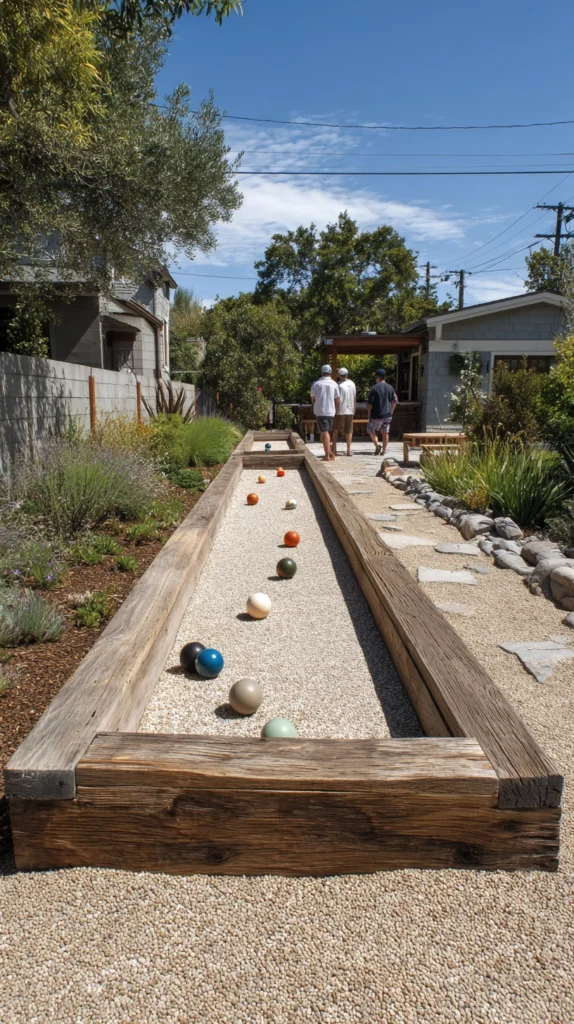
A permanent bocce ball court — a flat, compacted surface of decomposed granite or fine gravel contained within a timber border, approximately 4 metres by 12 metres — creates a backyard game installation of considerable social usefulness and genuine long-term value.
A dedicated bocce court transforms a section of garden into a permanent game destination that every family gathering defaults to naturally and that improves with every season of play as the surface beds in and the surrounding planting establishes.
Excavate the court area to a depth of 10cm, install a treated timber border frame at ground level, fill with a compacted base layer of crushed limestone topped with a 3cm layer of decomposed granite, and rake level. The granite surface provides the ideal playing texture for bocce — firm enough for consistent ball rolling, slightly yielding for the satisfying thud of a well-thrown bocce ball landing precisely where intended.
Pro Tip: Install the bocce court timber border frame with the top edge of the timber exactly flush with the surrounding lawn level rather than raised above it. A border that projects above the lawn level creates a trip hazard around the court perimeter and makes mowing the adjacent lawn difficult.
A flush border integrates the court into the wider garden level seamlessly, creates a clean visual transition between the court surface and the surrounding lawn, and eliminates both the trip hazard and the mowing complication.
8. Backyard Mini Golf
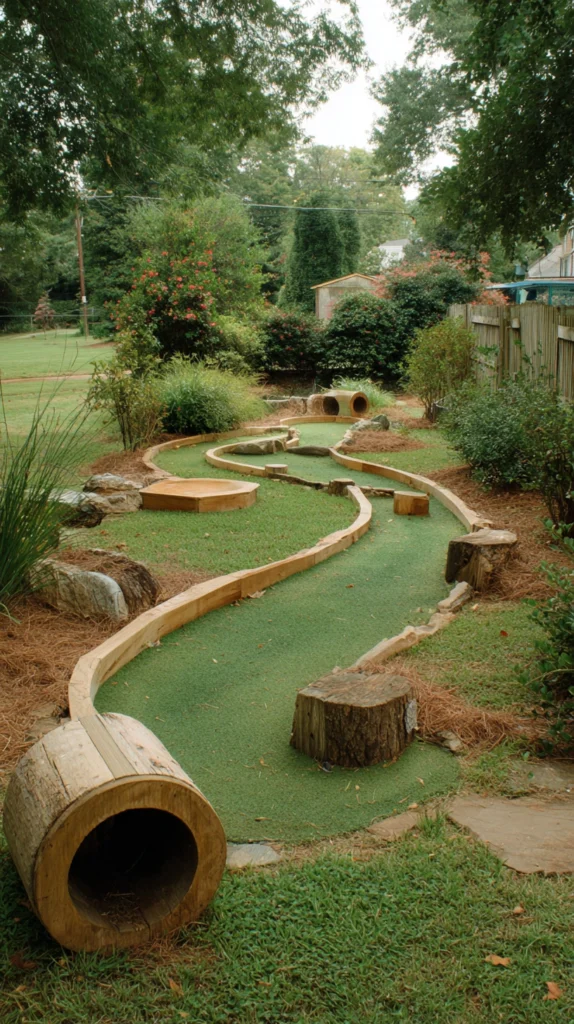
A DIY backyard mini golf course — a series of individual holes created from timber, pipe, and creative obstacles arranged across the garden in a connected sequence — creates a backyard game installation of extraordinary playability and long-term entertainment value. A nine-hole course takes a full weekend afternoon to build and provides years of genuinely enjoyable family entertainment from the investment.
Design each hole with a distinct character — a straight simple hole for beginners, a curved hole with a timber side border, a hole with a tunnel made from PVC pipe, a hole with a windmill obstacle, a hole with a bridge over a shallow water feature. Build each hole from exterior timber, PVC fittings, and creative salvaged materials. Set each hole in a defined area of the garden connected to the next by a paved or timber path that creates the genuine course-walking experience of real mini golf.
Pro Tip: Build mini golf holes to accept standard size golf balls and standard putter heads — 108mm hole diameter — from the beginning rather than creating a proprietary ball and putter system.
Standard equipment means that damaged or lost putters and balls can be replaced immediately from any sports retailer without commissioning custom replacements. The convenience of standard equipment compatibility makes the course significantly more practical to maintain and more accessible for visiting players who want to use their own equipment.
9. Oversized Snakes and Ladders
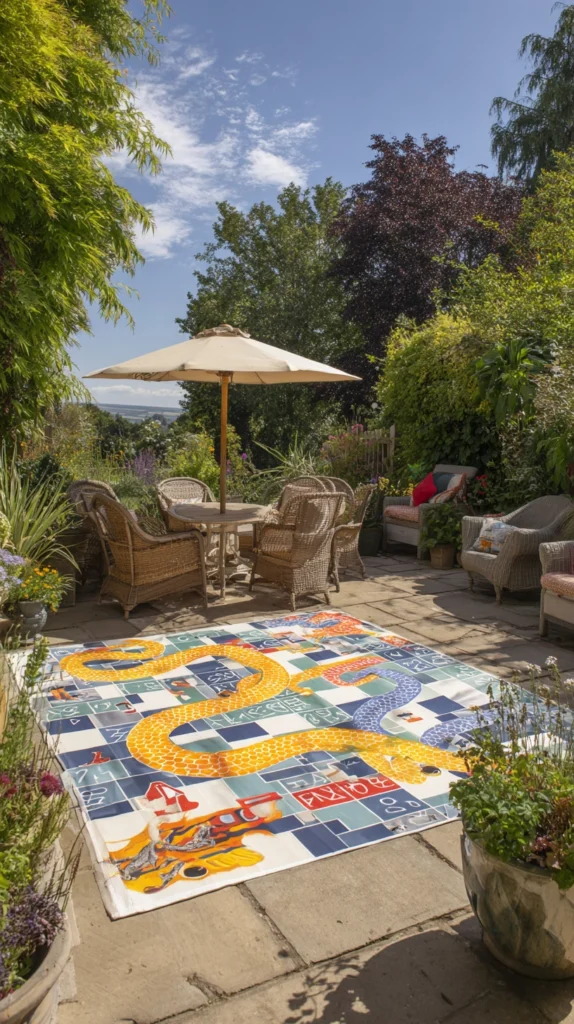
A giant snakes and ladders game painted directly onto a garden lawn, patio, or a large canvas groundsheet creates a garden game installation of spectacular visual impact and enormous family appeal.
The oversized format transforms the familiar childhood board game into a physical, full-body playing experience where players become their own game pieces — moving themselves across the numbered grid rather than moving small tokens across a cardboard board.
Paint the numbered grid directly onto an exterior timber board or a heavy canvas groundsheet using exterior paint — a 10 x 10 grid of numbered squares each approximately 40cm across creates a playing area of 4 metres square that is large enough for genuine physical movement between squares. Add dramatically illustrated snakes and ladders connecting specific numbered squares in the traditional format and laminate or seal the finished board for weather resistance.
Pro Tip: Make the dice for an oversized snakes and ladders game from a large foam cube — approximately 20cm per side — cut from high-density upholstery foam and covered in waterproof outdoor fabric with embroidered or painted pip markings. A large foam dice is safely throwable by young children, completely weatherproof, and creates the satisfying physical engagement of throwing a genuinely large object that a standard small dice entirely lacks. The oversized dice completes the full-body, giant-scale playing experience that makes this game so genuinely enjoyable.
10. Washer Toss
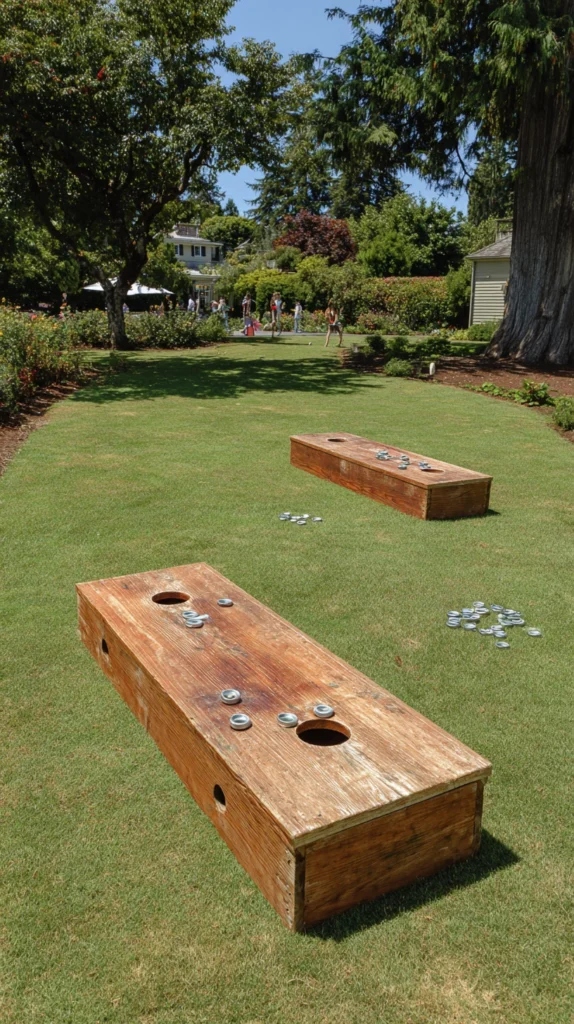
Washer toss — a game in which players throw metal washers at target boxes or pipes sunk into the ground, scoring points based on proximity or direct hits — is one of the most satisfying and most genuinely competitive of all DIY backyard toss games. The game requires minimal materials, minimal space, and minimal construction skill but creates a playing experience of considerable depth and competitiveness.
Build two target boxes from 18mm exterior plywood — each approximately 30cm square and 15cm deep — with a 10cm diameter PVC pipe fixed vertically at the centre of each box. Sand and paint with exterior paint. Make 12 washers — six in each team color, painted with exterior spray paint — from 50mm diameter, 3mm thick steel washers available from any hardware store. Set the boxes at a distance of approximately 5 metres apart for standard competitive play.
Pro Tip: Fill the target boxes with rubber granules — the type used for playground surfaces — rather than leaving them empty or filling with sand.
Rubber granule fill absorbs the impact of thrown washers almost completely, preventing bouncing out of the box that reduces scoring opportunities and makes the game less satisfying. Sand fill creates a flat, compacted surface that increases bounce significantly. Rubber granules create the most forgiving and most satisfying landing surface for a genuinely playable washer toss game.
11. DIY Outdoor Bowling
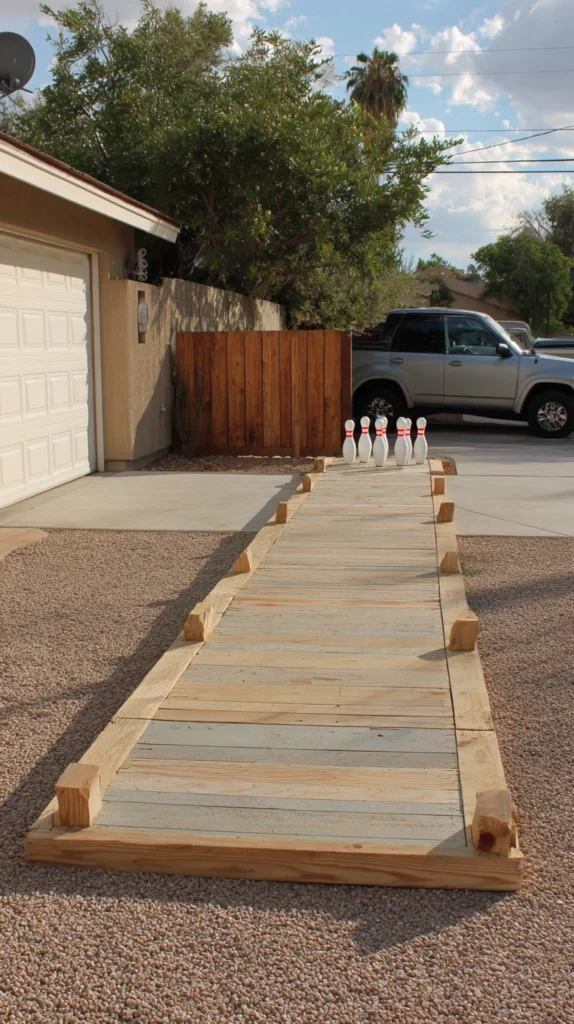
A backyard bowling lane — a smooth, level timber surface of approximately 10 metres in length with a ball return channel along one side and a pin setting zone at the far end — creates a permanent backyard bowling installation of considerable entertainment value. Turn or source ten timber skittles of consistent size and weight, use a standard-sized rubber or timber bowling ball, and the full ten-pin bowling experience is available in the backyard without any commercial facility.
Build the lane surface from smooth exterior plywood panels joined edge to edge on a level timber sub-frame — the smoothness of the surface is critical for consistent ball rolling performance. Edge the lane with low timber side rails that keep errant balls within the lane. Mark the foul line, the approach area, and the pin positions with painted markings and the full bowling experience is complete.
Pro Tip: Apply a coat of exterior floor varnish to the bowling lane surface annually to maintain the smooth, consistent rolling surface that the game requires. Weathered, unfinished exterior plywood develops a rough, uneven surface texture that creates unpredictable ball deflection and inconsistent pin action. A well-maintained varnished surface provides consistent, predictable ball behavior that makes the game genuinely playable and genuinely competitive rather than a lottery of surface irregularities.
12. Giant Noughts and Crosses
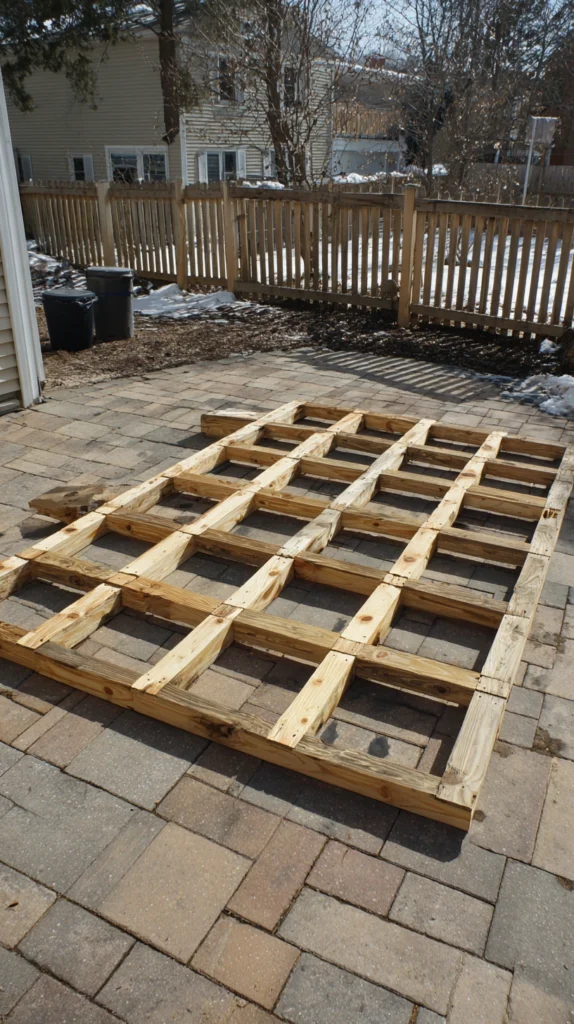
Giant noughts and crosses — a large-scale version of the classic strategy game played on an oversized grid with oversized timber disc and ring pieces — creates a garden game of simple strategic engagement and satisfying physical scale. The game takes sixty seconds to learn and never quite becomes boring because the strategic possibilities, though limited, create genuine competitive tension between evenly matched players.
Build the grid from four lengths of smooth timber dowel — 50mm diameter, 90cm long — arranged as two pairs of parallel lines crossing at right angles to create the nine-square playing grid. Lay flat on a patio or lawn surface. Make five disc pieces and five ring pieces from 150mm diameter, 18mm thick timber circles — the ring pieces with a 100mm diameter hole cut from their centre — in two contrasting colors painted with exterior paint.
Pro Tip: Make the giant noughts and crosses pieces generous enough in diameter to be clearly visible from a standing playing height and robust enough to resist being accidentally kicked or displaced by wind during play.
Pieces that are too small look lost on the large grid and are easily displaced — making the game state difficult to read clearly from the playing position. Pieces of 150mm diameter or larger sit stably on the grid, resist minor disturbance, and create a clearly legible game state from every playing position around the grid.
13. Backyard Archery Range
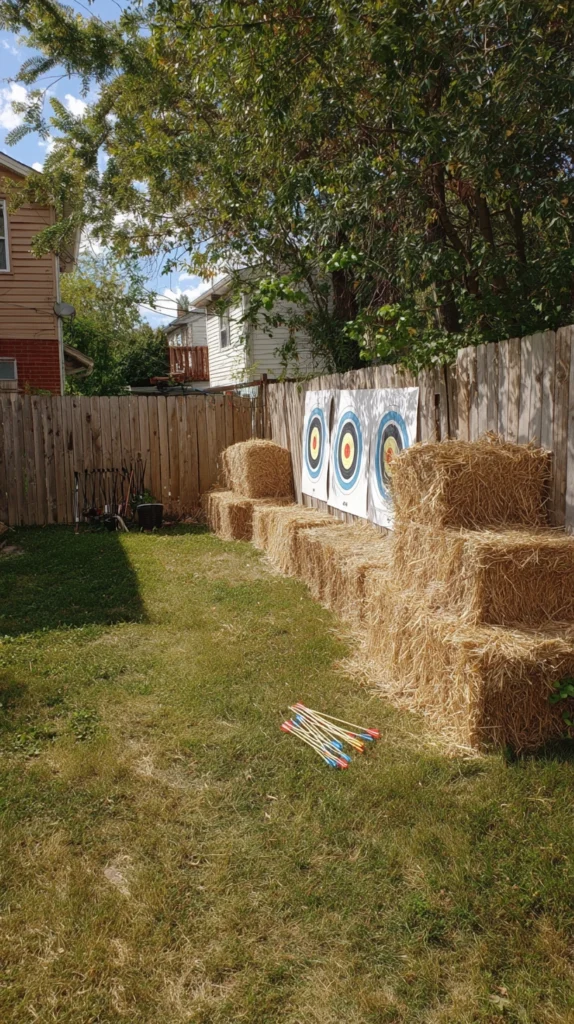
A simple DIY backyard archery range — a safe backstop of stacked straw bales, a target face attached to the front bale, and a clearly marked shooting line at an appropriate distance — creates one of the most genuinely skilful and most individually satisfying of all backyard game installations.
Archery develops focus, breath control, and physical precision in a way that purely social games do not and the satisfaction of a well-placed arrow is one of the most immediately rewarding physical experiences available in a backyard setting.
Stack three or four straw bales in a stable configuration against a solid boundary wall or fence — ensuring the backstop has sufficient depth to stop all arrows completely — and attach a printed archery target face to the front face of the front bale. Mark the shooting line at 10 metres for beginners or 20 metres for more experienced archers. Provide recurve bows of appropriate draw weight for the intended age group of users.
Pro Tip: Check local regulations regarding the use of archery equipment in residential gardens before installing a backyard archery range. Many jurisdictions have specific requirements regarding minimum property size, maximum bow draw weight, and backstop construction standards for residential archery use. Confirming the legal requirements in advance prevents any compliance issues and ensures the range is designed from the beginning to meet all applicable safety standards for residential archery use.
14. Rope Maze
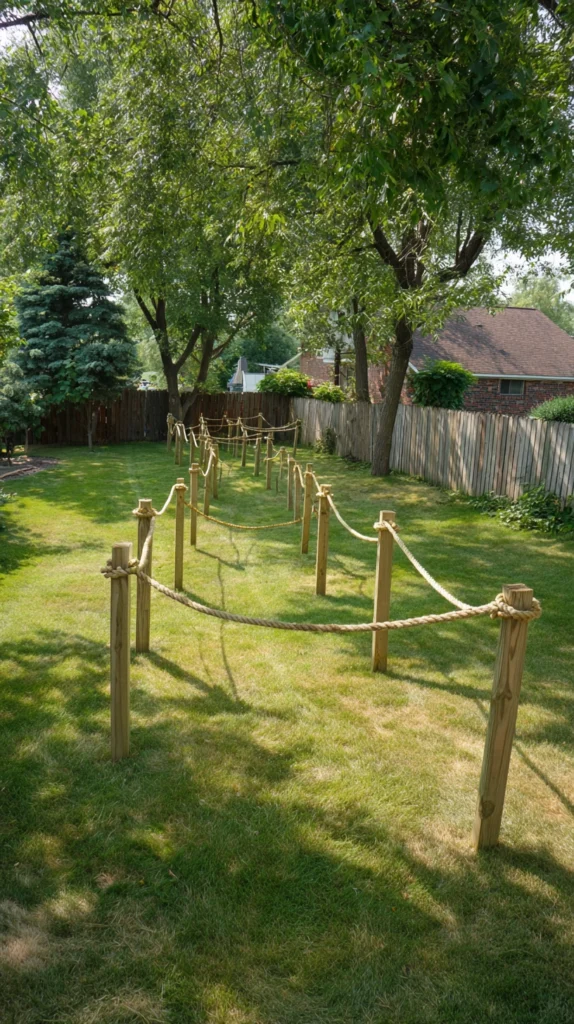
A rope maze — a series of ropes stretched between timber stakes at varying heights throughout a defined garden area, creating a three-dimensional obstacle course that players must navigate without touching the ropes — creates a DIY backyard game of genuine physical challenge and irresistible competitive appeal.
The rope maze suits children with enormous enthusiasm but challenges adults equally — the combination of spatial awareness, flexibility, and body control required to navigate a well-designed rope maze creates a genuine physical puzzle for players of every age.
Drive timber stakes into the lawn at irregular intervals throughout the maze area — approximately 3 metres by 5 metres minimum for a satisfying maze complexity — and stretch brightly colored rope between the stakes at varying heights from 15cm to 120cm above the ground. Connect ropes in a complex, interlocking pattern that creates multiple route options of varying difficulty. Attach small bells to the ropes so that contact with a rope is immediately audible.
Pro Tip: Design the rope maze with a deliberate route of minimum difficulty that young children can navigate successfully alongside routes of increasing complexity that challenge older children and adults.
A maze with only one difficulty level is either too easy for adults or too discouraging for young children — a range of route difficulties allows every player to find their own appropriate level of challenge and creates a game that genuinely works for mixed-age family groups.
15. Glow-in-the-Dark Backyard Games
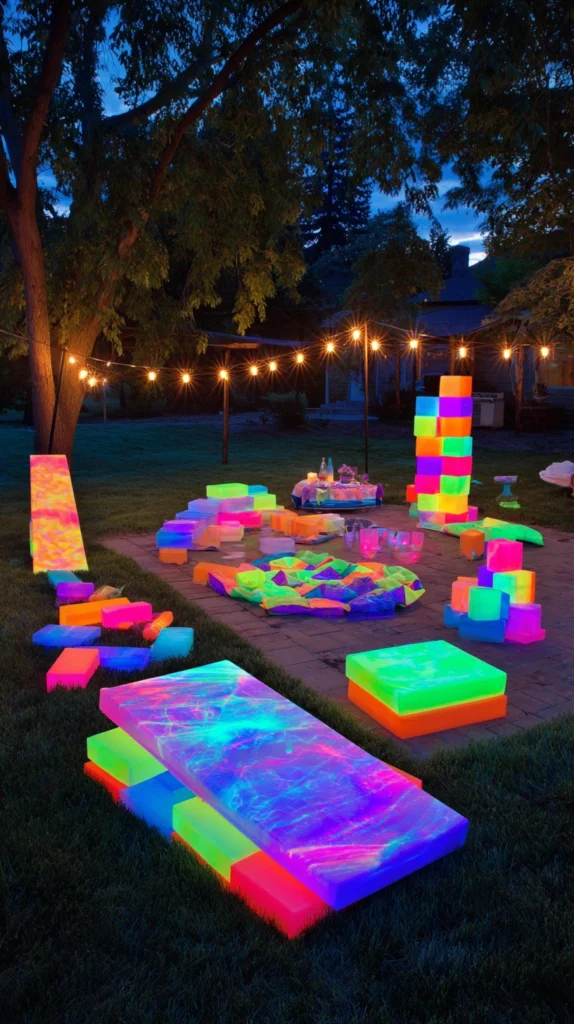
Converting any of the games on this list to a glow-in-the-dark format — using UV-reactive or phosphorescent paint on the game pieces, UV LED lighting strung around the playing area, and glow-in-the-dark rope or tape to mark boundaries and targets — creates a backyard game experience of extraordinary novelty and genuine fun that extends outdoor entertaining well into the evening hours.
Glow-in-the-dark Jenga with UV-reactive painted blocks, a glowing cornhole setup with illuminated boards and bags, a luminous bocce set with glow-in-the-dark balls — any game transformed into its glow version creates a completely different and genuinely magical playing experience after dark that generates the kind of shared outdoor enjoyment and genuine, uncomplicated fun that is the entire point of a backyard game in the first place.
Pro Tip: Use UV LED strip lights rather than UV fluorescent tubes for a glow-in-the-dark backyard game setup — UV LEDs provide consistent, weather-resistant illumination at low power consumption that can be run from a portable battery pack without requiring a mains electrical connection in the playing area. UV fluorescent tubes are fragile, power-hungry, and require mains connection — practical disadvantages that make them unsuitable for outdoor game use. UV LED strips are robust, efficient, and completely safe for outdoor use in all weather conditions.
Build the Games and They Will Come Outside
The backyard games you build yourself are the ones that get used most consistently, talked about most fondly, and remembered most clearly. They carry the investment of the maker — the Saturday afternoon of measuring and cutting, the satisfaction of the first game played on something made with your own hands — and that investment is felt by every person who plays them.
Build one game this weekend. Play it with the people you love. Then build another one. The backyard that has games in it is the backyard that has people in it — and the people are always the point.