15 Dining Room Storage Ideas That Look Like Decor
Dining rooms present a unique storage challenge—they need to house dishes, linens, glassware, and serving pieces while maintaining the elegant, uncluttered atmosphere expected in spaces designed for gathering and entertaining.
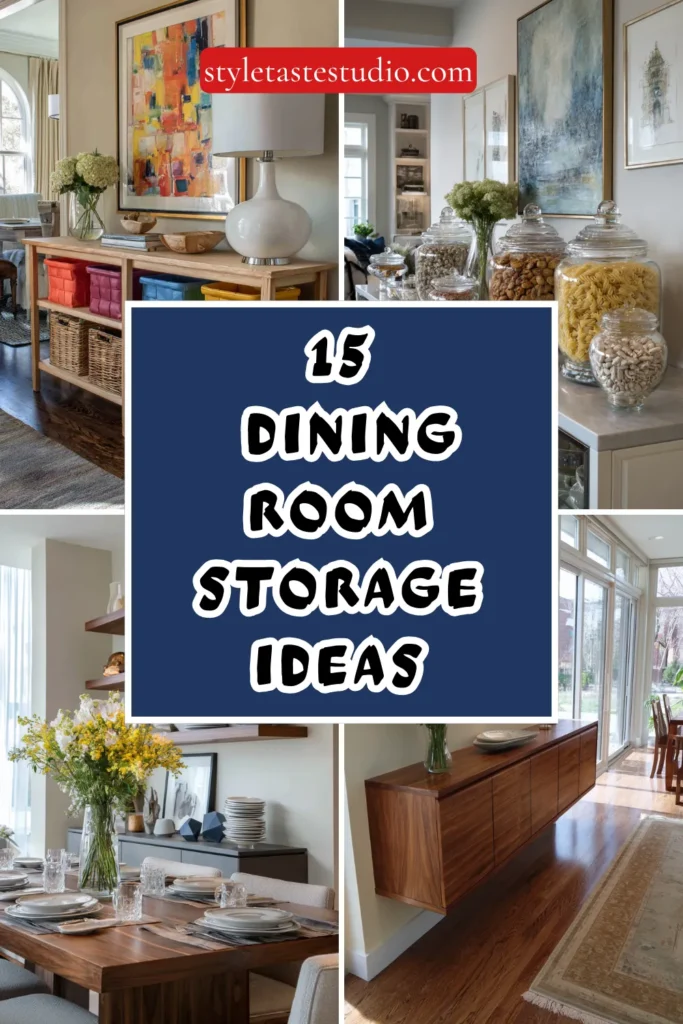
The most successful dining room storage solutions blur the line between function and beauty, serving dual purposes as both practical organization and decorative focal points.
These fifteen ideas prove that storage doesn’t need to be hidden away in utilitarian cabinets but can instead enhance your dining room’s aesthetic while keeping everything you need beautifully organized and accessible.
1. Antique Hutch Display
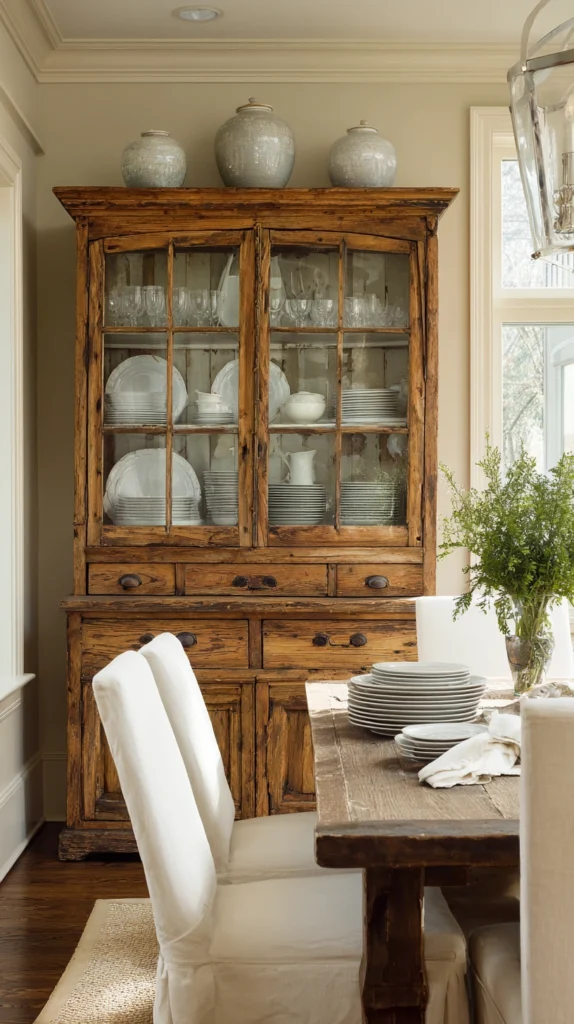
A vintage hutch or china cabinet becomes a stunning focal point while storing your entire dining collection. Display your most beautiful dishes, glassware, and serving pieces behind glass doors in the upper section while concealing linens, extra flatware, and less attractive items in lower drawers and cabinets.
The hutch’s architectural presence adds character and weight to the room while its glass-front display transforms functional storage into a curated collection that guests admire.
2. Open Shelving Gallery Wall
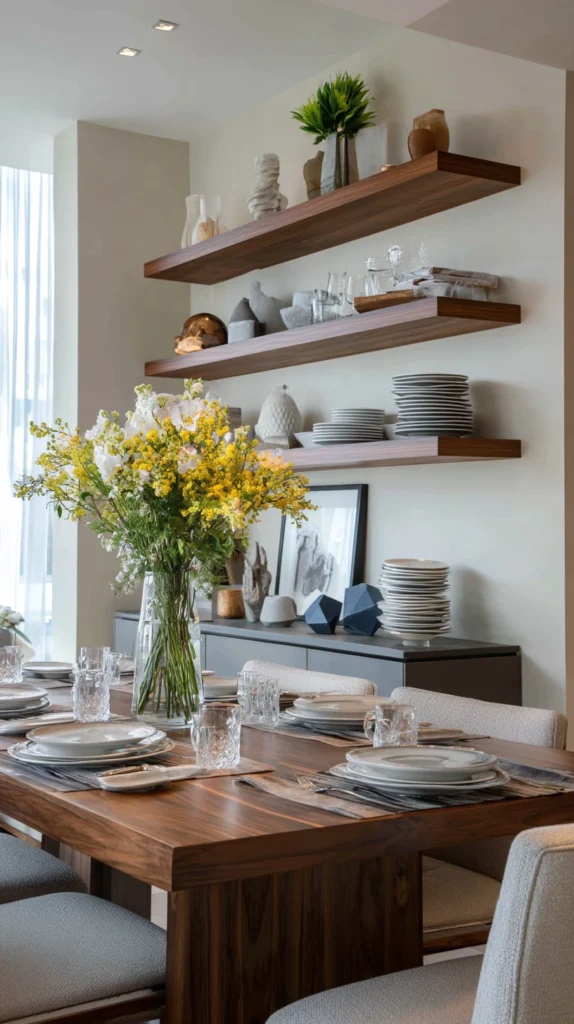
Install floating shelves in varying lengths arranged asymmetrically to create a modern gallery wall that stores dishes while functioning as sculptural art. Paint shelves the same color as walls for a built-in appearance, then display white dishes, beautiful glassware, and decorative objects with intentional spacing that prevents clutter.
This approach works particularly well in contemporary or transitional dining rooms where traditional hutches might feel too formal or heavy.
3. Credenza Sideboard Elegance
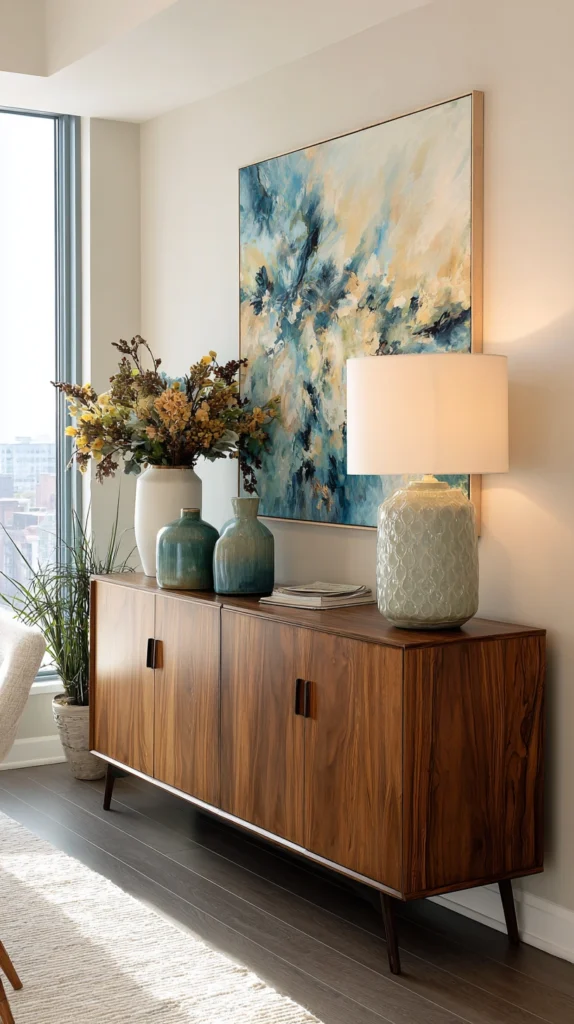
A low, long credenza or sideboard along one wall provides substantial storage without overwhelming the space visually. These pieces typically offer closed cabinet storage for less attractive items while their surfaces become display areas for lamps, artwork, plants, and decorative objects.
Choose credenzas with beautiful wood grain, interesting hardware, or mid-century modern lines that make them furniture worth showcasing rather than just functional storage boxes.
4. Bar Cart Beverage Station
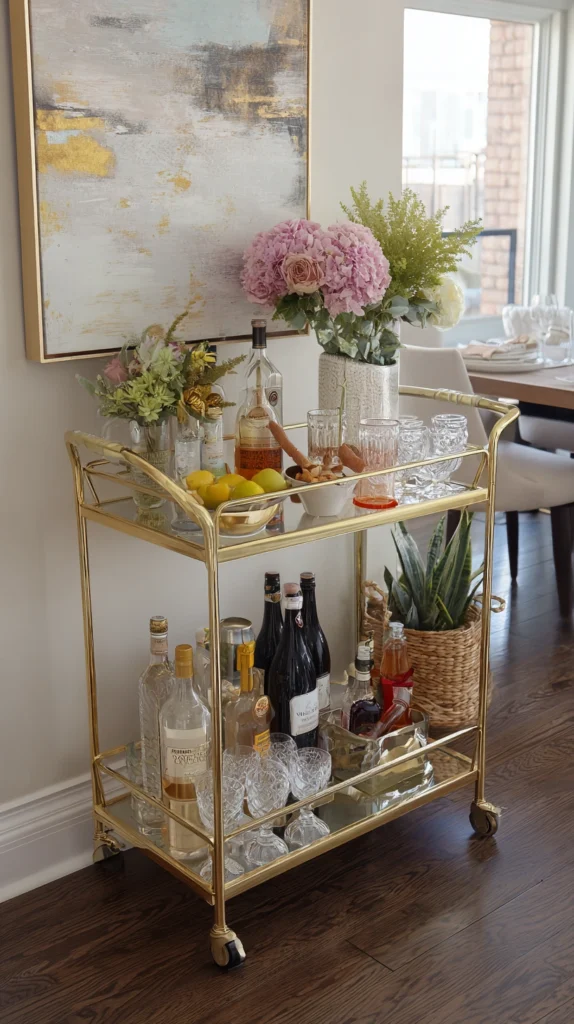
Transform a stylish bar cart into mobile storage for glassware, spirits, mixers, and bar accessories that doubles as an elegant decorative element.
Layer bottles at varying heights, hang stemware from built-in racks, and style the cart with fresh flowers, cocktail books, or small plants. The bar cart’s mobility allows you to roll it wherever needed—beside the dining table during dinner parties or tucked in a corner during everyday use.
5. Apothecary Jar Collections
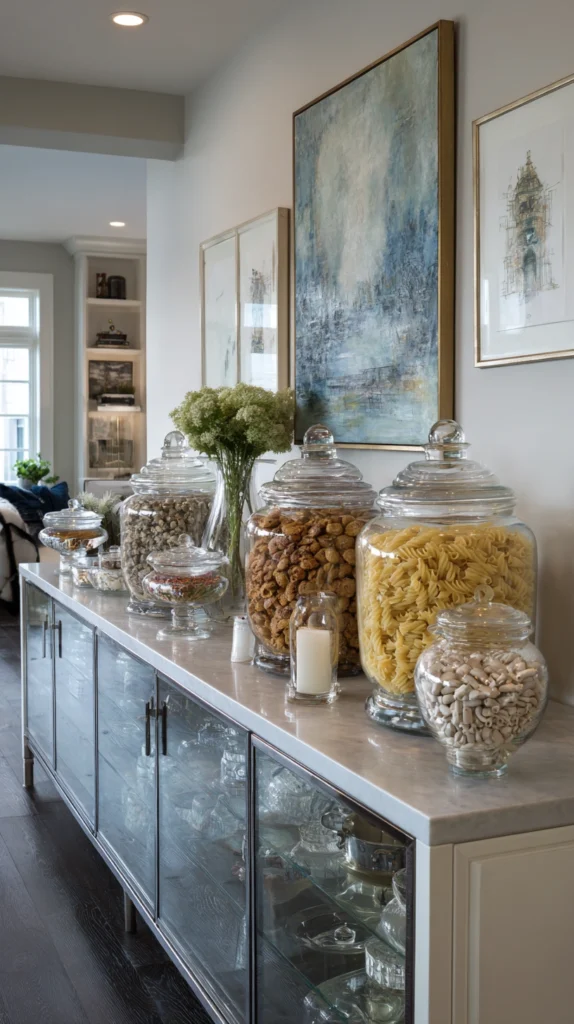
Display dry goods, colorful candies, or seasonal decorations in glass apothecary jars arranged on shelves, sideboards, or a console table. The transparent glass allows contents to become part of the decor—dried pasta in interesting shapes, colorful beans, or seasonal items like pinecones and ornaments create visual interest while remaining accessible.
Group jars in varying heights and sizes for dynamic visual rhythm that feels curated rather than utilitarian.
6. Vintage Ladder Shelf Display
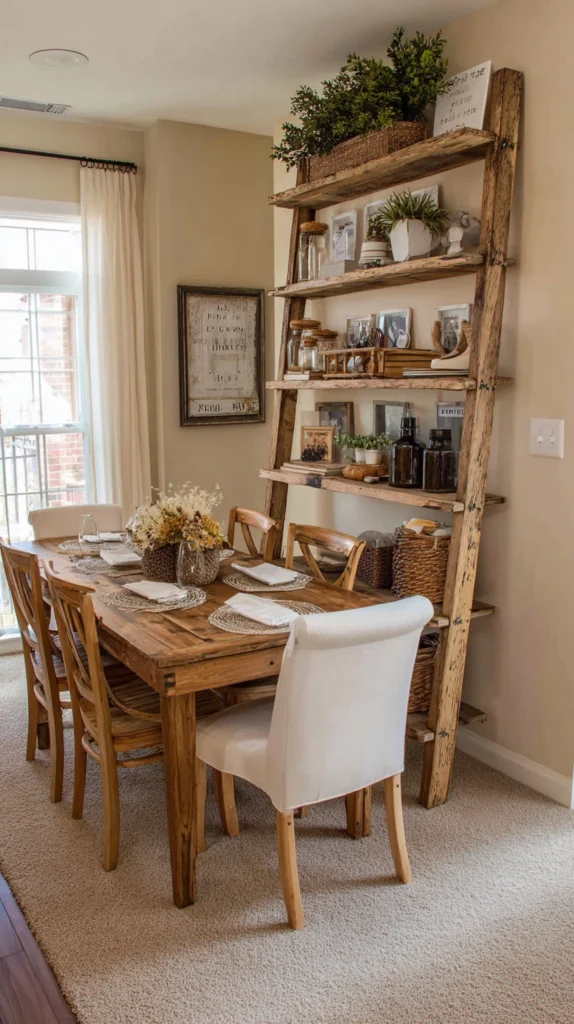
Lean a vintage wooden ladder against the wall and use its rungs to display folded linens, drape table runners, or hang decorative items. This unexpected storage solution adds rustic charm and vertical interest while keeping textiles organized and easily accessible.
The ladder’s weathered patina and organic form bring texture and character to the room while serving a genuinely functional purpose that justifies its prominent placement.
7. Window Seat with Hidden Storage
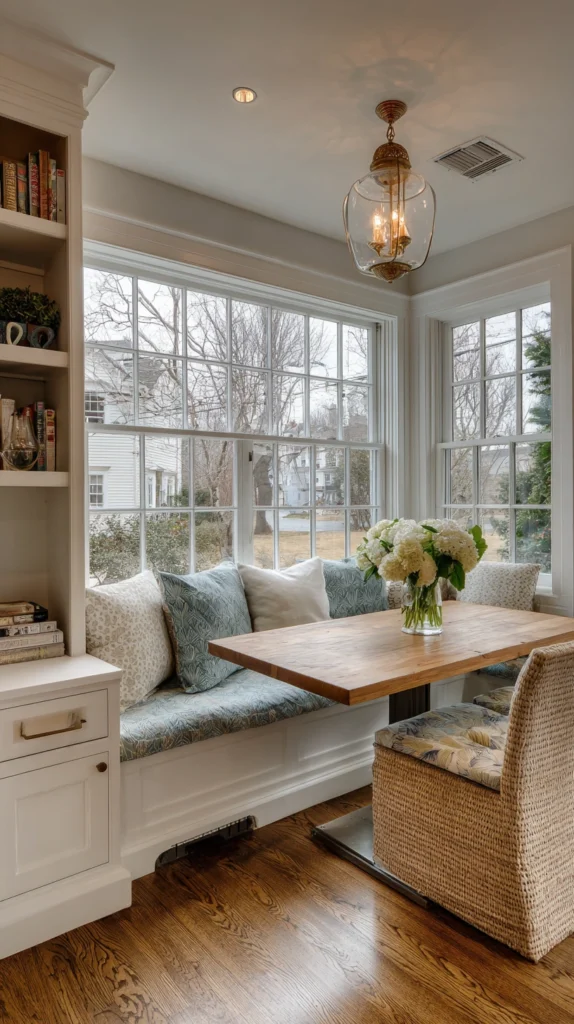
Build or install a window seat with lift-up cushions that conceal storage compartments underneath for table linens, seasonal decor, or serving pieces used occasionally. The seat itself provides additional dining seating during large gatherings while the storage remains invisible beneath beautiful cushions and throw pillows.
This dual-purpose solution maximizes space efficiency while adding architectural interest and comfort to the dining area.
8. Bookshelf Styled Beautifully
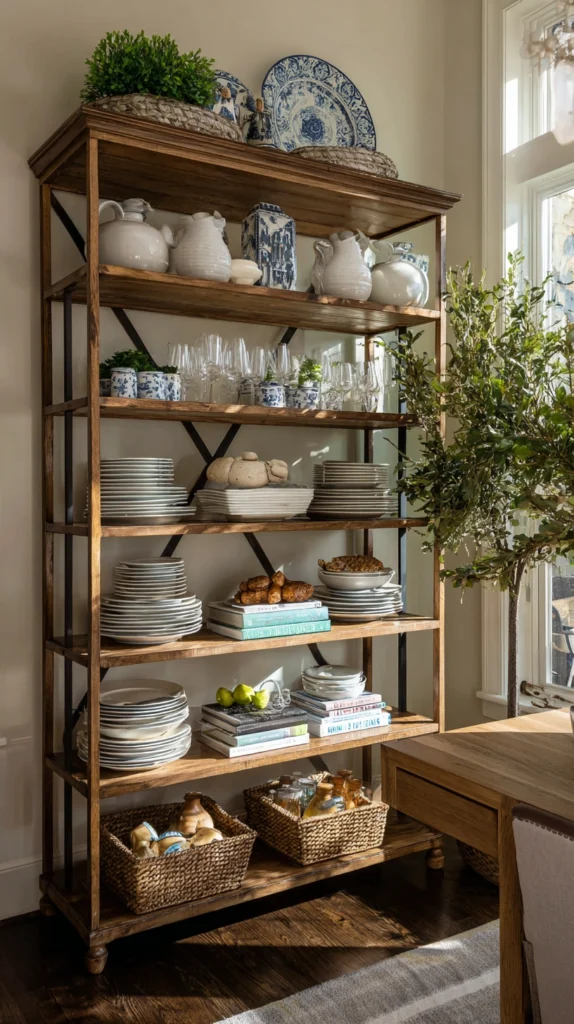
Repurpose a bookshelf as dining storage by styling it with dishes, glassware, cookbooks, and decorative objects arranged with the same care you’d give to styling a bookcase.
Alternate between functional items and purely decorative pieces—stack dinner plates beside a small sculpture, arrange glassware next to a potted plant, or display serving bowls alongside framed artwork. The varied content and thoughtful arrangement transform the bookshelf into a curated display rather than obvious storage.
9. Glass-Front Cabinet Curation
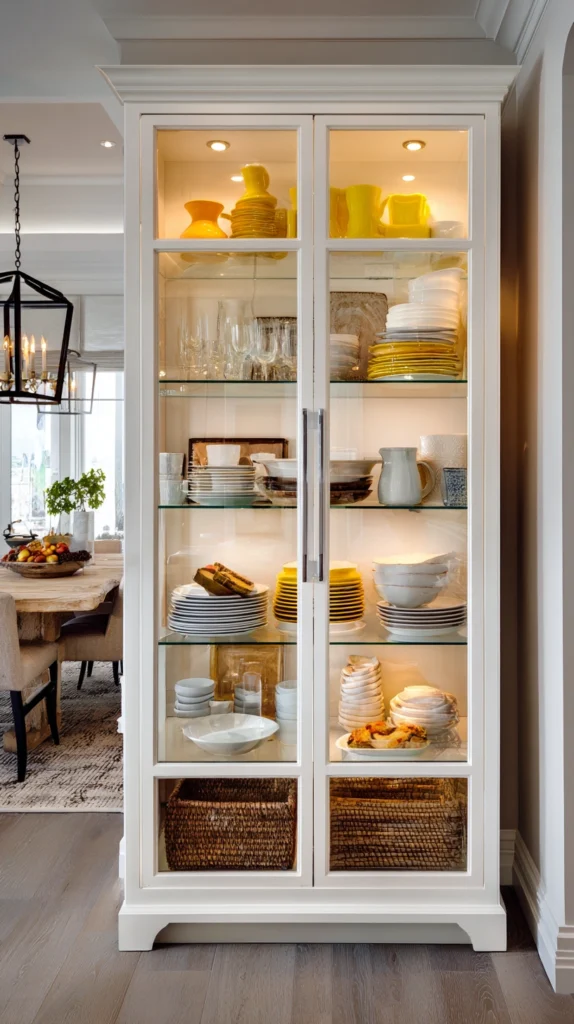
Install or place glass-front cabinets that force you to keep contents beautiful and organized since everything remains visible. This transparency naturally prevents clutter while allowing your dishware collection to function as decor.
Arrange items by color, stack plates by size, and introduce decorative elements like small plants or art pieces among the functional items to elevate the display beyond mere storage.
10. Floating Credenza Modern Statement
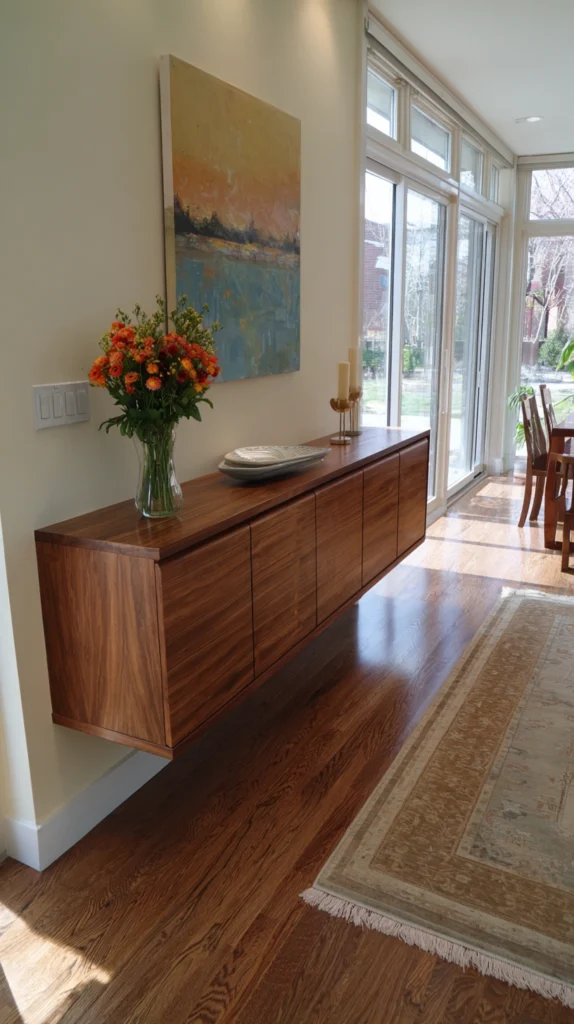
Mount a wall-hung credenza that floats above the floor, creating a light, contemporary look while providing enclosed storage that hides clutter. The floating installation makes the piece feel like architectural sculpture rather than furniture, and the space underneath keeps the room feeling open and uncluttered.
Choose credenzas with beautiful wood fronts, colored lacquer finishes, or interesting texture that makes them worthy of attention as decorative elements.
11. Decorative Trunk Stack
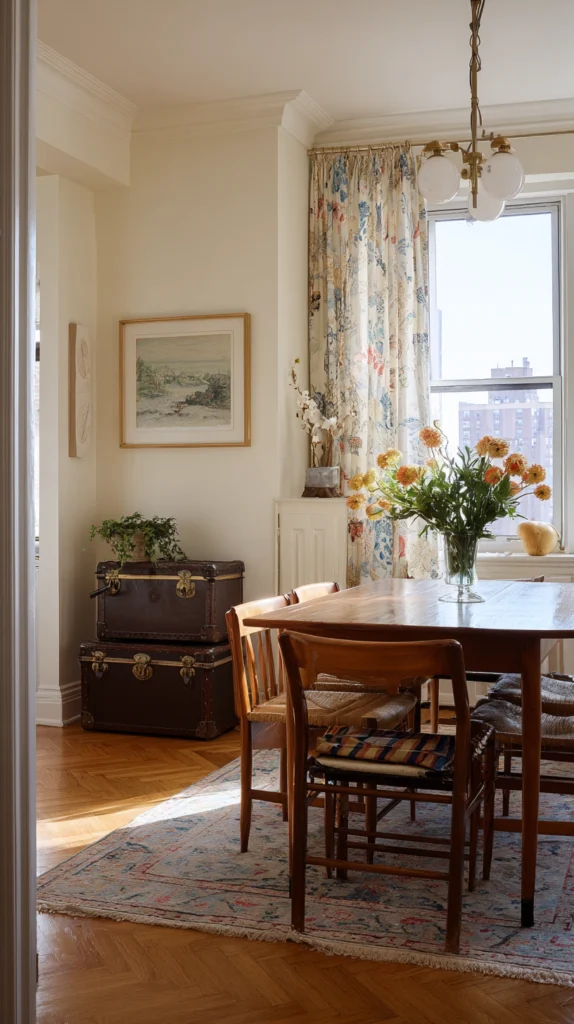
Stack vintage trunks, leather suitcases, or decorative boxes in a corner to create sculptural storage for linens, seasonal items, or serving pieces used infrequently. The varied sizes, materials, and patinas create visual interest while the stacked configuration emphasizes verticality and saves floor space.
This approach works beautifully in eclectic, traditional, or bohemian dining rooms where the trunks’ character and history add to the room’s narrative.
12. Open Baker’s Rack Display
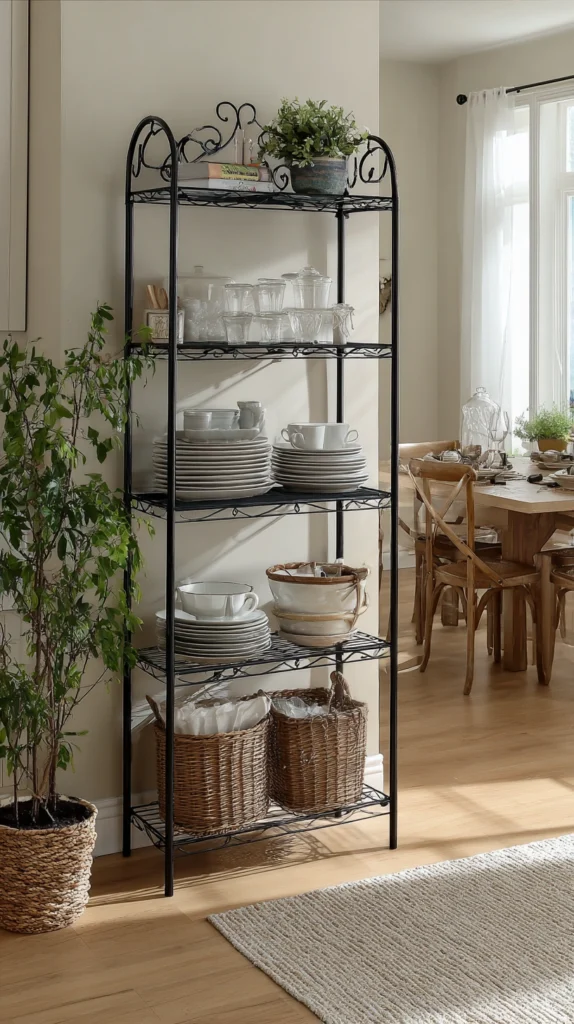
Position a baker’s rack—preferably in brass, iron, or wood—against a wall to store and display dishes, glassware, cookbooks, and plants. The open construction keeps the room feeling airy despite the storage capacity, and the vertical design draws eyes upward while occupying minimal floor space.
Style the rack thoughtfully with a mix of functional and decorative items, using baskets on lower shelves for less attractive necessities while displaying beautiful pieces at eye level.
13. Console Table with Baskets
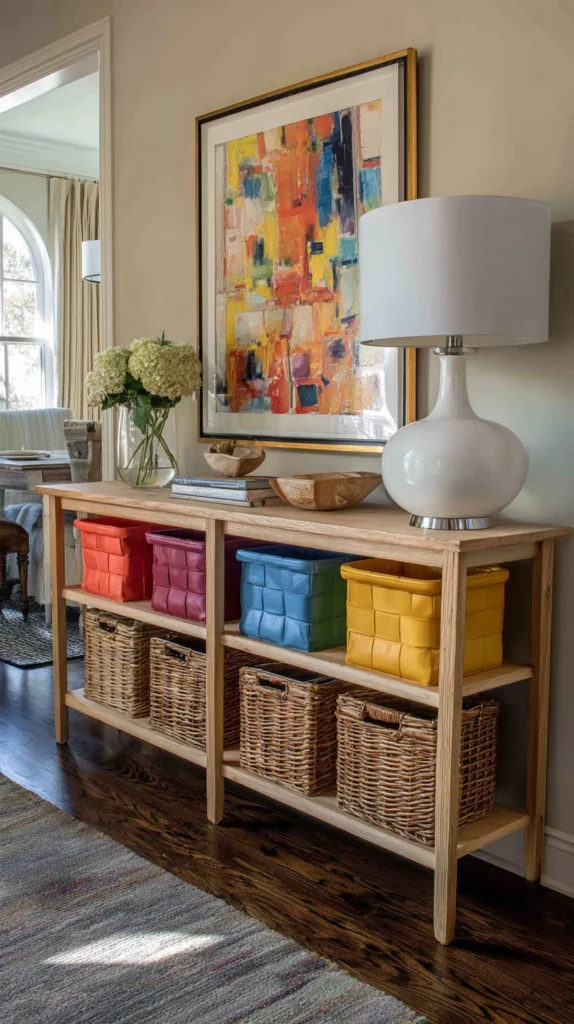
Place a narrow console table along a wall and use beautiful baskets or boxes underneath to conceal linens, napkins, and other dining essentials. The console’s surface becomes a display area for lamps, artwork, plants, or decorative objects while the baskets below provide hidden storage that maintains the room’s refined appearance.
Choose baskets in natural materials like seagrass, rattan, or woven cotton that add texture while coordinating with the room’s overall aesthetic.
14. Built-In Corner Cabinet
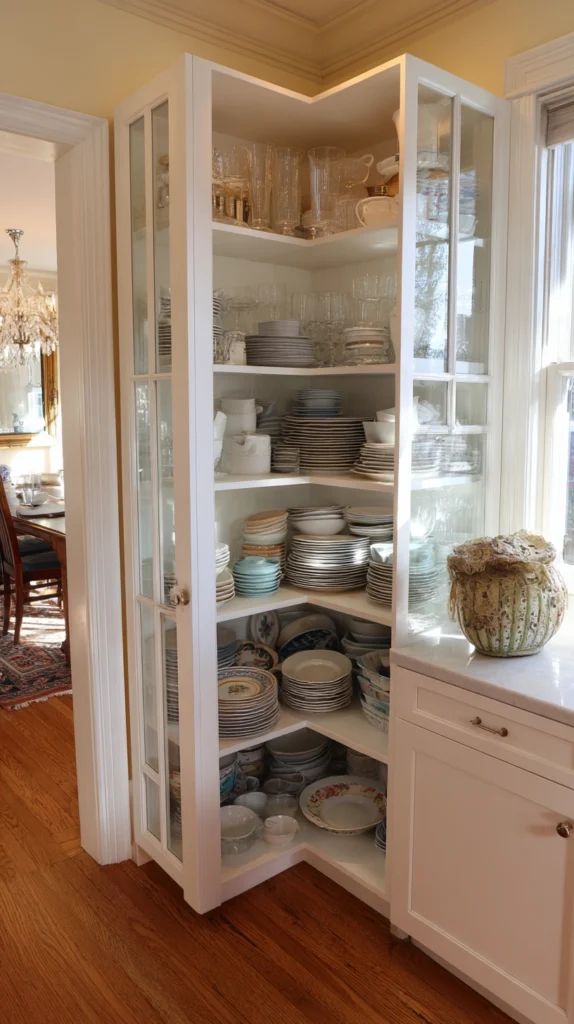
Utilize corner space with a custom or antique corner cabinet that maximizes awkward areas while adding architectural charm. Corner cabinets often feature glass fronts that display beautiful dishes while their triangular footprint takes up minimal floor space.
The vertical design and traditional styling make these pieces feel like intentional architectural elements rather than added furniture, particularly in traditional or farmhouse-style dining rooms.
15. Styled Serving Trays Display
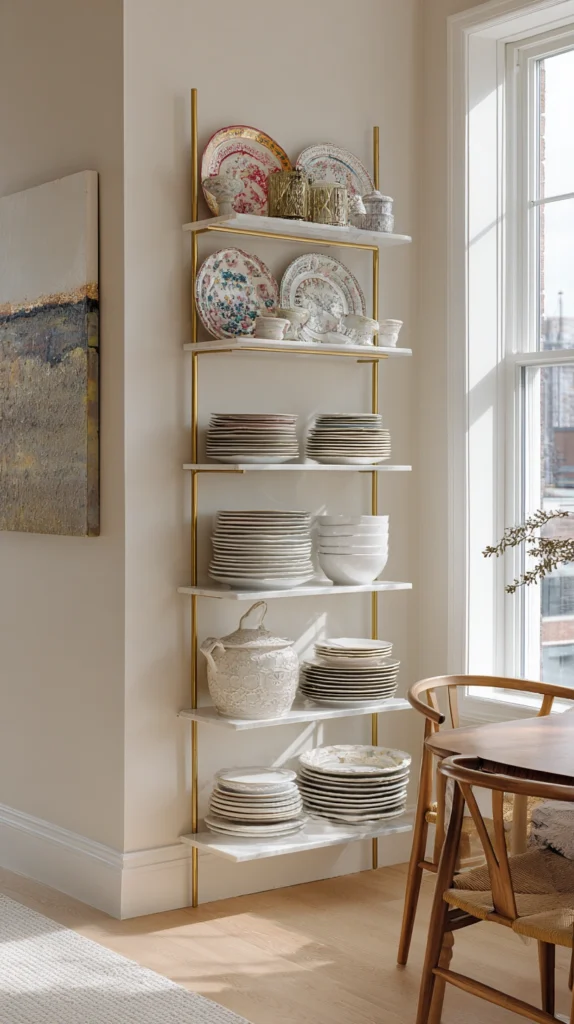
Arrange beautiful serving trays vertically on walls or lean them on plate rails and shelves to create functional art that stores items while decorating walls. Hang decorative platters, wooden bread boards, or vintage silver trays in gallery-style arrangements that add pattern and texture to walls. These pieces remain accessible for use while their display turns functional serving pieces into wall decor that adds visual interest to otherwise empty vertical surfaces.
Material and Finish Cohesion
Successful dining room storage that functions as decor requires attention to material and finish consistency. Choose storage pieces in wood tones, metals, or colors that complement existing furniture and finishes rather than introducing jarring contrasts. A brass bar cart works beautifully with brass chandeliers and cabinet hardware, while a weathered wood ladder complements a rustic farmhouse table, and painted pieces should coordinate with wall colors or other painted furniture in the space.
The Art of Display Editing
Storage that doubles as decor demands regular editing to maintain its decorative appeal rather than devolving into cluttered shelving. Apply the same principles you would to styling a bookshelf—vary heights, create visual triangles, leave negative space, and group items in odd numbers. Remove anything chipped, stained, or unattractive, and resist the temptation to fill every inch of visible storage even if technically more items would fit.
Lighting Storage as Decor
Proper lighting elevates functional storage into true decor by highlighting beautiful pieces and creating ambiance. Install picture lights above hutches or shelving, add small LED pucks inside glass-front cabinets, or position table lamps on credenzas and sideboards. This lighting draws attention to your carefully curated displays while providing practical illumination for selecting dishes or serving pieces during dinner parties.
Seasonal Rotation Strategy
Keep storage-as-decor feeling fresh by rotating displayed items seasonally. Switch white dishes for earth-toned pottery in fall, display colorful glassware in summer, or showcase special occasion pieces during holiday months.
This rotation prevents visual stagnation while allowing you to highlight different parts of your collection throughout the year, and storing off-season items in less visible locations keeps displayed storage from becoming overcrowded.
Balancing Function and Beauty
The key to successful decorative storage lies in balancing genuine functionality with aesthetic appeal. Ensure frequently used items remain accessible rather than buried behind decorative objects, and resist displaying items solely for appearance if they serve no purpose in your dining routine. The most successful solutions allow you to retrieve what you need quickly during meal service while still looking beautiful when not in use.
Color Coordination Impact
Organizing stored items by color creates instant visual harmony that makes storage look intentional and decorative. Group white dishes together, arrange glassware by color, and stack linens in tonal gradations.
This color coordination tricks the eye into perceiving organization and beauty even when substantial quantities of items are stored visibly, and it makes selecting coordinating pieces for table settings intuitive and efficient.
Mixing High and Low
Combine investment pieces with affordable finds to create storage displays that look expensive without breaking the budget. Pair an antique sideboard with inexpensive white dishes, style a budget bookshelf with a few high-end decorative objects, or use a designer bar cart to display affordable glassware.
This high-low mixing creates sophisticated looks while keeping costs reasonable and proves that beautiful decorative storage doesn’t require unlimited budgets.
Conclusion
Dining room storage that functions as decor represents the ideal intersection of beauty and practicality, eliminating the need to choose between functional organization and aesthetic appeal. These fifteen ideas demonstrate that with thoughtful selection, careful styling, and regular editing, your dining room storage can enhance rather than detract from the room’s beauty while keeping everything you need organized and accessible.
The most successful approach combines multiple storage types—perhaps a sideboard for concealed storage, open shelving for display, and a bar cart for beverage service—creating a layered system that accommodates various storage needs while maintaining visual interest through varied forms and functions.
Whether your style leans traditional with antique hutches and corner cabinets or contemporary with floating credenzas and minimalist shelving, the principle remains the same: treat storage as an opportunity to showcase beautiful objects rather than hide necessary items.
Remember that dining room storage serves your lifestyle, so adapt these ideas to reflect how you actually use your dining space. Frequent entertainers need accessible serving piece storage and ample glassware display, while families with young children might prioritize enclosed storage that protects delicate items.
By selecting storage solutions that genuinely work for your needs while looking beautiful in your space, you create a dining room that’s both highly functional and genuinely delightful—a space where storage enhances rather than compromises the room’s elegance and charm.