15 Deck Steps Ideas for a Beautiful, Safe Outdoor Staircase
Deck steps are one of the most functionally critical and most frequently underdesigned elements of any outdoor living space. They are the transition point between the elevated deck and the garden below — the element that determines how comfortably, how safely, and how beautifully the deck connects to the surrounding landscape. Poorly designed deck steps look like an afterthought.
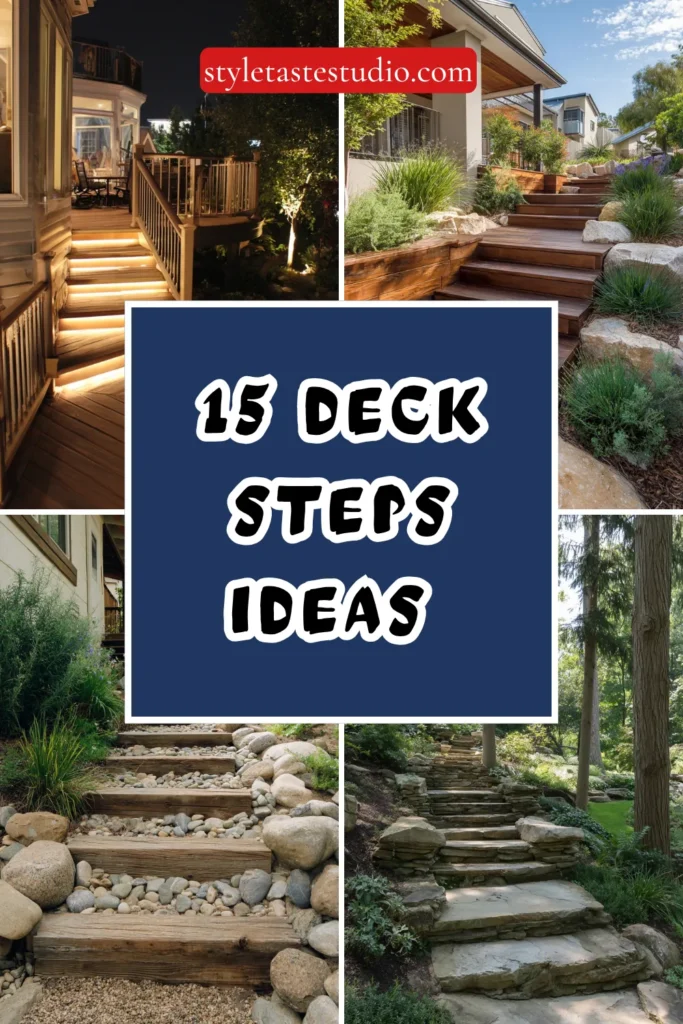
Well-designed deck steps look like a deliberate, considered extension of the deck itself — the transition between levels handled with the same material quality and the same design intention as every other element of the outdoor space.
Here are 15 deck steps ideas that create a beautiful and genuinely safe outdoor staircase.
1. Wide Cascading Timber Steps
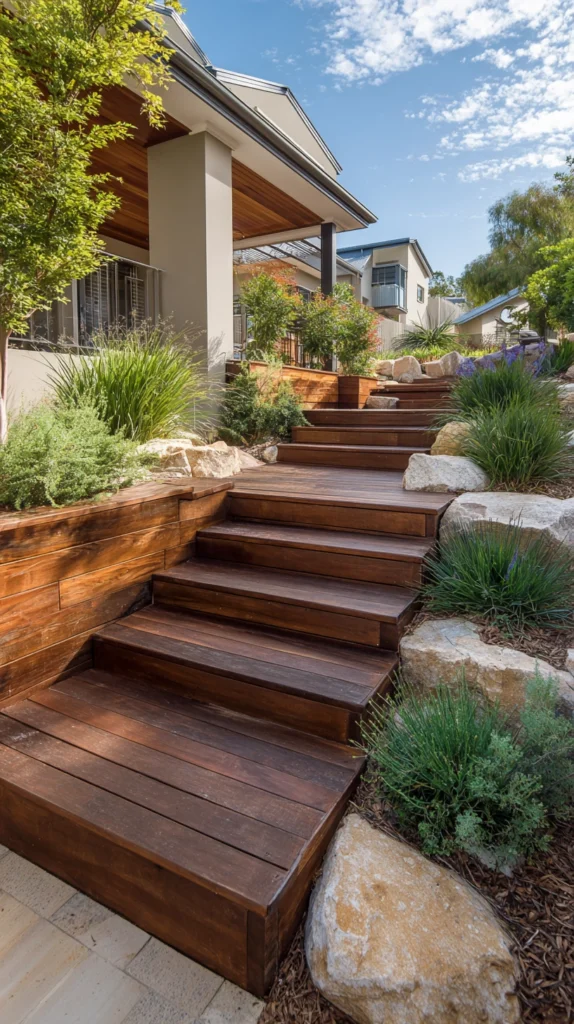
Wide cascading timber steps — a staircase of generous width considerably wider than the minimum functional requirement — create the most immediately beautiful and most socially generous deck step design available.
Wide steps invite multiple people to descend simultaneously, create a seating surface for outdoor gatherings, and communicate a quality of spatial generosity that narrow steps entirely lack. A cascade of wide timber steps descending from a deck to a garden creates a transition of genuine architectural quality.
Pro Tip: Build wide cascading deck steps to a minimum width of 1.8 metres for a staircase that reads as genuinely generous and genuinely architectural rather than simply wider than standard.
Steps of 1.2 to 1.5 metres feel comfortable for two people to descend simultaneously, but lack the true cascading quality of a genuinely wide staircase. Steps of 1.8 metres or more create the broad, welcoming quality that makes wide cascading timber steps such a specifically beautiful deck transition element.
2. Floating Timber Treads on Steel Stringers
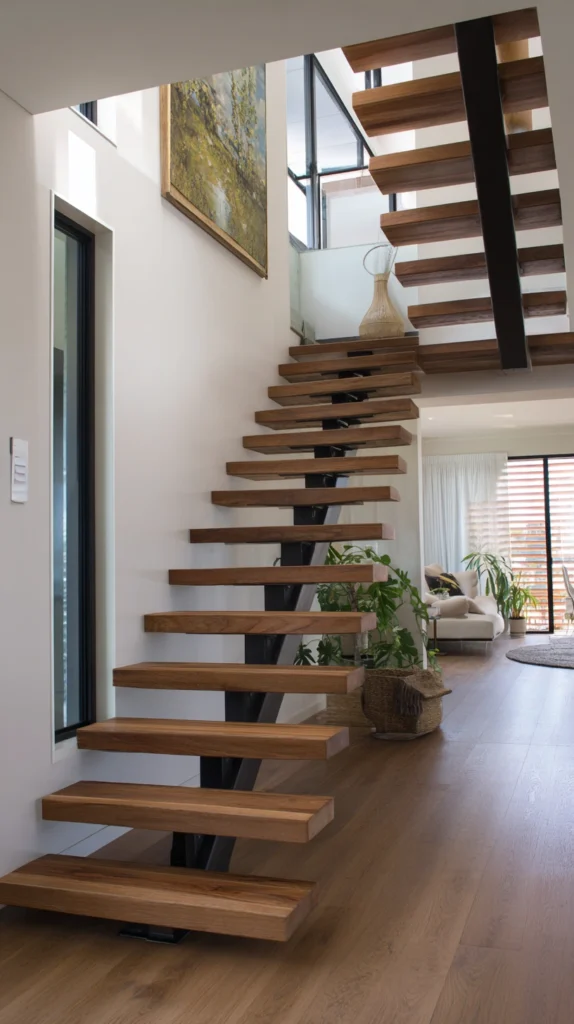
Floating timber treads — individual timber planks of generous thickness cantilevered from minimal steel stringers, creating the impression that the steps hover above the ground — create a deck staircase of maximum contemporary elegance and genuine architectural sophistication.
The clean, precise lines of the steel stringer alongside the warm, natural quality of the timber tread create a staircase of genuine material contrast and considerable design confidence that suits contemporary and minimalist garden designs.
Pro Tip: Use timber treads of at least 50mm thickness for floating tread deck steps — the generous tread depth creates the solid, substantial visual quality that makes floating treads so specifically beautiful.
Thin treads of 25 to 30mm on a floating tread staircase create a slightly insubstantial visual effect — the steps appearing too light and too slight for the structural confidence that makes the floating tread aesthetic so genuinely beautiful and credible as a design statement.
3. Natural Stone Steps
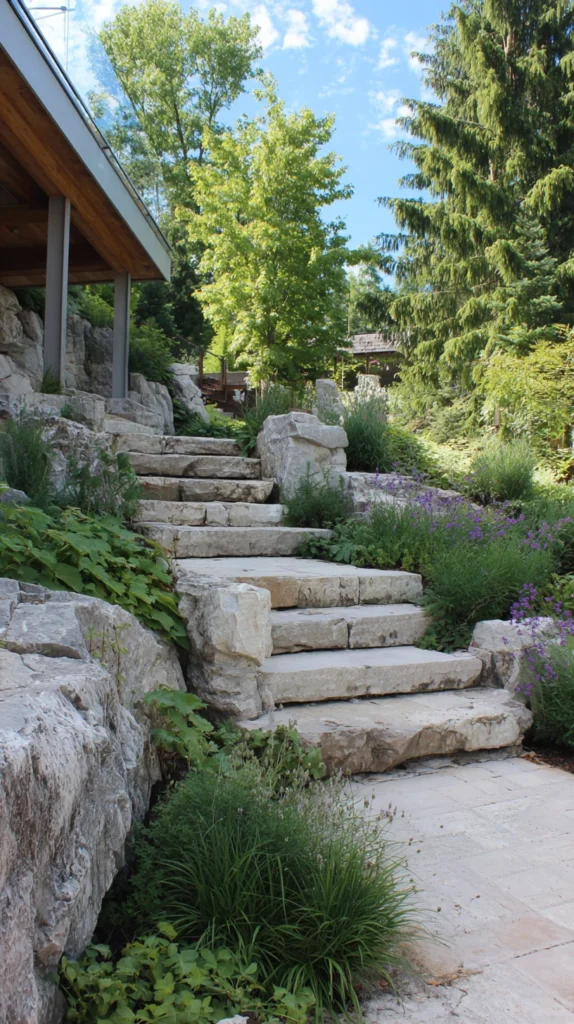
Natural stone steps — large format pieces of limestone, sandstone, slate, or granite used as step treads — create a deck staircase of extraordinary natural beauty and genuine geological permanence.
Natural stone steps have a quality of ancient immovable belonging in the garden landscape that no manufactured material can replicate — the stone steps appearing to have always been in their position, connecting the deck to the garden with the unhurried authority of natural geological material.
Pro Tip: Choose stone step treads of at least 100mm thickness for a natural stone staircase of genuine visual substance and structural credibility.
Thin stone veneers applied to a concrete step structure create a stone effect without the genuine material presence — the thin edge of the veneer reveals the manufactured substrate beneath and undermines the quality of natural material authenticity that makes genuine thick stone steps so specifically and completely beautiful.
4. Brick and Timber Combination Steps
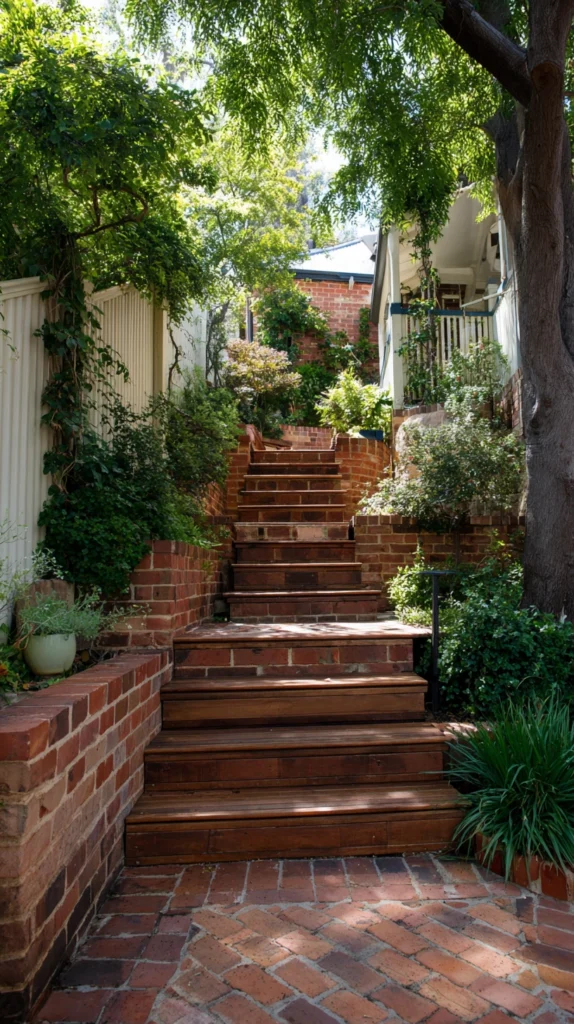
Deck steps combining brick risers with timber treads — the warm red of traditional clay brick alongside the warm natural grain of timber decking — create a staircase of considerable material richness and genuine traditional domestic beauty.
The combination of two warm natural materials creates a staircase that feels genuinely connected to both the deck above and the garden below — the brick referencing the ground and the garden while the timber references the deck above.
Pro Tip: Match the brick used in the deck steps to the brick used in the house exterior for a staircase of complete material coherence that connects the deck and the garden to the primary architecture of the home.
Matching exterior brick creates an outdoor staircase that appears to grow from the house rather than having been added to it — a quality of considered material continuity that makes the complete outdoor space feel genuinely designed as a unified architectural composition.
5. Concrete Steps with Timber Nosing
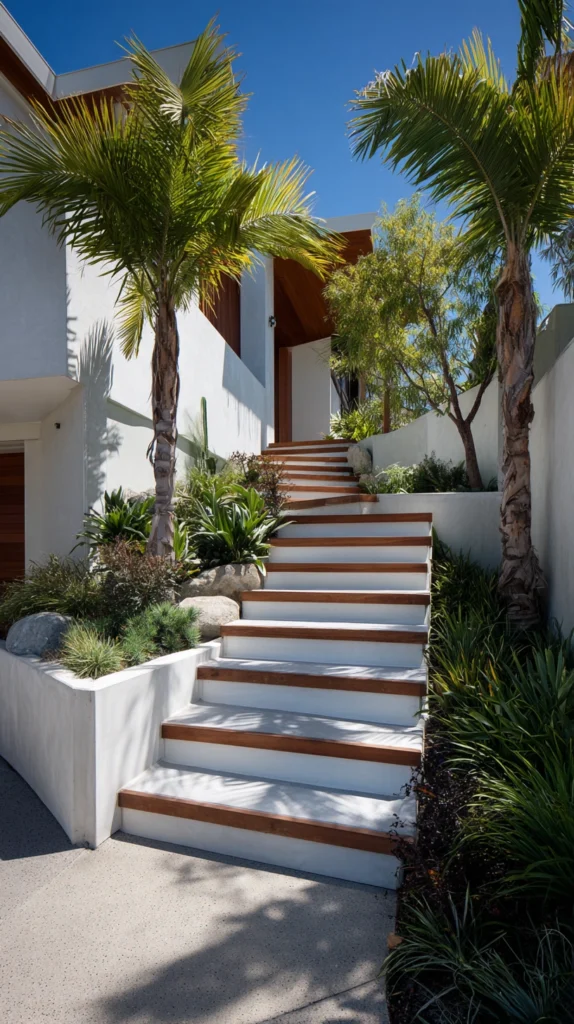
Concrete steps with a timber nosing applied to the front edge of each tread create a staircase of practical durability and genuine material warmth. The concrete provides the structural foundation and long-term resilience.
The timber nosing provides the natural material warmth, the visual connection to the deck above, and the tactile quality that bare concrete lacks. The combination creates a staircase of complete practical performance and genuine aesthetic quality.
Pro Tip: Use the same timber species for the deck step nosing as for the primary deck boards above for a complete unified material language between the deck and the staircase. A deck step nosing in a different timber species from the deck boards above creates a material discontinuity that reveals the steps as a separately considered element rather than a continuous unified extension of the deck surface.
6. Corten Steel Step Structure
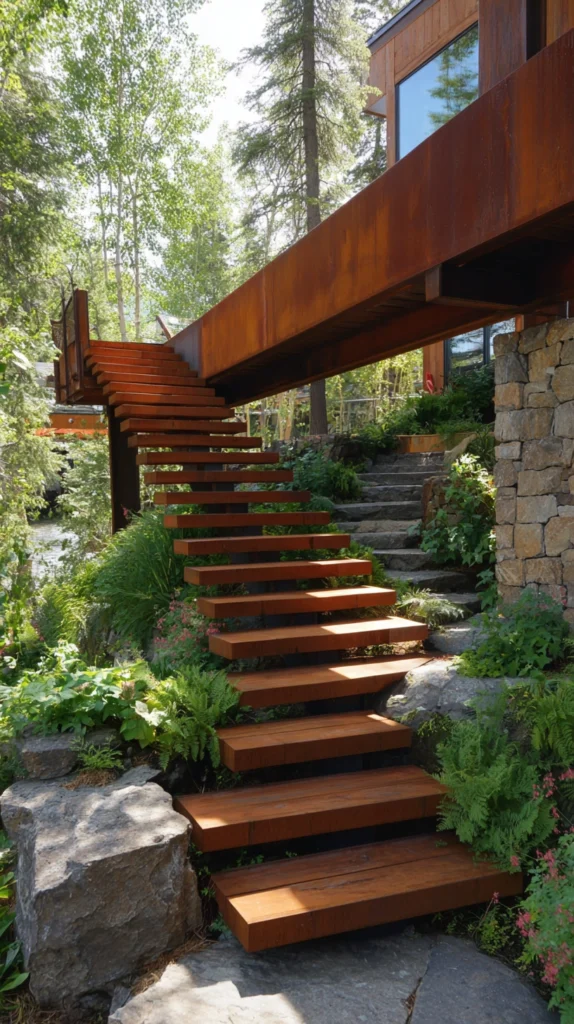
A deck staircase constructed from Corten weathering steel — the distinctive warm orange-brown rust-patinated structural steel that weathers to a stable self-protecting oxide surface — creates a staircase of considerable contemporary design confidence and extraordinary material presence.
The warm rust tones of the weathered steel create a color relationship with warm timber decking and natural garden planting of considerable organic material coherence.
Pro Tip: Combine Corten steel stringers with timber or stone treads rather than using Corten steel for the tread surface. Corten steel tread surfaces develop a slightly uneven rust surface that can create slip hazards in wet conditions and leaves rust staining on shoes and clothing, making a Corten tread surface impractical for regular daily use. Corten stringers alongside timber or stone treads provide the material drama without any of the practical challenges.
7. Wraparound Corner Steps
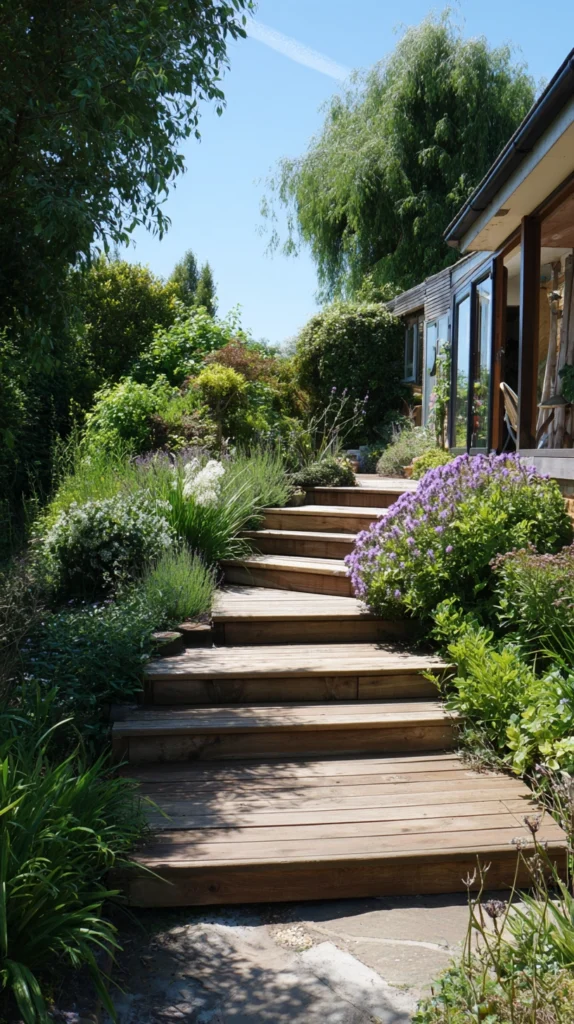
Wraparound corner steps — a staircase that descends from a corner of the deck, wrapping around two sides of the corner to create L-shaped steps of generous width and considerable spatial presence — create the most spatially generous and most visually interesting deck step format available.
The wraparound corner step creates a transition of complete considered spatial quality — the steps descending diagonally from the corner and creating a landing that allows entry to the garden from two directions simultaneously.
Pro Tip: Build the wraparound corner steps with consistent riser height and tread depth throughout the full L-shaped staircase — maintaining the same ergonomic proportions through the corner as on the straight sections.
A wraparound corner step with inconsistent riser heights through the corner section creates a trip hazard at precisely the point where the changing direction of the staircase already requires the most careful attention from the person descending.
8. Steps with Integrated Planters
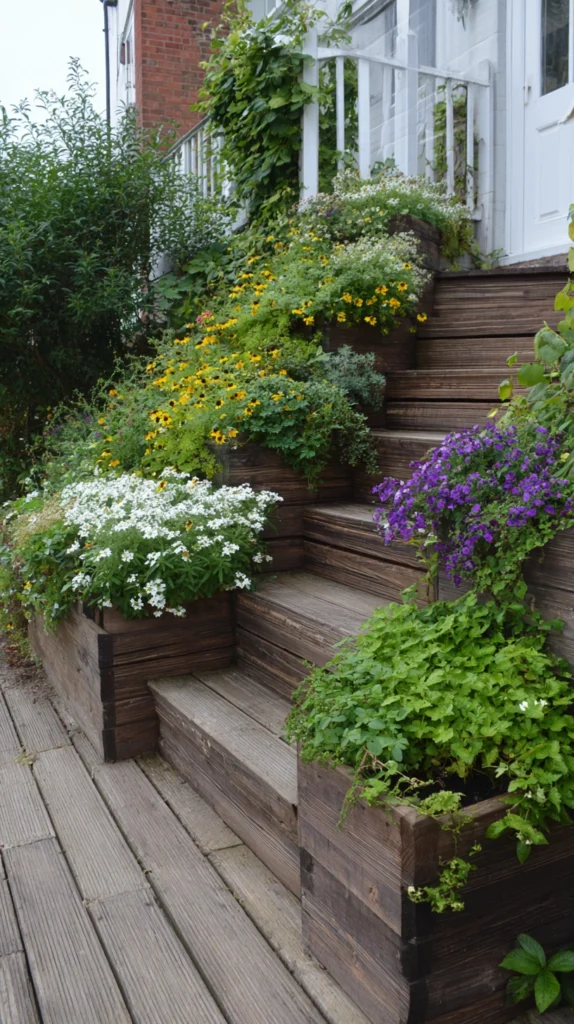
Deck steps with integrated planters — planter boxes built into the step structure at each landing or at the sides of the staircase — create a deck staircase that blurs the boundary between the built and the living elements of the garden transition.
Planted with cascading flowers, aromatic herbs, or architectural foliage plants, the integrated planters transform the staircase from a purely functional transition structure into a genuine garden feature of living seasonal beauty.
Pro Tip: Plant the integrated step planters with a combination of structural evergreen plants and seasonal flowering plants — the evergreens maintain the visual quality of the planted staircase throughout the year, while the seasonal flowers create the changing, abundant color that makes the steps genuinely beautiful at the peak of each growing season.
A staircase planted only with seasonal flowers looks beautiful in summer and bare in winter. A staircase planted with evergreen structure and seasonal accent looks genuinely beautiful in every month of the year.
9. Steps with Integrated Lighting
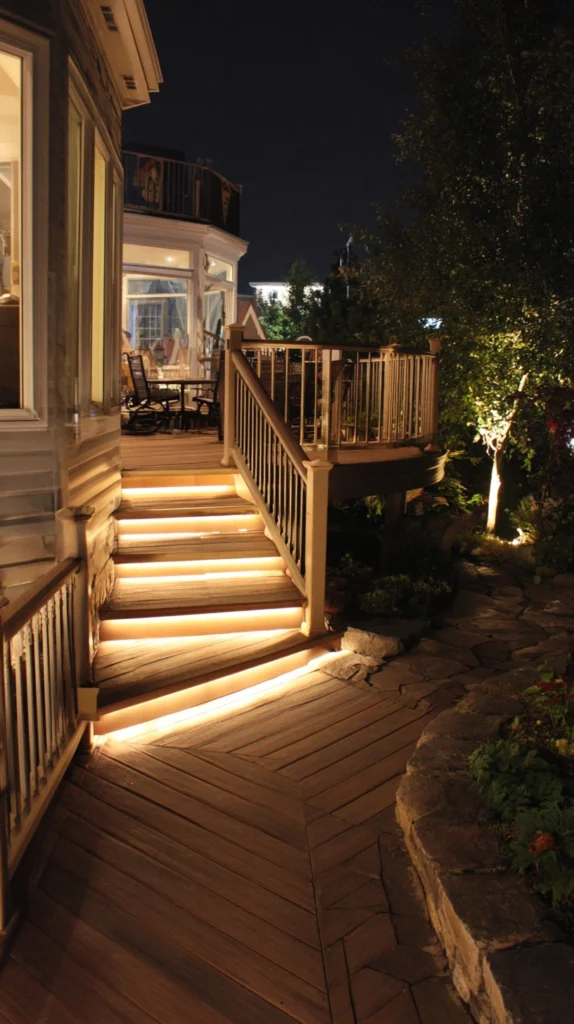
Deck steps with integrated lighting — warm white LED strip lights installed within the riser of each step, illuminating the tread from below — create a staircase that is safe and genuinely beautiful in the evening.
Step lighting transforms a deck staircase from a structure that becomes invisible and potentially hazardous after dark into a defined illuminated pathway of genuine evening beauty — the warm glow of the step lights creating a quality of welcoming, considered outdoor illumination.
Pro Tip: Choose warm white LED step lights — 2700K color temperature or lower — rather than cool white alternatives. Cool white step lights create a slightly clinical quality of outdoor illumination that works against the warm, inviting atmosphere of an outdoor deck and garden. Warm white step lights create the soft, honeyed quality of outdoor illumination that makes a lit deck staircase genuinely beautiful rather than simply functionally visible in the evening hours.
10. Curved Deck Steps
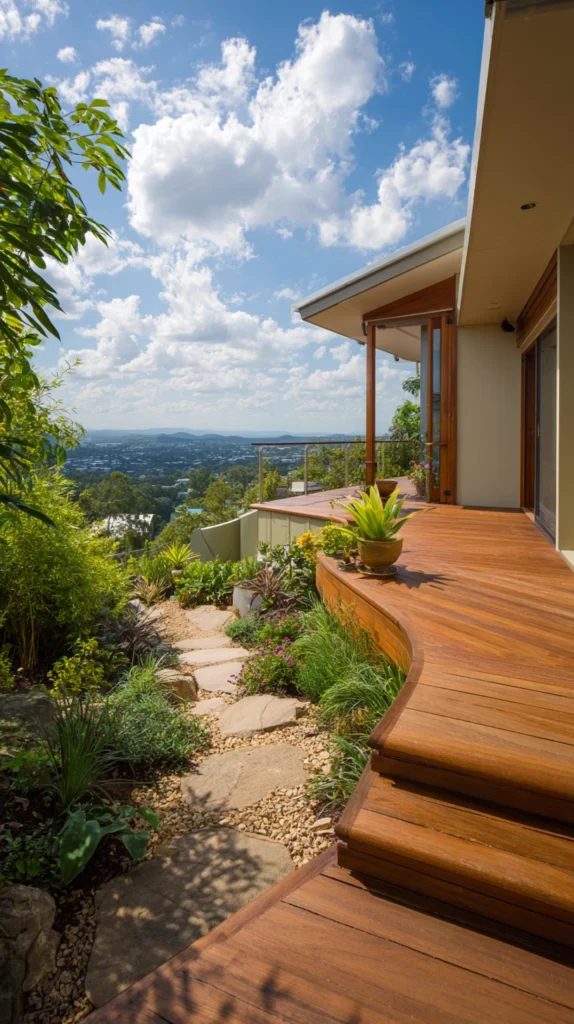
Curved deck steps — a staircase with a curved rather than straight leading edge, the tread nosing following a gentle arc — create a deck staircase of considerable spatial grace and genuine architectural originality.
The curved leading edge of each step creates a softer more organic quality of transition between the deck and the garden — the curve referencing the natural landscape rather than the rectilinear geometry of the built structure.
Pro Tip: Design the curved deck staircase with a single consistent curve radius throughout all step levels. A consistent curve radius creates a staircase of complete visual coherence — the curve reading as a single deliberate architectural gesture that flows continuously from the deck surface to the garden landing. Varying curve radii between steps creates a visual inconsistency that undermines the organic grace that makes curved steps so specifically and genuinely beautiful.
11. Reclaimed Timber Steps
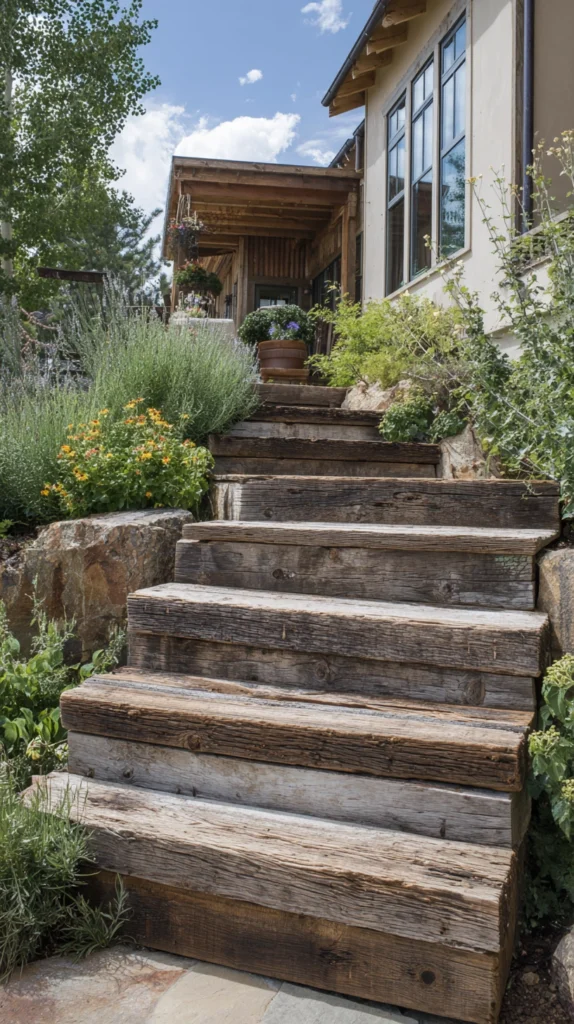
Deck steps constructed from reclaimed timber — old railway sleepers, reclaimed hardwood beams, or salvaged dock timber — create a staircase of extraordinary material character and genuine historical warmth.
The nail holes, the worn surfaces, the grain revealed by years of previous use — each quality of reclaimed timber creates a step material of authentic accumulated character that new timber construction cannot replicate regardless of the quality of the new material or the skill of the installation.
Pro Tip: Check all reclaimed timber step material for protruding nails and metal fixings before cutting and installing. Hidden metal fixings in reclaimed timber damage saw blades, create dangerous projectiles during cutting, and leave protruding metal hazards in the finished step surface. A thorough metal detector pass over all reclaimed timber before any cutting begins is a simple safety step that prevents entirely avoidable accidents throughout the construction process.
12. Steps with Side Walls
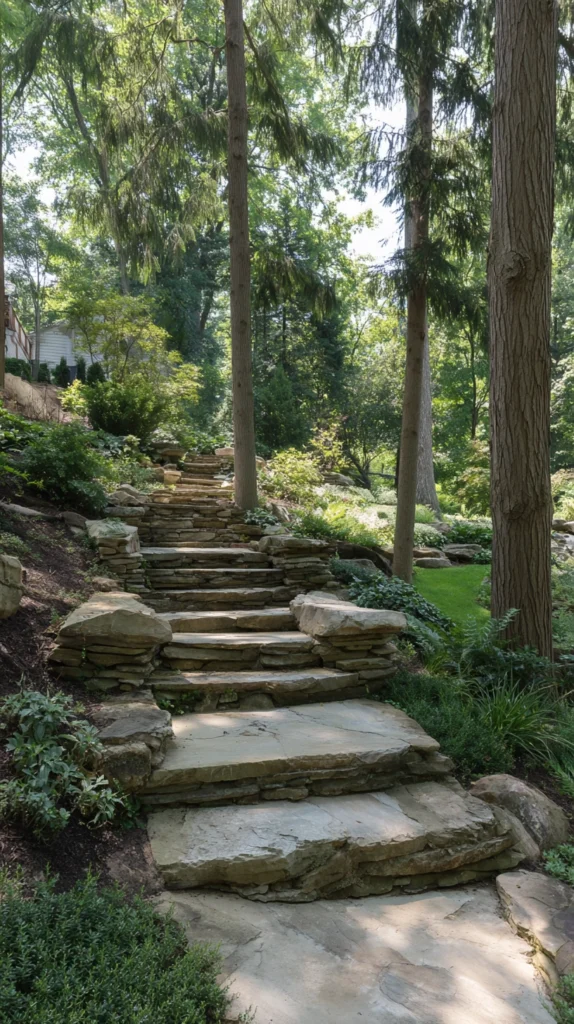
Deck steps flanked by low side walls — timber, brick, stone, or rendered concrete walls of 400 to 600mm height running alongside the full length of the staircase — create a deck staircase of considerable architectural quality and genuine spatial enclosure. The side walls transform the staircase from a simple descent structure into a defined spatial sequence — the walls creating the sense of passing through a designed transition rather than simply walking down a set of steps.
Pro Tip: Cap the side walls of a deck staircase with a flat smooth coping surface — a stone cap, a smooth timber rail, or a rendered concrete top — that can serve as a casual handrail surface for people descending who prefer a resting point for their hand.
A flat coping surface on the side walls creates a genuinely useful handrail function within the architectural language of a wall rather than the functional language of a conventional handrail post and rail system.
13. Steps with Cable Handrail
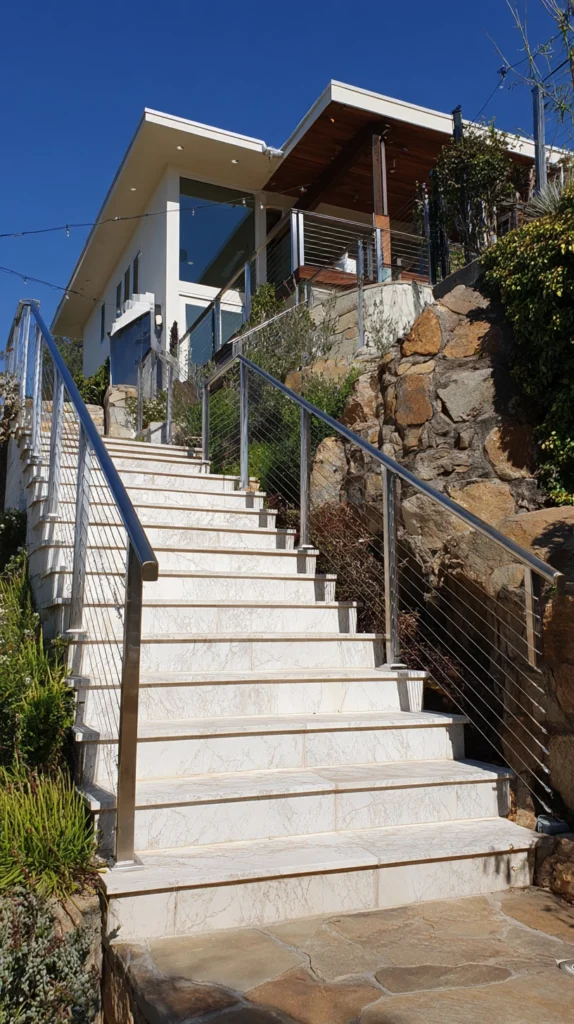
Deck steps with a cable handrail system — horizontal stainless steel cables stretched between minimal vertical posts at the sides of the staircase — create a staircase of maximum contemporary elegance and genuinely unobstructed views across the garden.
The cable handrail provides the required safety function while creating the minimum possible visual obstruction — the horizontal cables virtually disappear from a straight-on viewing angle and maintain the complete visual openness of the staircase.
Pro Tip: Tension the cable handrail system to the manufacturer’s specified tension — typically sufficient tension that each cable deflects no more than 25mm under a lateral load of 150 newtons. Under-tensioned cables are a safety hazard regardless of how beautiful the cable handrail system appears — the cables sagging and deflecting significantly under the lateral loading of a person steadying themselves on the staircase.
14. Steps with Gravel Landing
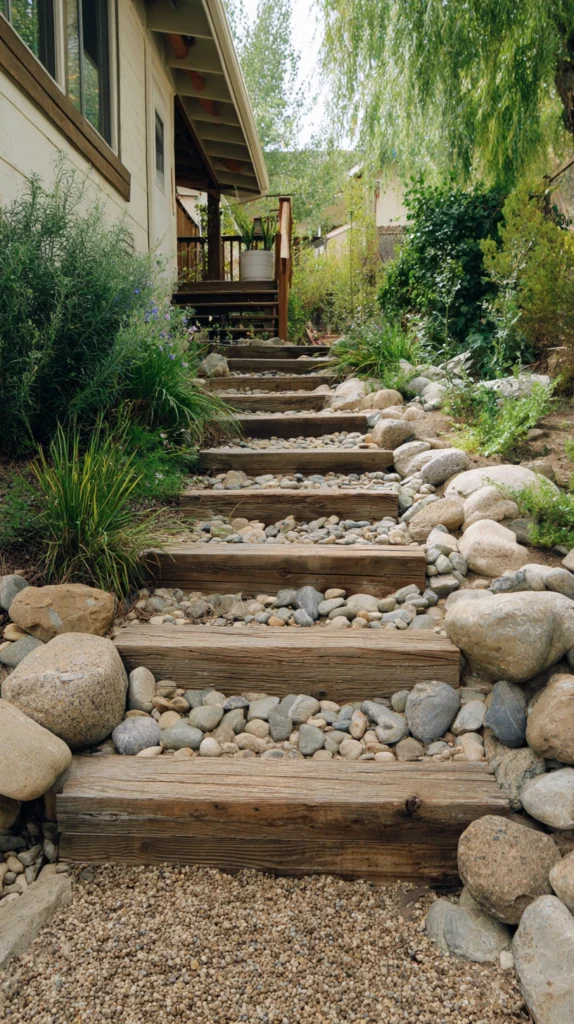
Deck steps descending to a gravel landing — a generously sized area of compacted gravel immediately at the base of the staircase — create a deck transition of considerable natural warmth and genuine landscape integration.
The gravel landing provides a non-slip, well-drained surface at the base of the steps and creates a defined transition zone between the formal structure of the deck and steps and the more organic planted elements of the surrounding garden.
Pro Tip: Edge the gravel landing at the base of deck steps with a defined rigid edging — steel, brick, or timber — that contains the gravel within the landing area and prevents it from migrating into the surrounding garden or lawn.
Unedged gravel landings gradually lose their gravel into the surrounding landscape — the landing becomes thin, uneven, and progressively less effective as a surface material within two to three seasons of installation without proper edge containment.
15. Steps with Pergola or Overhead Structure
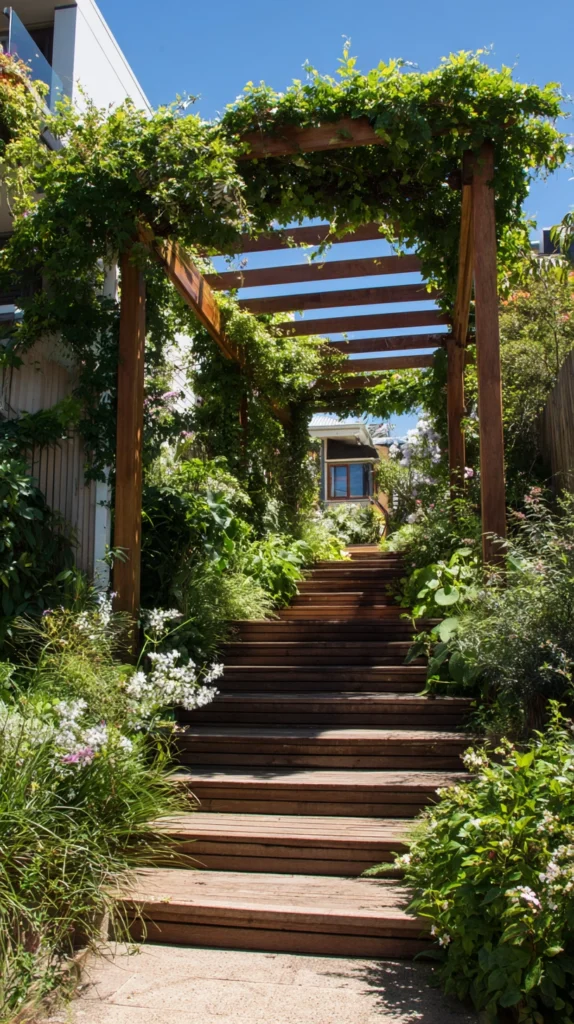
Deck steps surmounted by a pergola or simple overhead timber structure — an archway positioned directly above the staircase — create a deck descent of genuine theatrical quality and considerable architectural presence.
The overhead structure transforms the staircase from a simple descent element into a genuine architectural feature — the act of descending from the deck to the garden becomes a designed spatial experience of complete considered beauty.
Pro Tip: Plant climbing plants on the pergola structure above deck steps — a climbing rose, a clematis, a jasmine, or a wisteria.
A pergola above deck steps planted with a fragrant climbing plant creates a descent through fragrance and flower that is one of the most genuinely extraordinary sensory experiences available in any garden — the combination of the designed architectural transition and the living aromatic canopy above creating a garden moment of complete and extraordinary natural beauty.
Steps That Earn Their Place
Well-designed deck steps earn their place in the outdoor space rather than simply occupying it. The right material, the right proportions, the right lighting, and the right relationship to the surrounding landscape creates a staircase that is genuinely worth looking at, genuinely pleasurable to use, and genuinely deserving of the same design attention that every other element of the outdoor space receives.
Build them generously. Finish them beautifully. Light them warmly. And discover that deck steps designed with genuine care and genuine intention are one of the most quietly significant and most consistently appreciated design decisions in any outdoor living space.