15 Cozy Reading Nook Ideas for Small Spaces
Creating a cozy reading nook doesn’t require a large home or an extra room. In fact, some of the most charming reading corners come from cleverly using small, overlooked spaces.
A well-designed nook offers more than just a place to sit with a book—it becomes a personal retreat where comfort, calm, and creativity come together.

Whether you live in a small apartment, a compact house, or simply want to maximize unused corners, these cozy reading nook ideas help transform tight spaces into relaxing escapes.
With the right seating, lighting, textures, and styling, even the smallest corner can become your favorite place to unwind.
1. Transform an Empty Corner Into a Reading Retreat
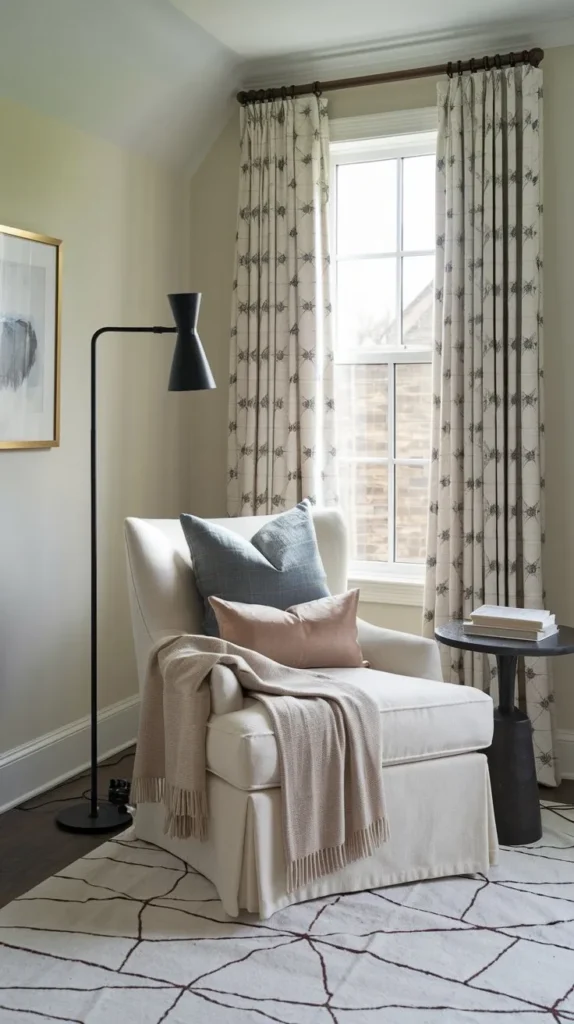
One of the easiest ways to create a reading nook in a small space is by using an empty corner. Corners are often underutilized but naturally feel enclosed and cozy, making them perfect for reading.
Place a comfortable armchair or a small accent chair in the corner and add a soft throw blanket and layered cushions for comfort. A small side table or floating shelf nearby can hold books, coffee, or decorative accents. To complete the look, add a floor lamp or wall-mounted light to ensure proper reading illumination.
Corners create a natural sense of privacy, which helps establish a relaxing and focused reading environment.
2. Use a Window Seat for Natural Light and Comfort
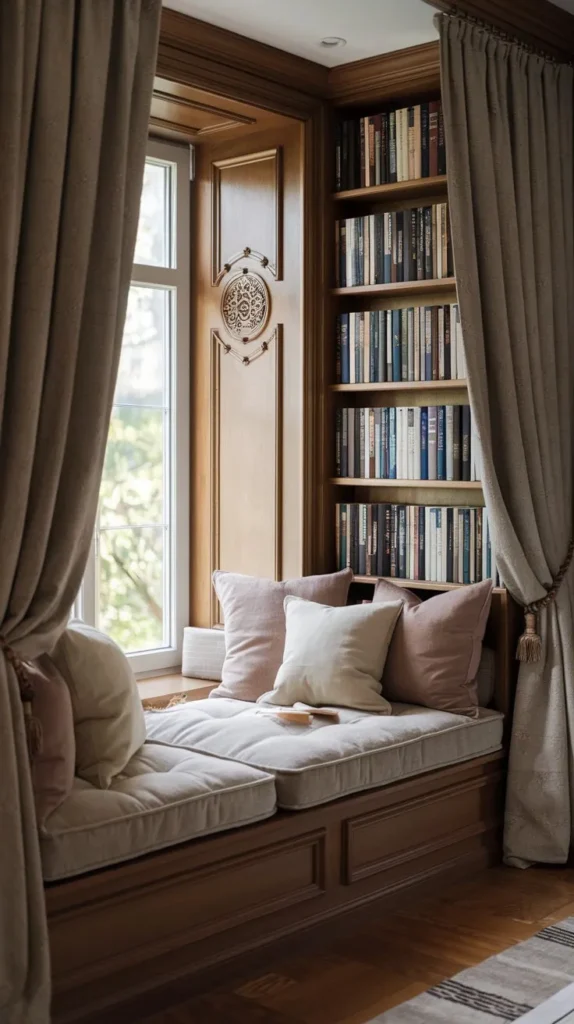
A window seat instantly creates a dreamy reading nook, especially in small homes where natural light is valuable. If your home already has a built-in window bench, enhance it with plush cushions and textured pillows.
If you don’t have a built-in seat, you can replicate the look using a narrow bench, storage ottoman, or low-profile daybed placed under a window. Natural sunlight reduces eye strain and creates a peaceful atmosphere that encourages longer reading sessions.
Sheer curtains or light-filtering drapes can soften the sunlight while maintaining brightness and privacy.
3. Turn an Unused Closet Into a Hidden Reading Nook
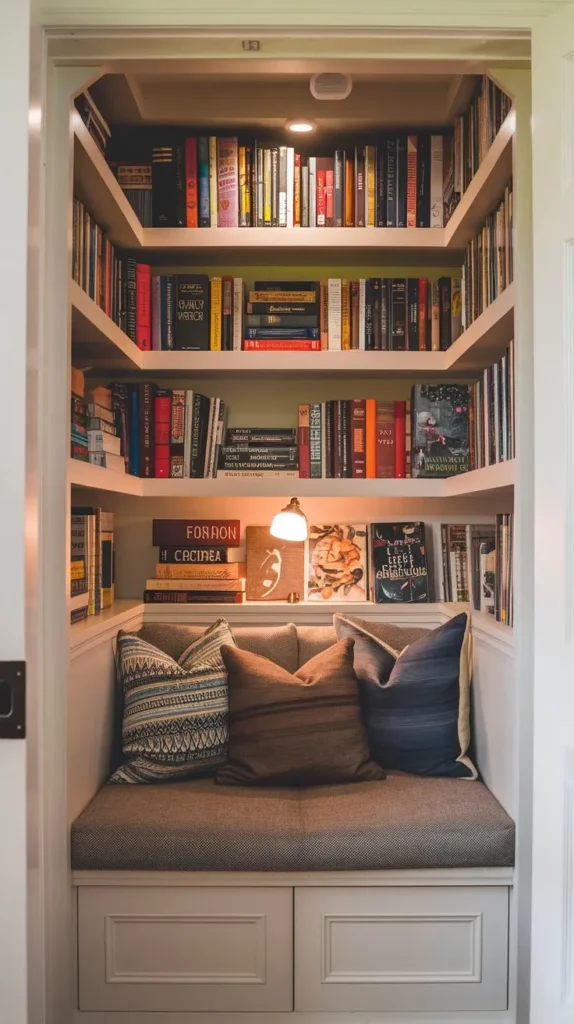
Small homes often include closets that are rarely used. Converting one into a reading nook creates a charming, tucked-away retreat.
Remove the closet doors and install a cushioned bench or built-in seating. Add wall-mounted shelves above or beside the seating to store books and decor. Soft lighting, such as LED strip lights or small sconces, can brighten the enclosed space without overwhelming it.
Painting or wallpapering the inside of the closet adds personality and helps define the nook as a special, cozy destination.
4. Create a Floating Reading Nook With Wall-Mounted Seating
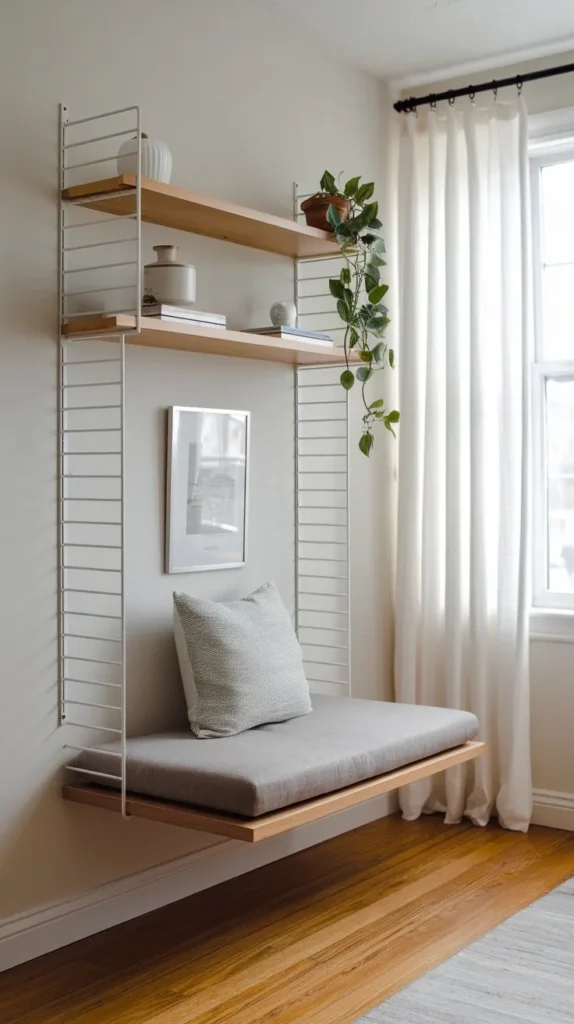
When floor space is limited, consider floating furniture solutions. A wall-mounted bench or shelf-style seating can create a compact reading nook without crowding the room.
Pair floating seating with wall shelves above for book storage and decor display. Add a slim cushion and layered textiles to soften the seating. This approach works especially well in studio apartments, bedrooms, or narrow living rooms where maximizing floor space is essential.
Floating designs also create a modern, streamlined aesthetic that feels stylish and functional.
5. Design a Reading Nook Under the Stairs
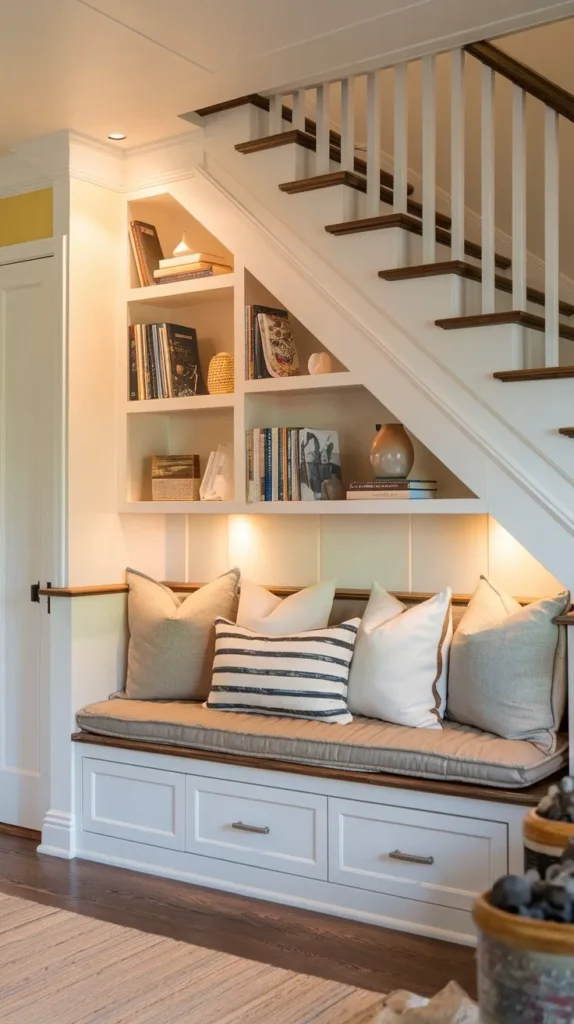
The space under a staircase is often overlooked, but it can easily be transformed into a cozy reading area. Built-in benches, custom cushions, or even a small lounge chair can fit perfectly within the angled structure.
Use the vertical walls under the stairs for shelving to store books or display decor. Soft lighting is essential in this area, as staircases often block natural light. Warm-toned lighting enhances the comfort and intimacy of the nook.
This idea is perfect for maximizing every inch of your home while adding unique architectural character.
6. Add a Reading Chair to a Bedroom Corner
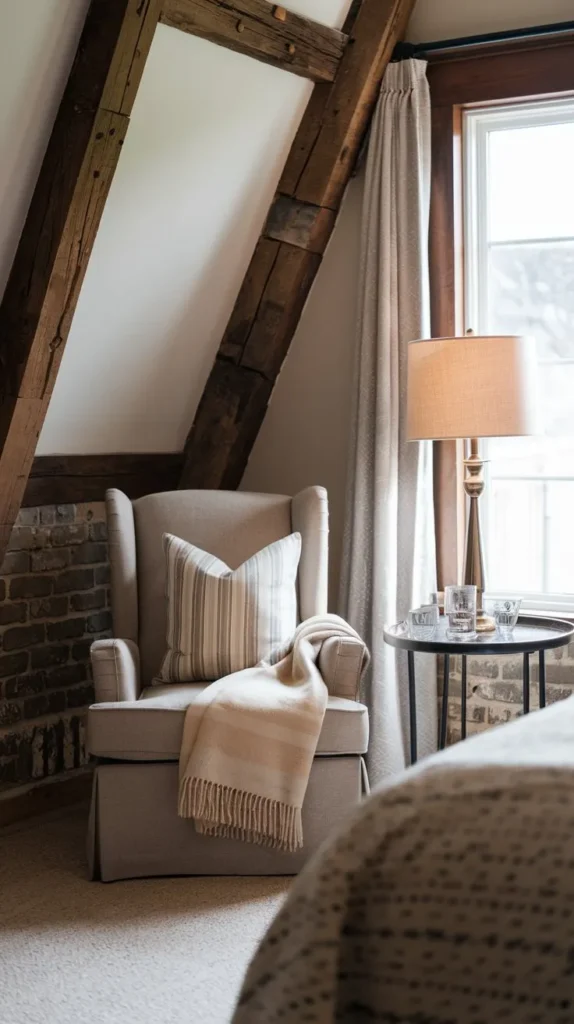
Bedrooms naturally support relaxation, making them ideal for a small reading nook. Adding a comfortable chair near a window or beside the bed can create a simple yet effective reading corner.
Choose a chair that complements your bedroom decor while prioritizing comfort. Layer it with a cozy throw blanket and a small pillow. A compact side table or nightstand can hold books, candles, or beverages.
This setup creates a multi-functional bedroom space that encourages winding down without adding clutter.
7. Use a Bookshelf Nook for Built-In Comfort

A bookshelf nook combines storage and seating into one cohesive design. Position a chair or small bench directly in front of a bookcase to create a library-inspired reading area.
If space allows, consider installing built-in shelving around a window or along a wall with a centered bench. The surrounding books create a comforting and immersive reading atmosphere.
Built-in designs also help maximize vertical storage, making them ideal for small homes where space efficiency is essential.
8. Create a Floor Cushion Reading Nook
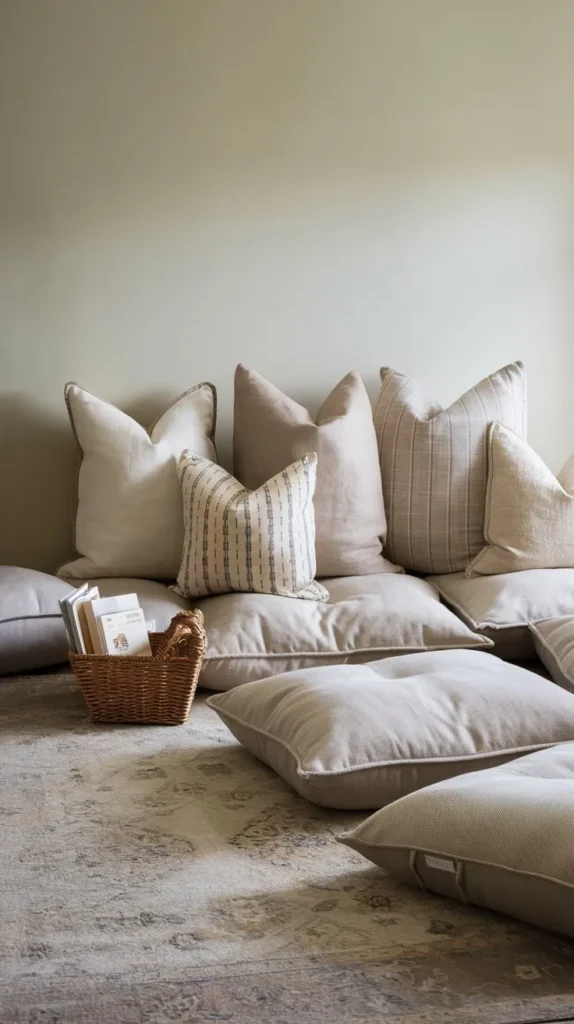
For ultra-small spaces or relaxed, casual aesthetics, a floor cushion reading nook offers flexibility and charm. Large floor pillows, poufs, or meditation cushions can transform a small corner into a comfortable reading space.
Layer a soft rug underneath to define the area and add warmth. Include a small basket or crate to hold books and blankets. This setup works especially well in boho, minimalist, or relaxed interiors.
Floor seating is easy to move or store, making it perfect for multi-purpose rooms.
9. Use a Daybed for Dual Functionality
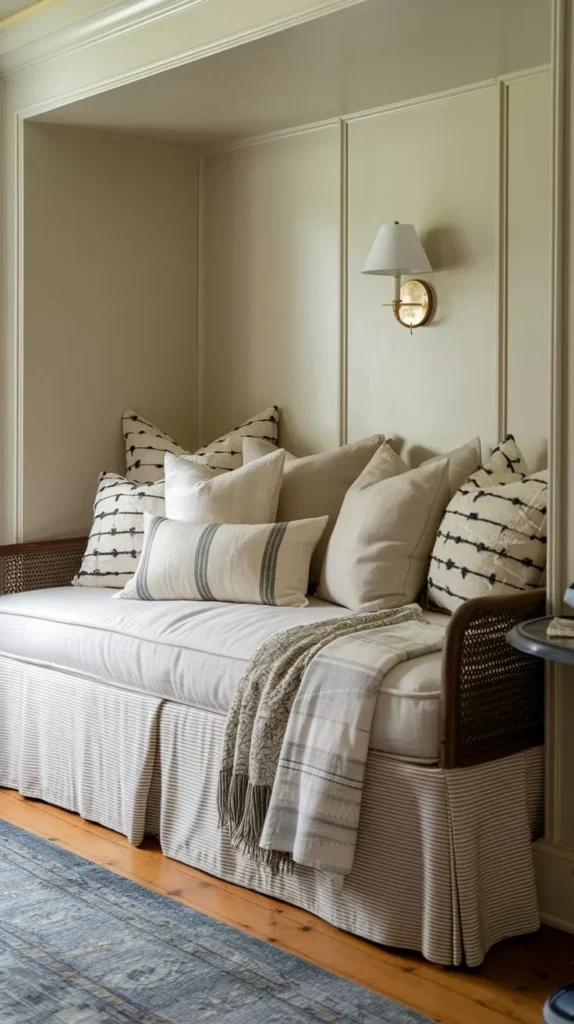
A daybed offers the comfort of a sofa and the relaxation of a bed, making it ideal for reading nooks in small spaces. Place a daybed against a wall or under a window and style it with layered pillows and throws.
During the day, it serves as a cozy reading and lounging space. At night, it can function as guest seating or extra sleeping space. Choose neutral or soft-toned textiles to maintain a calm and inviting atmosphere.
Daybeds are particularly useful in studio apartments or multi-purpose living rooms.
10. Style a Reading Nook With Curtains for Privacy
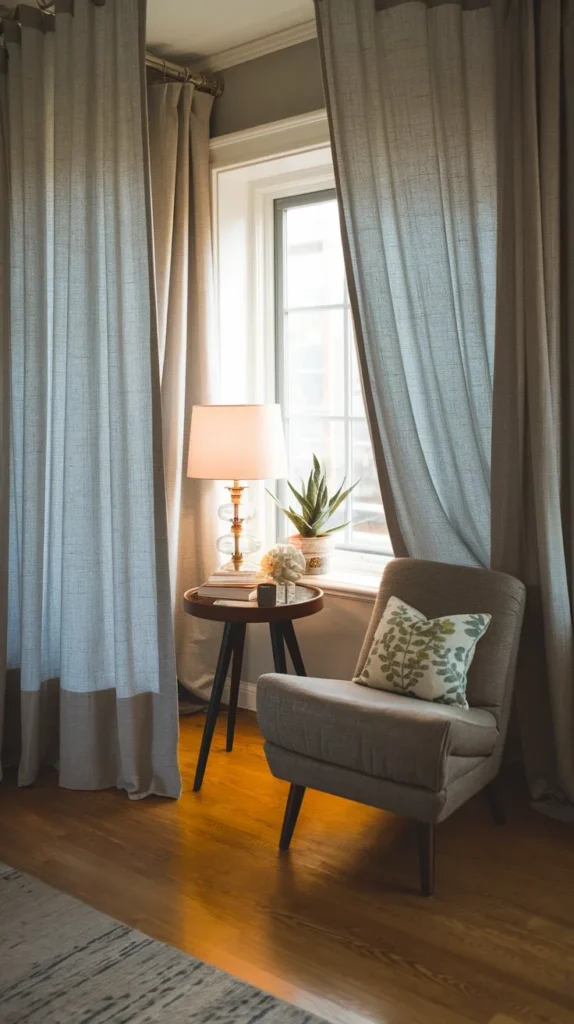
Adding curtains around a reading nook creates an instant sense of enclosure and comfort. This technique works well for window seats, corner benches, or closet conversions.
Lightweight curtains soften the space and allow you to close off distractions while reading. Choose natural fabrics like linen or cotton for a relaxed, cozy feel.
Curtains also add softness and texture, making the nook feel more intimate and personal.
11. Incorporate Soft, Layered Textiles
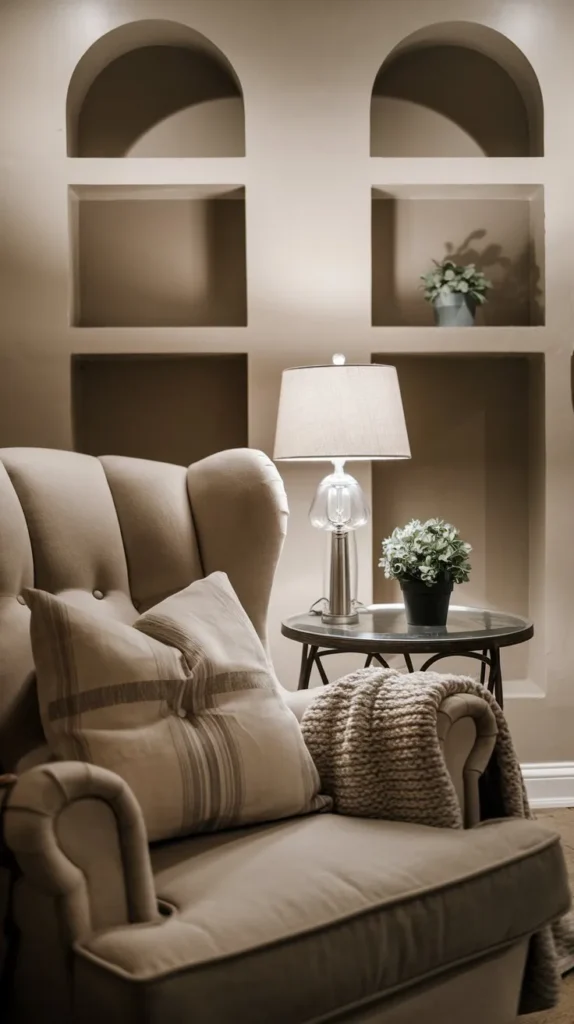
Textiles play a major role in making a reading nook feel inviting. Even the smallest seating area can feel luxurious when layered with soft materials.
Use plush cushions, knitted throws, and textured upholstery to enhance comfort. Rugs, especially high-pile or wool rugs, help define the nook while adding warmth underfoot.
Mixing textures like linen, boucle, wool, and cotton creates visual depth and encourages relaxation.
12. Add Warm, Adjustable Lighting
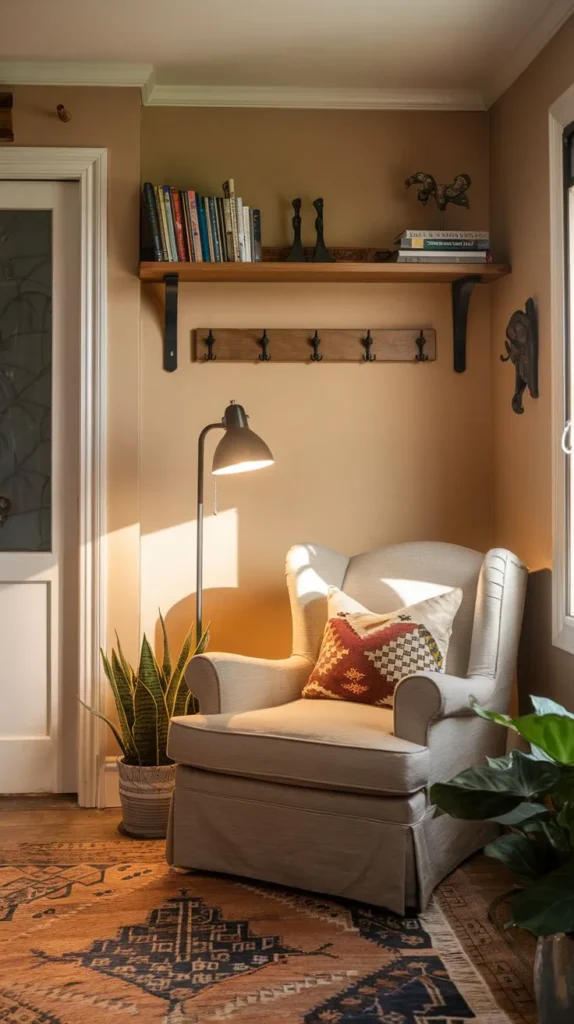
Proper lighting is essential for any reading nook. Small spaces benefit from layered lighting solutions that provide both function and ambiance.
Wall-mounted sconces save space while offering targeted reading light. Adjustable floor lamps or clip-on lights provide flexibility and prevent eye strain. Warm-toned bulbs create a cozy glow that enhances comfort and mood.
Avoid overly bright or cool lighting, as it can make the nook feel harsh and less relaxing.
13. Use Vertical Space for Book Storage
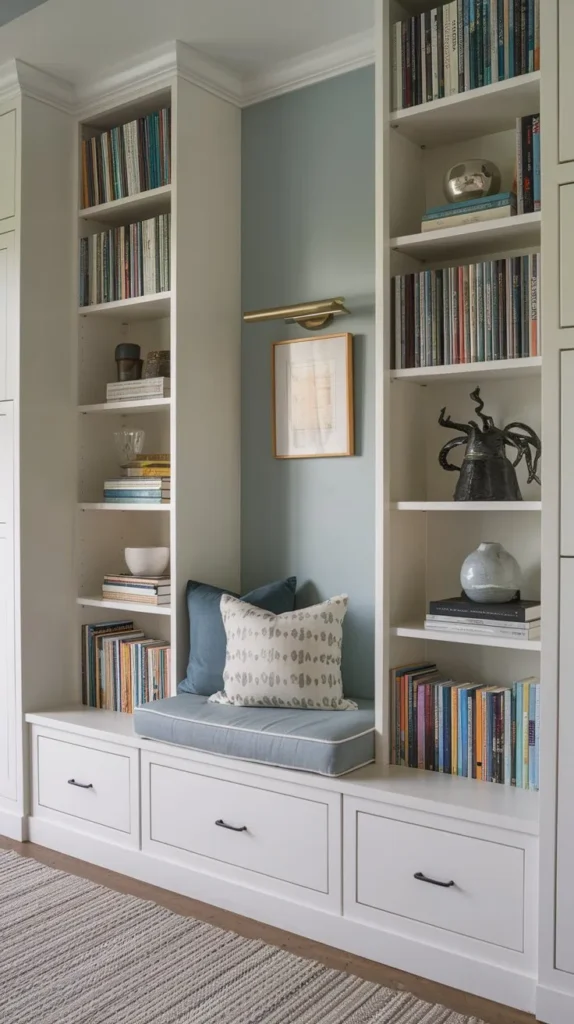
Small spaces often lack storage, but vertical shelving can solve this issue while enhancing the reading nook’s aesthetic. Tall, narrow bookcases or floating shelves provide storage without taking up valuable floor space.
Arrange books alongside decorative objects like plants, candles, or framed art to create a visually appealing display. Vertical storage keeps books accessible while maintaining an organized, clutter-free environment.
This strategy helps small reading nooks feel intentional and well-designed.
14. Personalize the Nook With Meaningful Decor
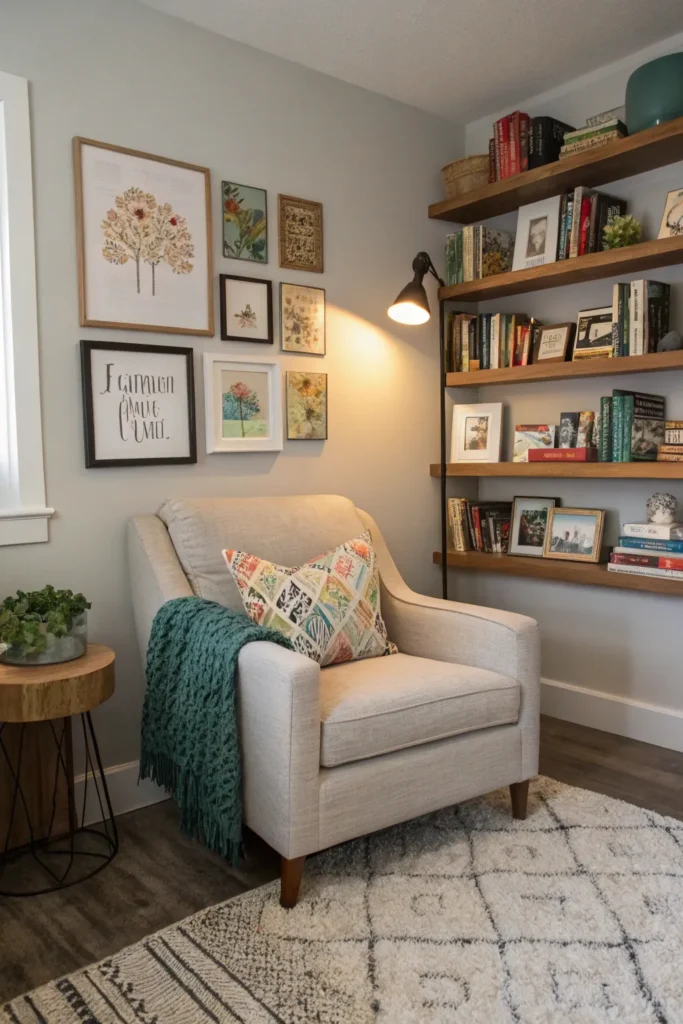
A reading nook should reflect your personality and interests. Adding meaningful decor makes the space feel welcoming and inspiring.
Consider framed quotes, favorite artwork, travel souvenirs, or family photos. Small decorative details like scented candles or handmade pottery can enhance the cozy atmosphere.
Keeping decor intentional rather than cluttered ensures the nook remains calming and functional.
15. Embrace Calm, Neutral Color Palettes
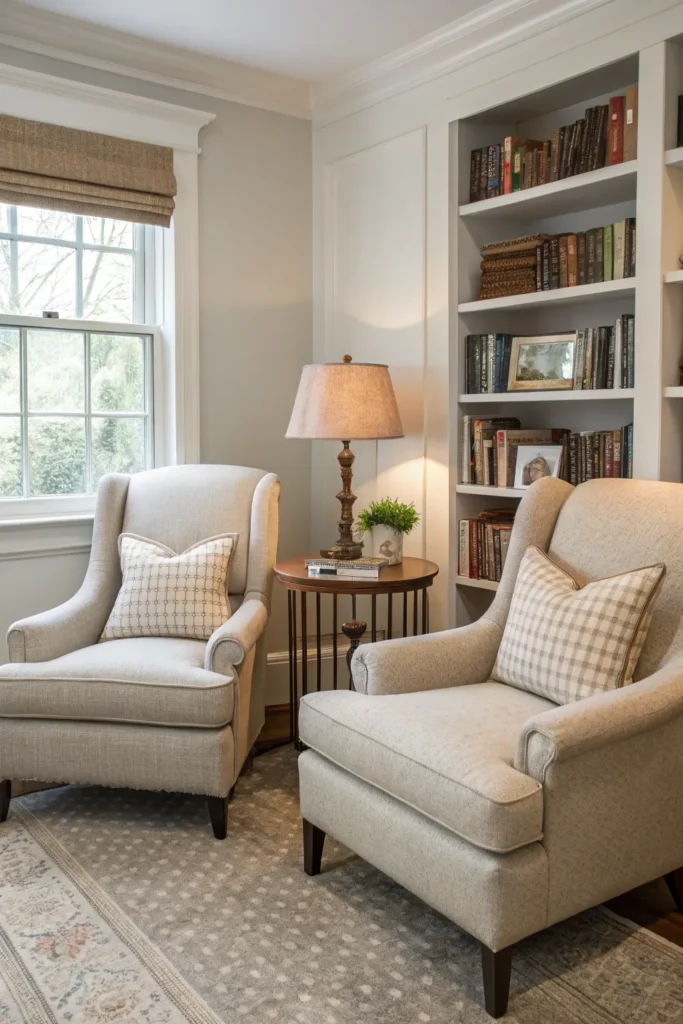
Color plays a significant role in creating a relaxing reading environment. Small reading nooks benefit from soft, calming color palettes that prevent the space from feeling cramped.
Neutral tones like beige, cream, warm gray, and soft earth tones create a soothing backdrop. Muted greens, dusty blues, or terracotta accents can add subtle warmth and character.
Keeping colors cohesive helps the nook feel visually spacious and peaceful, encouraging longer, more enjoyable reading sessions.
Designing a Reading Nook That Fits Your Lifestyle
The best reading nook is one that supports your habits and comfort preferences. Some people prefer upright seating with bright lighting for focused reading, while others enjoy lounging in plush, dimly lit spaces. Understanding how you like to read helps you design a nook that feels natural and functional.
Consider factors like lighting needs, seating comfort, storage, and accessibility. Even small adjustments, such as adding a blanket or repositioning lighting, can significantly improve the reading experience.
Making Small Spaces Feel Cozy and Intentional
Creating a reading nook in a small space is about thoughtful design rather than square footage. By using overlooked corners, vertical storage, layered textures, and warm lighting, you can transform compact areas into comfortable retreats.
Cozy reading nooks encourage relaxation, creativity, and mindfulness. They provide a quiet escape from daily distractions and help create moments of calm within busy routines.
With these 15 cozy reading nook ideas, you can design a small yet meaningful space that invites you to slow down, unwind, and enjoy the simple pleasure of getting lost in a good book.