15 Best Flowering Ground Covers for Shade
Shady areas in the garden are often seen as difficult spaces, but with the right plants, they can become some of the most beautiful spots in your landscape.
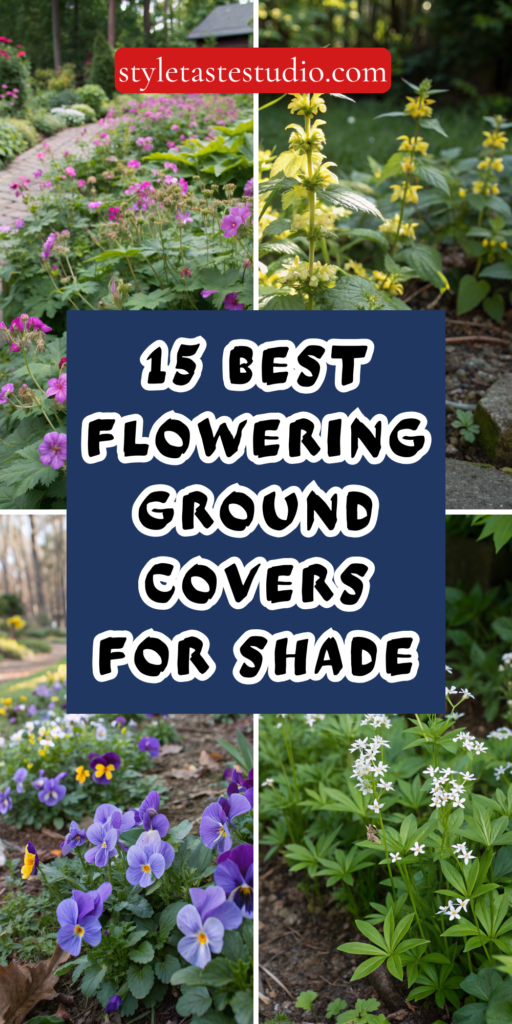
Flowering ground covers for shade not only fill bare soil and suppress weeds, but they also add color, texture, and seasonal interest where grass and sun-loving plants struggle. Below are 15 of the best flowering ground covers that thrive in partial to full shade, offering unique blooms and reliable coverage.
1. Sweet Woodruff (Galium odoratum)
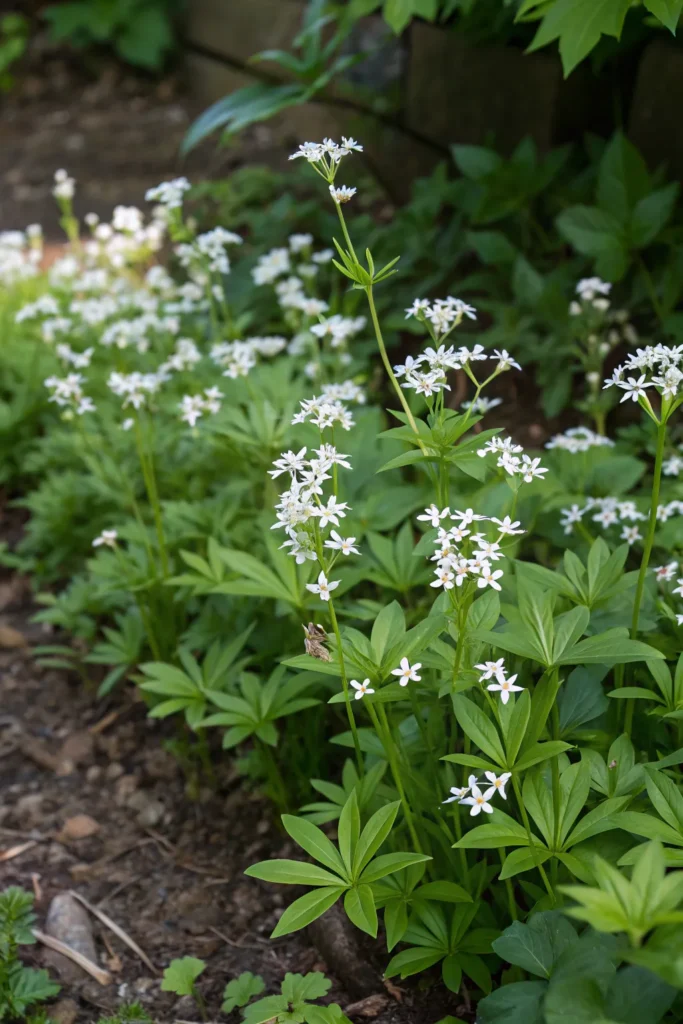
Sweet woodruff is a classic shade-loving ground cover known for its delicate white star-shaped flowers and soft, whorled green leaves. Blooming in late spring, it creates a carpet-like effect under trees and along shaded pathways. Once established, it spreads gently and is easy to maintain. Sweet woodruff also has lightly fragrant foliage, especially when dried, making it a charming addition to woodland gardens.
2. Creeping Jenny (Lysimachia nummularia)
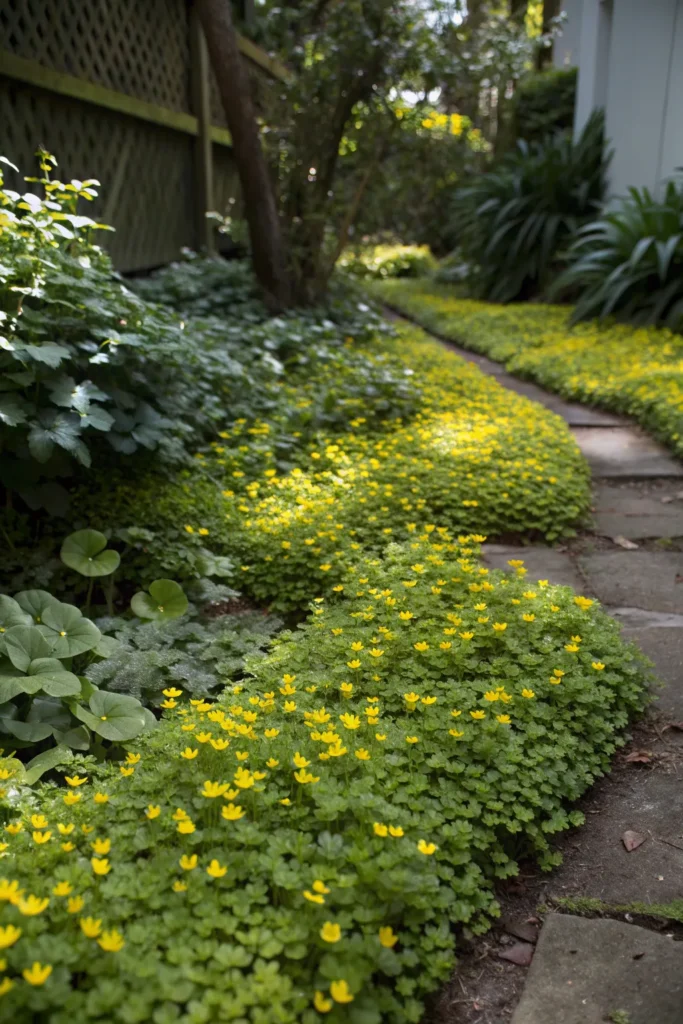
Creeping Jenny is valued for its trailing habit and bright yellow cup-shaped flowers. While it tolerates some sun, it performs beautifully in partial shade where its vibrant green or golden foliage softens darker corners. It spreads quickly, making it ideal for filling gaps between stepping stones, along borders, or under shrubs. Regular trimming helps keep it contained.
3. Lungwort (Pulmonaria)
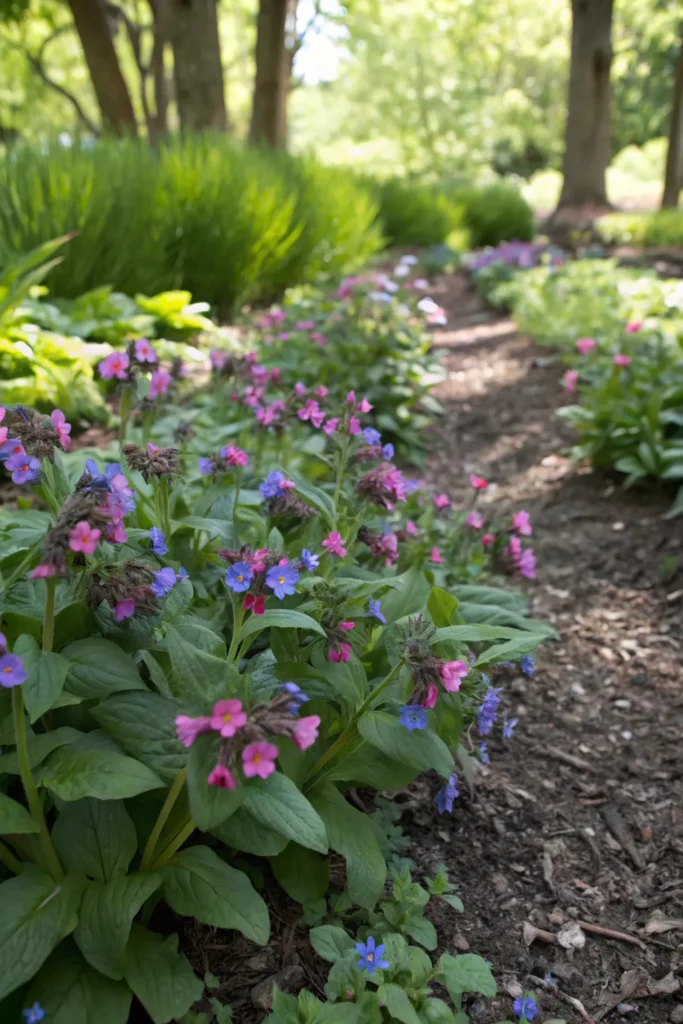
Lungwort is one of the earliest bloomers for shaded gardens, producing clusters of pink, blue, or purple flowers in early spring. Its spotted or silver-flecked leaves remain attractive long after flowering ends, providing season-long interest. Lungwort thrives in moist, well-drained soil and works especially well beneath trees or alongside hostas and ferns.
4. Bugleweed (Ajuga reptans)
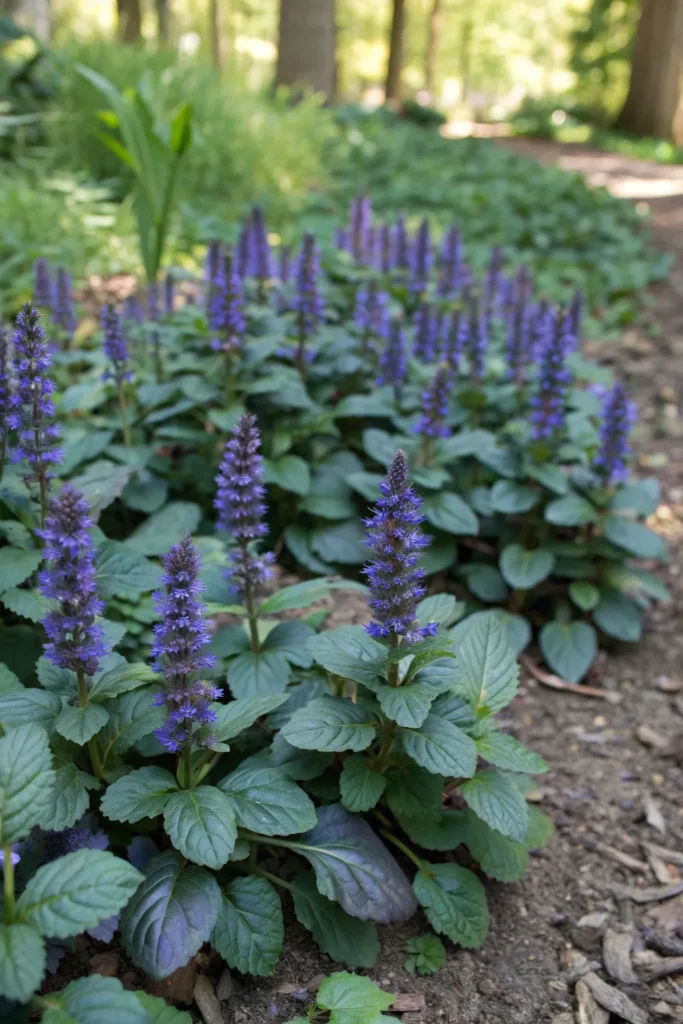
Bugleweed is a hardy ground cover that forms dense mats of glossy foliage topped with blue, purple, or pink flower spikes in spring. It adapts well to partial and full shade and is often used on slopes or in areas where erosion control is needed. Ajuga’s foliage comes in a range of colors, from deep green to bronze and burgundy, adding visual depth to shaded areas.
5. Foamflower (Tiarella cordifolia)
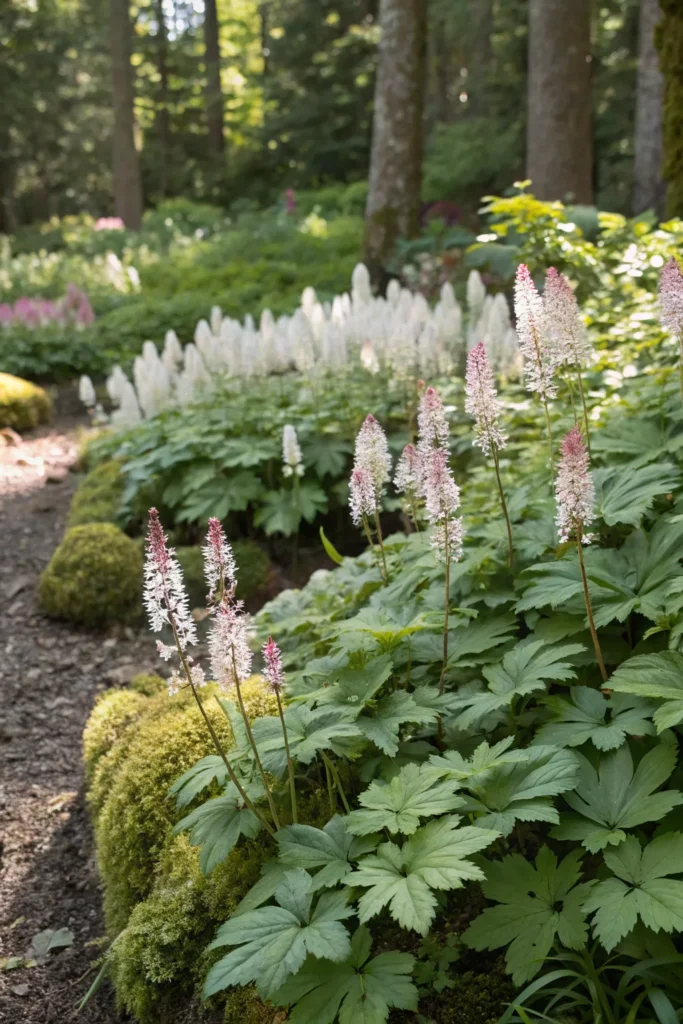
Foamflower gets its name from the airy, foam-like clusters of tiny white or pale pink blooms that appear in spring. Native to woodland areas, it thrives in dappled shade and moist soil. Its heart-shaped leaves often develop red or bronze tones in fall, extending its ornamental value beyond the flowering season.
6. Dead Nettle (Lamium maculatum)
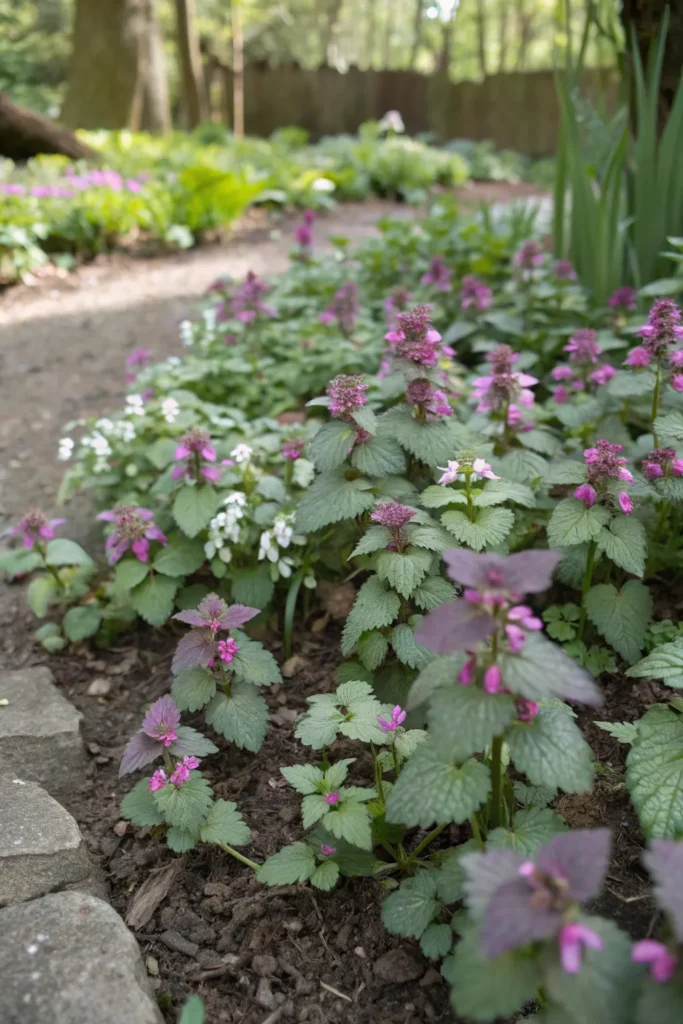
Dead nettle is a versatile flowering ground cover that performs exceptionally well in shade. It produces small pink, purple, or white flowers above silvery or variegated foliage. Lamium spreads steadily without being overly aggressive, making it suitable for borders, underplanting, or containers in shady patios.
7. Periwinkle (Vinca minor)
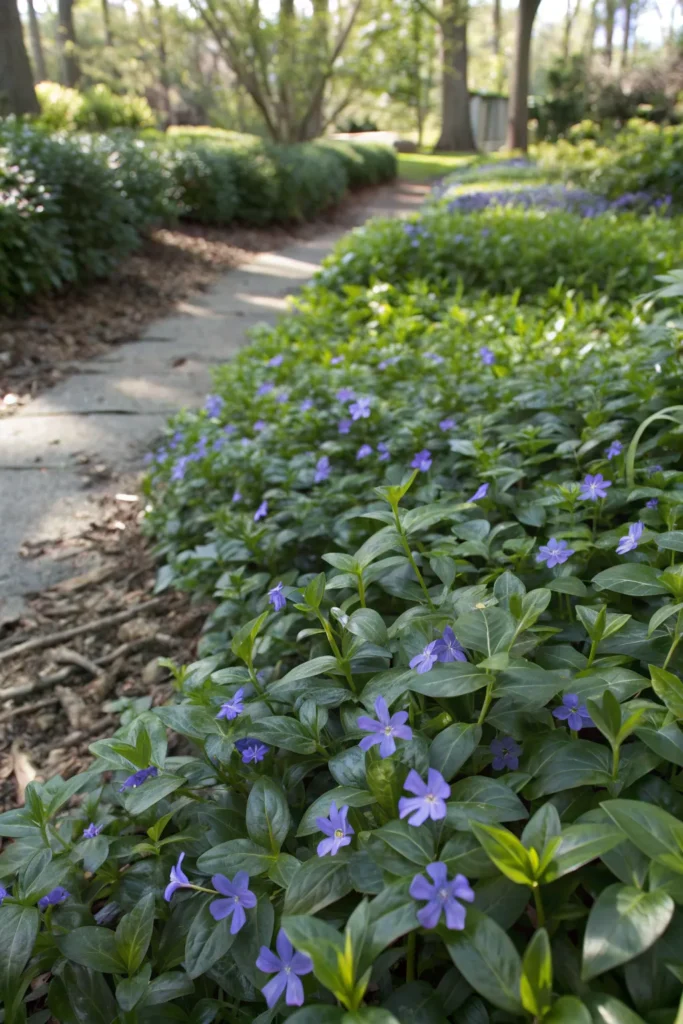
Periwinkle is a popular evergreen ground cover known for its glossy leaves and cheerful blue or violet flowers. It blooms primarily in spring but often produces sporadic flowers throughout the growing season. Vinca minor tolerates deep shade once established and is excellent for covering large areas under trees where other plants struggle.
8. Yellow Archangel (Lamiastrum galeobdolon)
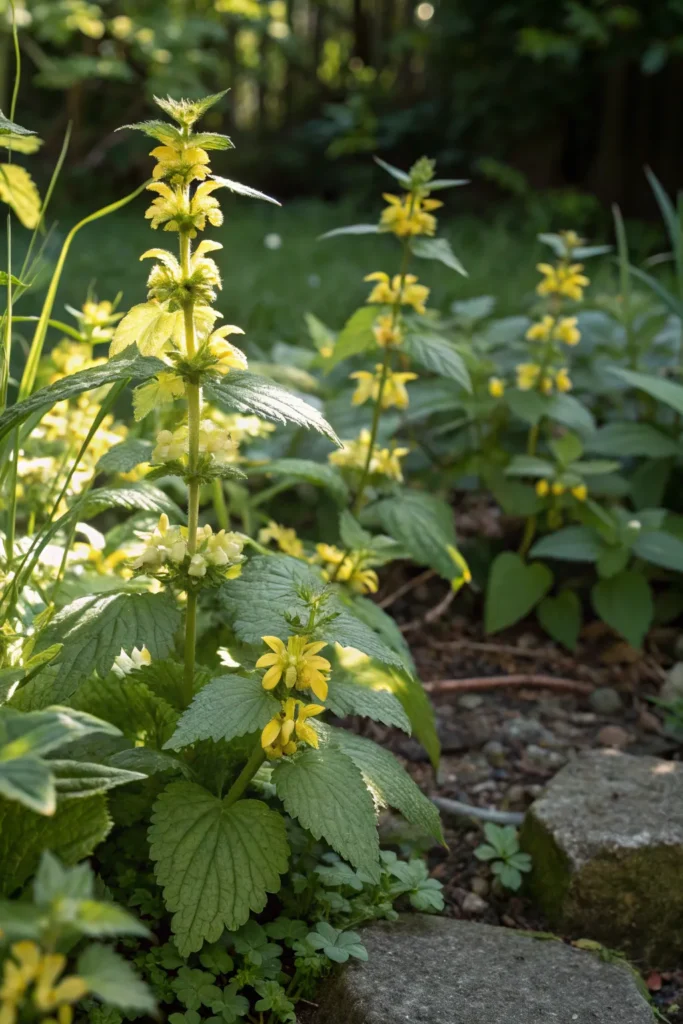
Yellow archangel offers bright yellow flowers and striking variegated foliage that lights up shaded spaces. It grows well in woodland gardens and shaded borders, spreading to form a thick, weed-suppressing mat. While attractive, it should be monitored in smaller gardens to prevent excessive spreading.
9. Barrenwort (Epimedium)
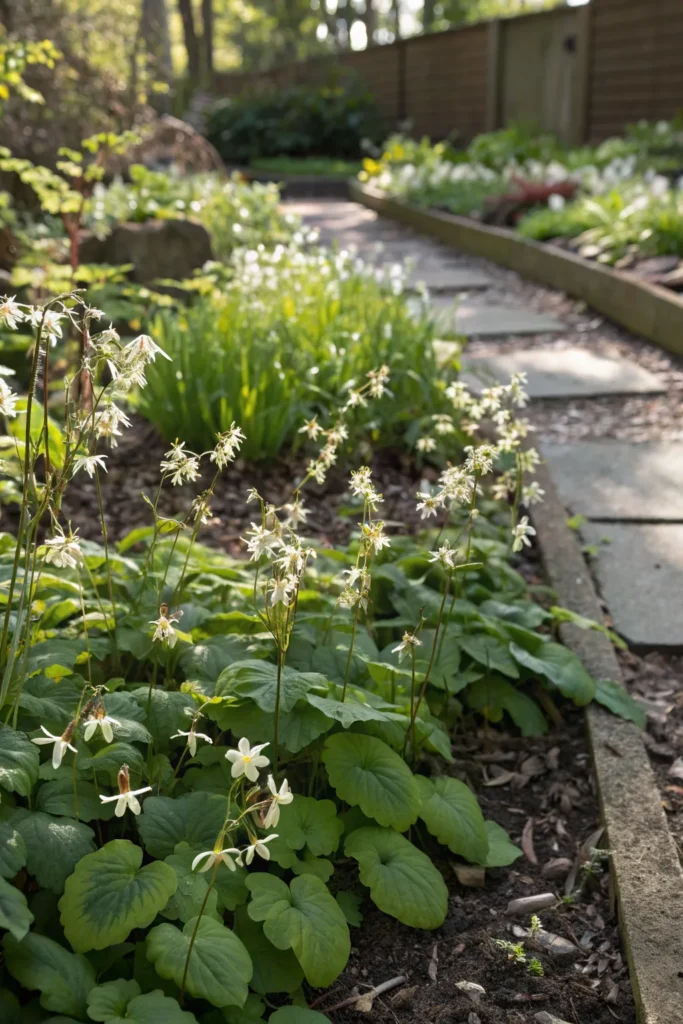
Barrenwort is a refined ground cover prized for its delicate, orchid-like flowers that bloom in spring. The foliage often emerges with reddish tones before maturing to green and may develop fall color in some varieties. Epimedium is drought-tolerant once established and thrives in dry shade, making it ideal for areas beneath mature trees.
10. Bishop’s Hat (Epimedium grandiflorum)

A close relative of barrenwort, Bishop’s Hat features heart-shaped leaves and showy flowers in shades of pink, white, yellow, or purple. It forms a graceful ground cover that spreads slowly, making it perfect for gardeners who prefer a controlled, elegant look. It performs best in partial to full shade with well-drained soil.
11. Lily of the Valley (Convallaria majalis)

Lily of the valley is beloved for its nodding white bell-shaped flowers and sweet fragrance. Blooming in spring, it creates a lush carpet of green leaves that persists throughout summer. This ground cover thrives in shaded areas and is especially effective under trees, though it can spread vigorously over time.
12. Hardy Geranium (Geranium macrorrhizum)

Hardy geraniums are adaptable plants that tolerate partial shade and offer long-lasting blooms in shades of pink, purple, or magenta. Geranium macrorrhizum also has aromatic foliage that helps deter pests. It forms a dense ground cover that suppresses weeds and requires minimal maintenance once established.
13. Japanese Spurge (Pachysandra terminalis)

Japanese spurge is a reliable evergreen ground cover for full shade. While its white spring flowers are subtle, they add gentle interest to shaded beds. Pachysandra excels at covering large areas, especially beneath trees, and provides year-round structure with its glossy leaves.
14. Mazus (Mazus reptans)

Mazus is a low-growing ground cover that produces small, snapdragon-like flowers in blue, purple, or lavender tones. It thrives in moist soil and partial shade, making it ideal for garden edges or between stepping stones in shaded pathways. Its compact growth habit keeps it neat and easy to manage.
15. Violet (Viola spp.)
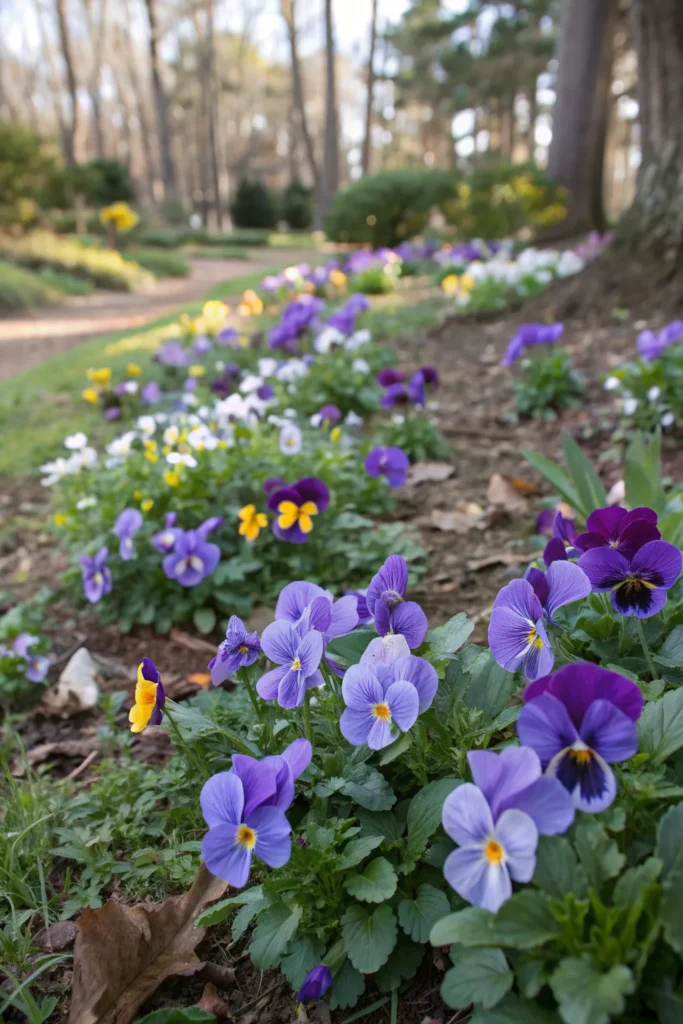
Violets are charming, shade-tolerant ground covers that offer cheerful flowers in purple, blue, white, or yellow. Blooming in spring and sometimes again in fall, they spread gently through self-seeding. Violets are perfect for naturalistic gardens, woodland settings, or informal borders where a soft, romantic look is desired.
Choosing the Right Flowering Ground Cover for Shade
When selecting flowering ground covers for shade, consider the specific conditions of your garden. Some areas may have dry shade under trees, while others remain consistently moist. Matching plants to soil moisture, light levels, and desired spread will ensure long-term success. Combining different ground covers can also create layered textures and extended bloom times throughout the season.
Benefits of Flowering Ground Covers in Shaded Areas
Flowering ground covers offer more than just beauty. They help prevent soil erosion, reduce weeds, and retain moisture in shaded garden beds. Many also provide habitat for pollinators and beneficial insects, even in low-light areas. With the right choices, shaded spaces can become vibrant, low-maintenance features of your landscape.
Final Thoughts
Shade doesn’t have to limit your gardening creativity. With these 15 best flowering ground covers for shade, you can transform dark, overlooked areas into lush, colorful displays. From delicate spring blooms to evergreen foliage, these plants prove that shade gardens can be just as stunning and rewarding as sunny ones.