15 Basement Makeover Ideas That Don’t Feel Dark or Dull
The basement’s reputation as the domestic interior’s most challenging space is well-earned and well-documented. The absence of natural light, the low ceilings, the structural intrusions of columns and ductwork, the persistent moisture management requirements, the psychological weight of being below grade — these are genuine design challenges that no amount of optimistic styling can entirely dissolve.
But the basement’s reputation for darkness and dullness is also, in the hands of a designer who understands how to work with the space’s specific constraints rather than against them, considerably overstated.
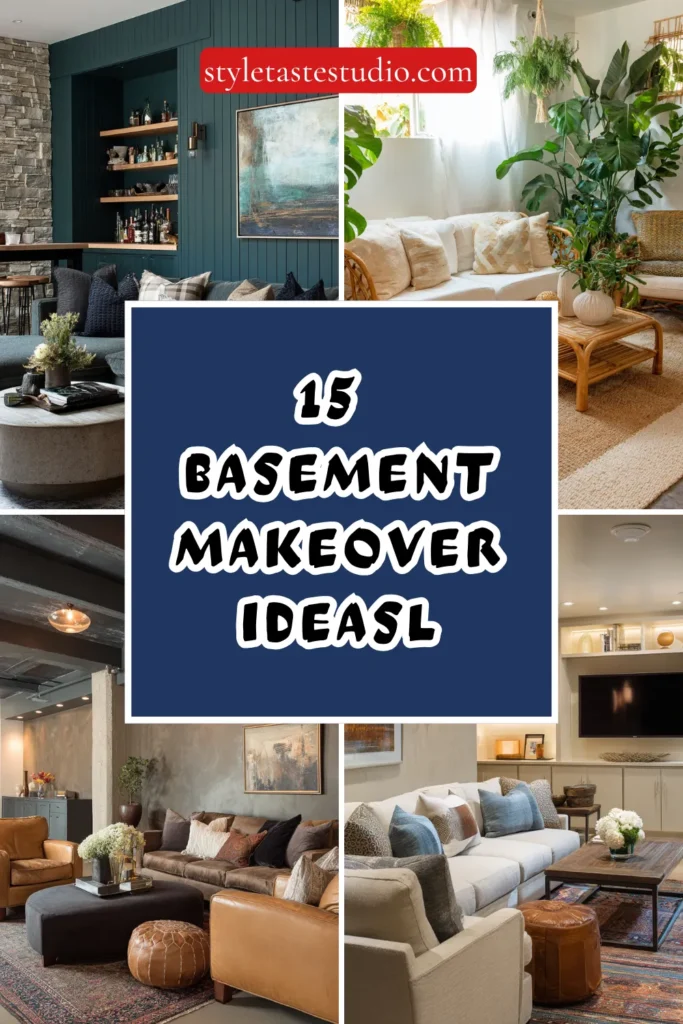
The basement that has been designed with genuine intelligence — that addresses its light deficit through artificial lighting of real quality, that manages its low ceiling through design choices that celebrate rather than fight the intimacy of a lower-ceilinged space, that resolves its moisture issues through appropriate materials before any finishing begins — is a basement that functions not as a compromise space but as a genuinely excellent one, whose specific qualities of enclosure, quiet, and thermal stability make it, for certain purposes, the best room in the house.
The renovation of a basement into a space that does not feel dark or dull begins with the honest acknowledgment of what the basement is — below grade, without daylight, with specific structural conditions — and the application of design intelligence to those specific conditions rather than the attempt to make the basement pretend to be something it is not. Here are fifteen ideas for achieving exactly that.
1. Resolve Moisture Before Everything Else
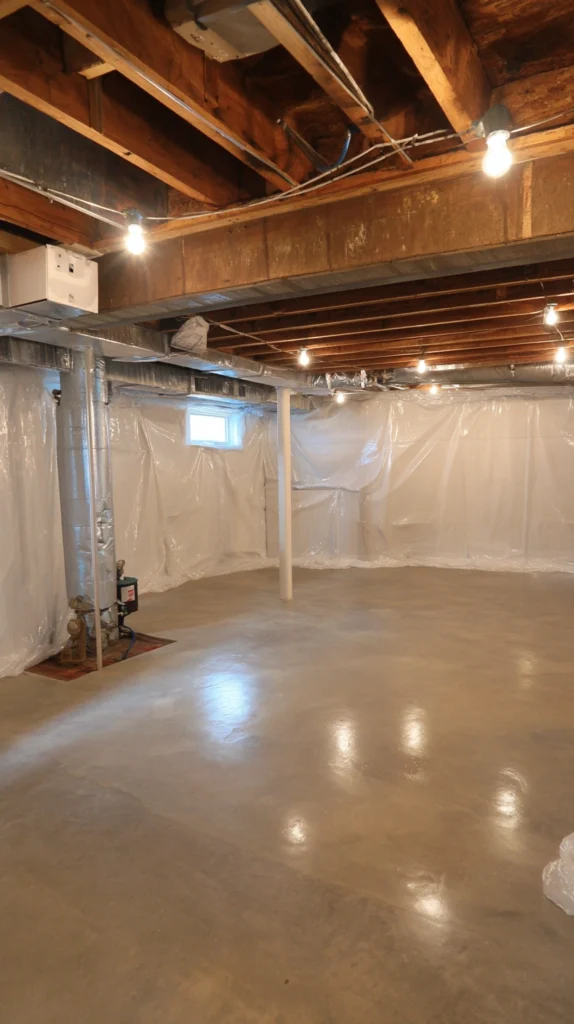
The single most important step in any basement makeover — the step that determines whether every subsequent design and finishing decision will succeed or fail — is the complete resolution of moisture infiltration before any wall, floor, or ceiling finishing begins.
The basement that has moisture issues and is finished over them produces a renovated space that begins to fail within months as mold develops behind the new walls, the flooring delaminates, and the smell of damp undermines every other quality of the finished space.
A genuine moisture assessment — conducted by a qualified surveyor or waterproofing specialist rather than by the optimistic eye of someone who wants to begin the exciting part of the renovation — identifies every source of moisture infiltration: rising damp through the floor slab, lateral penetration through the foundation walls, condensation from temperature differentials, and any drainage or groundwater issues that affect the space.
Address every identified moisture source with the appropriate remediation — tanking, drainage channels, sump pumps, vapor barriers — before any finishing material is installed. This investment is unglamorous and often significant in cost, but it is the foundation upon which everything else depends.
2. Install Layered Artificial Lighting Throughout
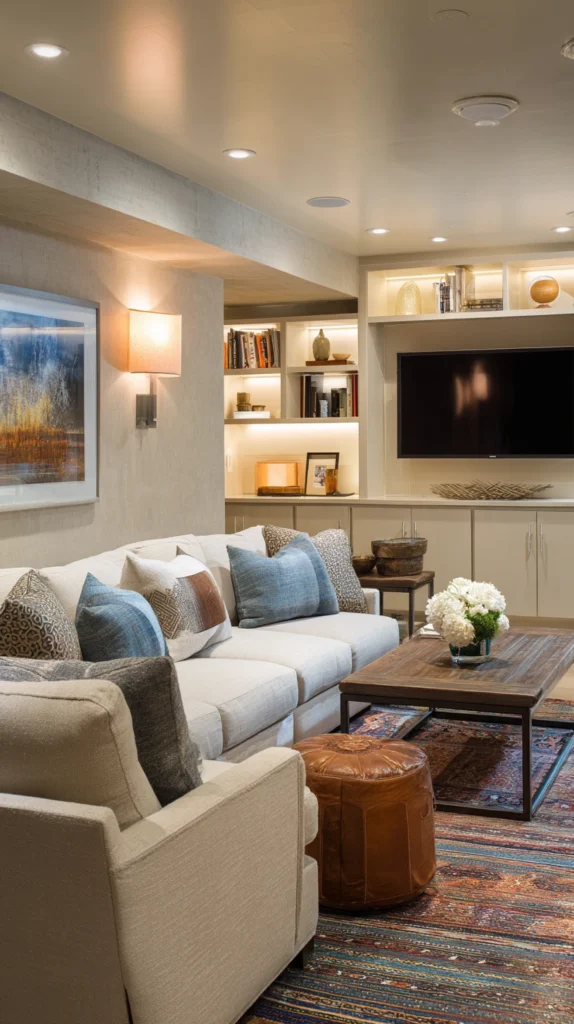
The basement’s most fundamental environmental deficit — the absence of natural light — cannot be resolved but it can be compensated for through an artificial lighting scheme of sufficient quality, quantity, and variety to create a room whose illumination quality does not feel like deprivation relative to an above-grade space.
The layered lighting approach that creates this quality requires multiple types of source working simultaneously: recessed downlights in the ceiling for general ambient illumination, positioned in a grid that provides even coverage without dark corners; wall-mounted sconces or picture lights that create pools of warm light at the room’s perimeter; floor or table lamps that create the intimate, low-level pools of warmth that the cozy, usable room requires; and LED strip lighting concealed behind coves, along shelving, and under cabinetry that creates the specific warm glow of background illumination without visible fixtures.
All circuits should be on dimmer switches that allow the lighting levels to be adjusted for different activities and different times of day.
The quality of the light source matters enormously in a basement — choose bulbs in the 2700K to 3000K warm white range that creates the warmth of incandescent light rather than the cold clarity of daylight-balanced sources that emphasize the basement’s subterranean quality.
3. Use Light, Warm Paint Colors Throughout
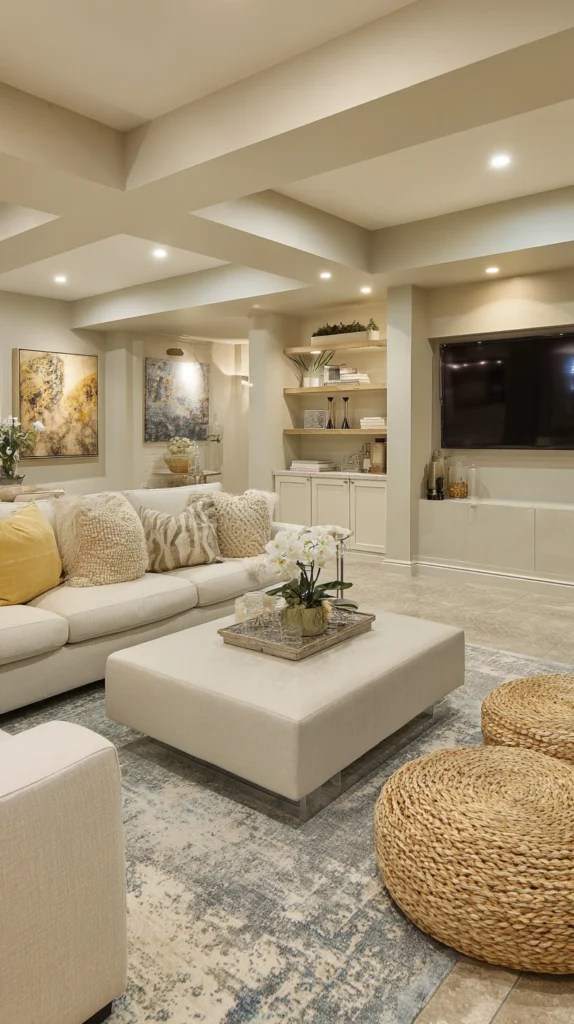
The basement’s low light levels are not best addressed by painting the walls white — the common instinct toward the lightest possible wall color in a dark space — but by choosing warm, slightly saturated tones in the light-to-mid range that create the sense of warmth and enclosure that the basement’s specific conditions suit. A soft warm white with yellow or pink undertones rather than the cool blue-white that reads as institutional in a low-light environment.
A warm pale cream that relates the space to the gentle amber of the artificial lighting. A very pale sage green that introduces the freshness of natural color reference without the coolness that grayer greens create.
The ceiling should be painted in the same warm tone as the walls rather than the conventional white, which in a basement creates a visual separation between the ceiling and the walls that emphasizes the ceiling’s lowness.
A monochromatic room — walls, ceiling, and even floor in related tones — creates a seamless, enveloping quality that the basement’s enclosed character suits naturally and that makes the space feel more generous than its dimensions.
4. Create a Defined Home Cinema
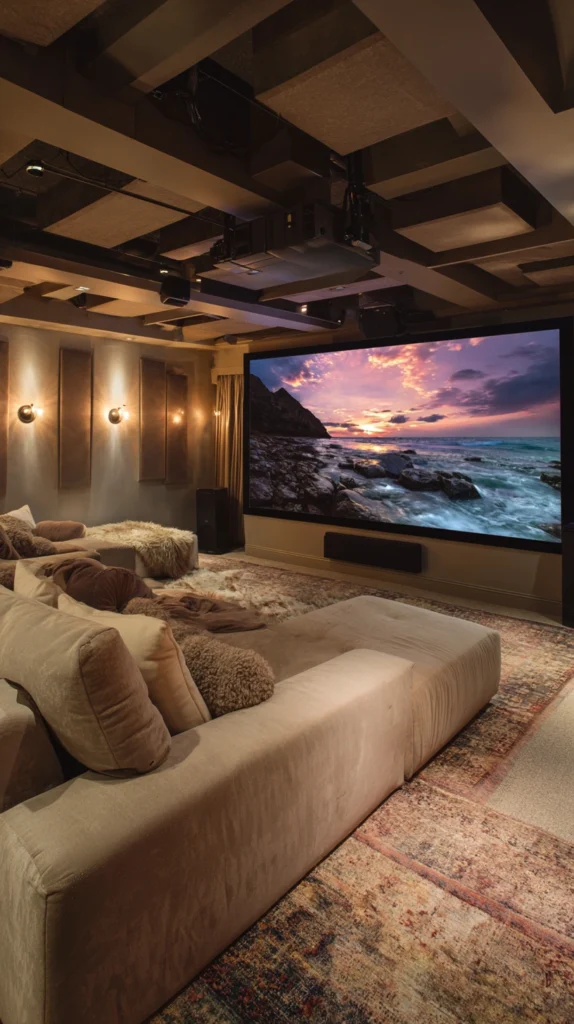
The basement is the home’s natural cinema room — its enclosure, its absence of windows that would create glare on a screen, its acoustic separation from the rest of the house, and its thermal stability create environmental conditions that the purpose-built cinema room is designed to replicate at significant expense in above-grade locations.
A basement cinema room that embraces these natural advantages — with a large projection screen or television on the primary wall, acoustic panels on the surrounding walls in a material and finish that suits the room’s aesthetic, deeply comfortable seating in tiered rows or in a generous sofa arrangement, and a lighting scheme that can be fully dimmed for screenings — creates one of the most genuinely excellent rooms in any home.
The cinema use resolves the basement’s darkness not as a problem but as a feature — the room is at its best when it is dark — and the investment in quality audio-visual equipment, comfortable seating, and acoustic treatment creates a basement room that is coveted rather than merely tolerated by every member of the household.
5. Build a Home Bar with Personality
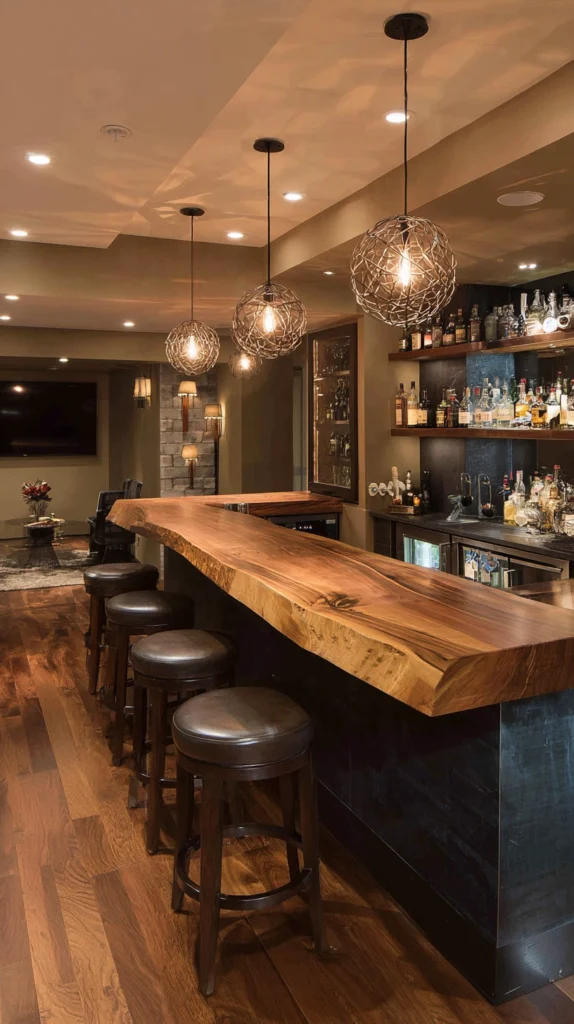
The home bar in a basement — a fitted bar counter with a back bar display, under-counter refrigeration, a sink, draft beer equipment if desired, and the full hospitality infrastructure of a genuinely functional drinks station — creates one of the most socially magnetic rooms available in any domestic setting, and the basement location suits the bar function with a naturalness that reflects the deep association between underground spaces and the intimate, somewhat illicit pleasure of the drinking establishment.
A basement bar should be designed with genuine ambition rather than as a glorified drinks cabinet — a proper bar counter of adequate height and depth, bar stools of comfortable quality, a back bar with shelving for bottles and glassware that is lit from within or behind to create the warm glow of a professionally designed bar environment.
The surrounding design should reinforce the bar’s atmospheric intention: dark, warm wall colors, pendant lighting in warm tones above the bar counter, music system integration, and the comfortable seating area that makes the basement bar a destination for an evening rather than simply a service counter.
6. Design a Wellness and Exercise Space
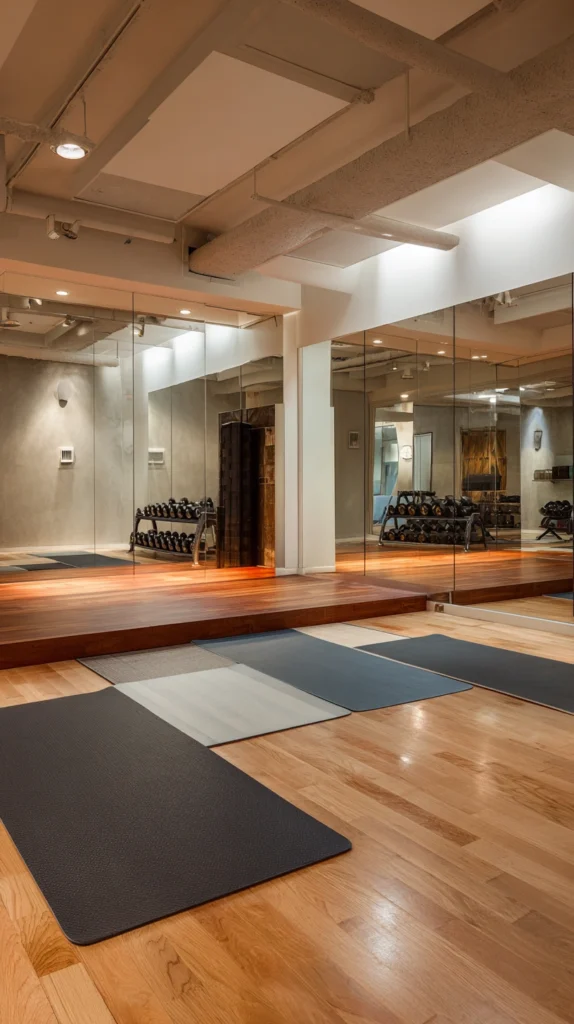
The basement’s separation from the main house’s living areas — its acoustic isolation and its physical distance from the household’s daily activity — makes it the ideal location for the exercise and wellness space that every household aspires to and most households fail to maintain because the equipment is in a room that conflicts with other domestic functions.
A basement gym that is genuinely well designed — with appropriate flooring for the exercise types it supports, mirrors on the primary wall that make the space feel larger and allow form monitoring during exercise, adequate ventilation that prevents the stale air quality that underground spaces without specific air management develop, and a sound system that makes exercise genuinely enjoyable — is a basement room that is used daily rather than occasionally.
Supplement the exercise zone with a wellness area — a yoga corner with a natural timber floor section and a storage wall for equipment, or a sauna installation for which the basement’s enclosed, thermally stable environment is ideally suited — that extends the basement’s wellness function beyond the purely physical workout.
7. Add a Dramatic Feature Wall
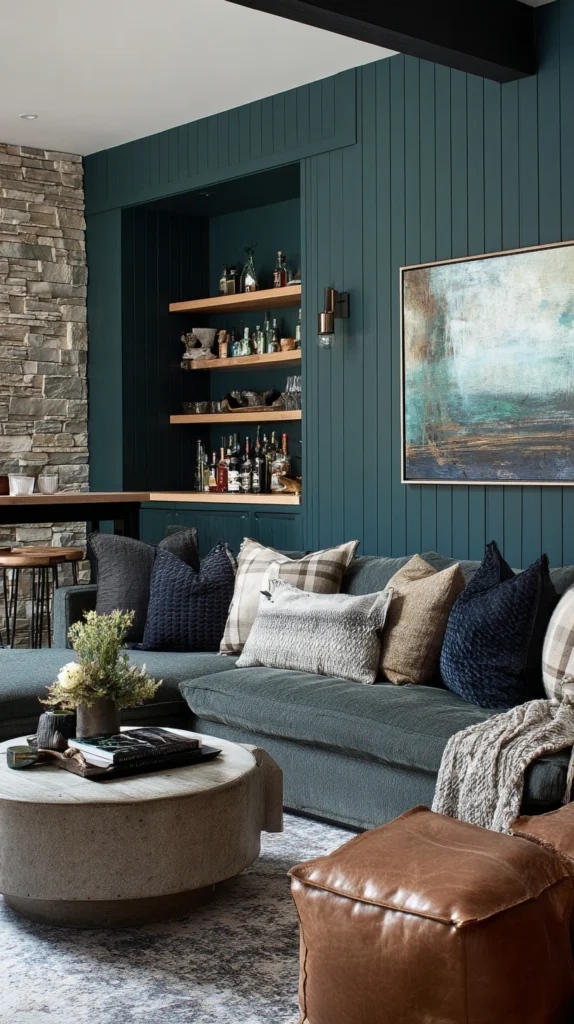
The basement room that addresses its potential visual monotony through a single dramatic feature wall — a surface of genuine material richness, visual complexity, or chromatic boldness that creates the visual destination the underground room requires — creates a space with a clear design intention that commands attention and generates the energy the basement’s subterranean quality can otherwise suppress. A floor-to-ceiling bookcase dressed with books and objects, creating the specific intellectual warmth of a library in the basement’s naturally quiet environment.
A stone or brick cladding wall that references the basement’s structural materiality and brings an organic texture to the finished space. A full-height fluted timber panel wall in a deep, saturated paint color that creates the dramatic backdrop for the bar counter or the sofa arrangement positioned in front of it.
A large-scale mural or a significant piece of art that creates the visual center around which the basement room’s entire spatial organization is arranged. The feature wall gives the basement visitor an immediate, compelling visual focus that the undifferentiated four-wall underground room cannot provide.
8. Install Engineered Timber or LVT Flooring
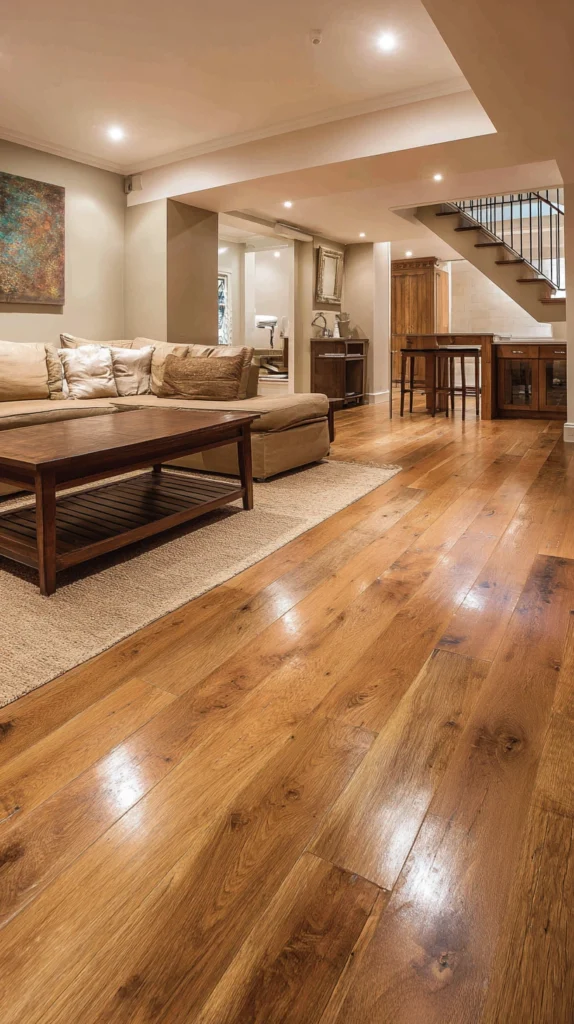
The basement floor presents a specific challenge that above-grade floors do not face: the moisture vapor that rises through the concrete slab creates an environment in which solid timber flooring — whose dimensional stability is compromised by moisture variation — is inappropriate without extraordinary moisture control measures.
Engineered timber — a veneer of real timber bonded to a dimensionally stable plywood or HDF core — provides the warmth, authenticity, and visual quality of a timber floor with significantly greater moisture tolerance, and its installation directly over the concrete slab with an appropriate vapor barrier creates a basement floor of genuine aesthetic quality.
Luxury vinyl tile in a quality timber or stone effect — its completely moisture-proof construction making it the most practically worry-free basement floor option — has improved sufficiently in visual quality that the finest products are difficult to distinguish from the natural materials they replicate.
Both options create a basement floor that reads as a designed interior space rather than a utility concrete slab, and both contribute the warmth of a horizontal surface in a non-white tone that the basement’s monochromatic scheme requires at floor level.
9. Create a Children’s Playroom
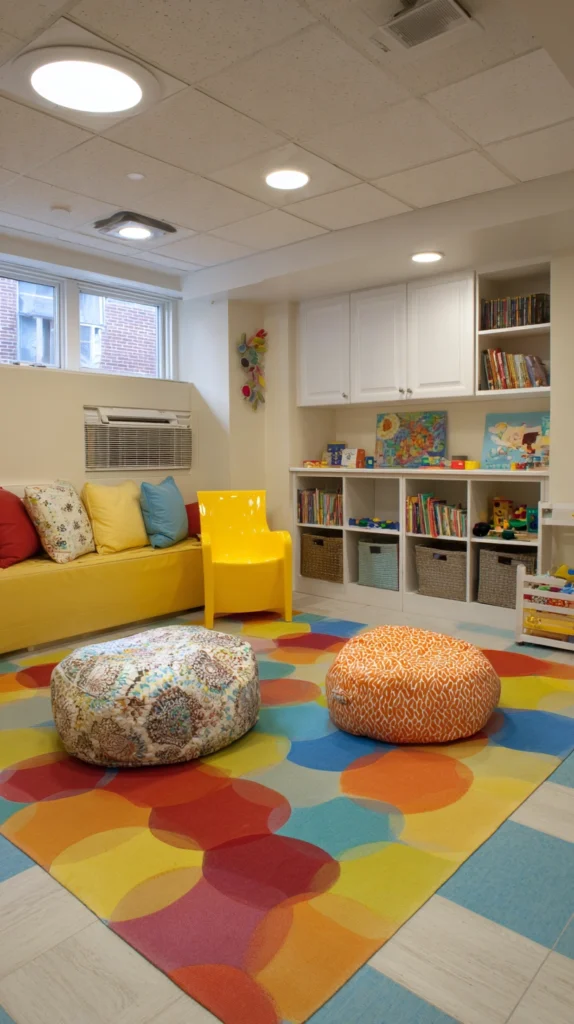
The basement playroom is one of the most domestically valuable basement uses available — a space that absorbs the visual complexity of children’s toys and equipment, the acoustic exuberance of children at play, and the floor-level activity of imaginative games without any of these qualities conflicting with the above-grade rooms where the adult household’s activities take place.
A well-designed basement playroom — with durable, easy-clean flooring in a bright, resilient material, abundant built-in storage for toys and equipment at child-accessible heights, a reading corner with comfortable child-scaled seating, and the bright, energizing artificial lighting that the playroom’s activity-supporting function requires — is a basement room that improves the functioning of the entire house by providing a dedicated space for the children’s activities that does not require the continuous management of toy distribution across the main living areas.
As children age the playroom evolves — a games room for teenagers, a study space for older children, eventually a guest room or additional living space — making the investment in its renovation valuable across a long period of domestic use.
10. Design a Dedicated Guest Suite
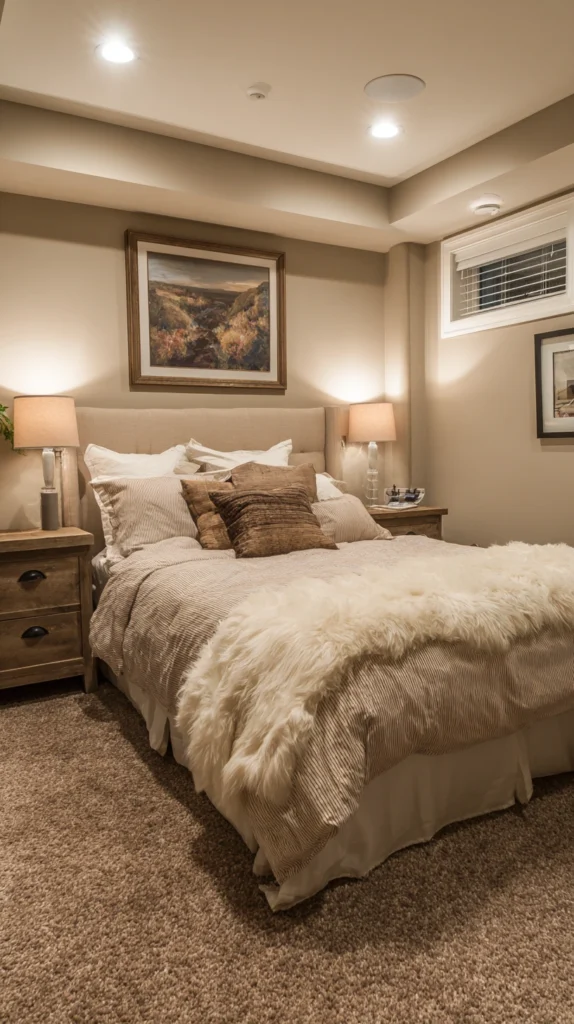
The basement guest suite — a self-contained guest bedroom and bathroom, separated from the main house’s daily activity by both physical distance and floor level — provides the most genuinely hospitable guest accommodation available in any domestic setting, giving guests the privacy, the quiet, and the independence from the household’s daily routine that the guest bedroom on the main floor cannot offer.
A basement guest suite should address the space’s light deficit specifically for the sleeping function — blackout blinds on any window wells, a lighting scheme that creates genuine warmth and welcome despite the absence of natural light, and a ceiling height that is managed through design to feel generous rather than oppressive.
An en-suite bathroom within the basement suite creates the full independence that the best guest accommodation provides, and the thermal stability of the below-grade environment creates a sleeping temperature that most guests find more comfortable than the more variable temperatures of above-grade bedrooms.
11. Install a Craft or Making Room
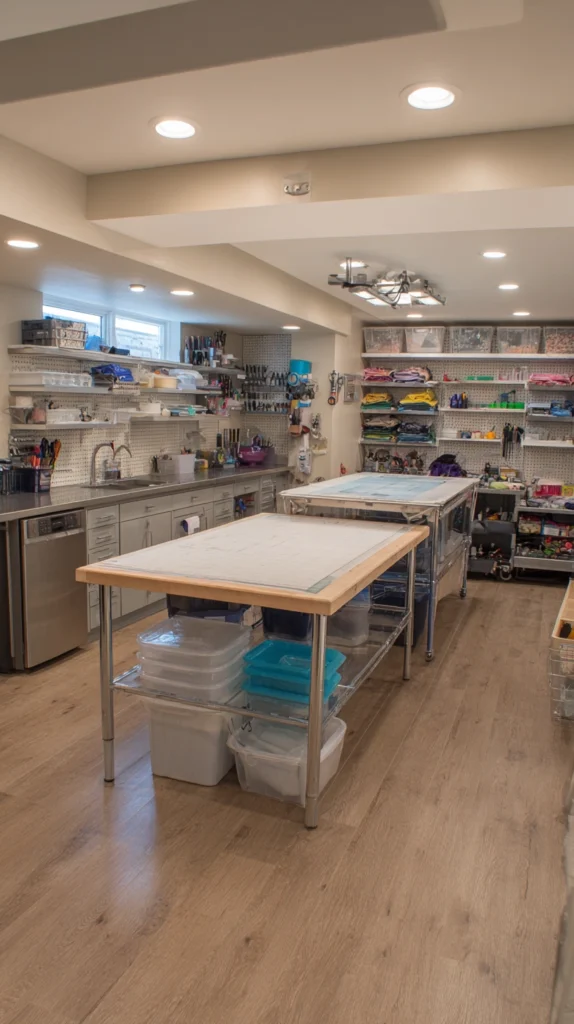
The basement craft room — a dedicated space for sewing, painting, model making, pottery, or any other creative practice whose materials, tools, and mess require a room that can sustain creative activity without constant clearing and tidying — is a basement use that transforms the household’s creative practice more completely than any other design intervention available.
The basement’s specific qualities suit the craft room with natural aptitude: the thermal stability that protects moisture-sensitive materials, the acoustic isolation that allows the noise of creative work without disturbing the rest of the household, the floor that can be cleaned without concern for the finishes of a main living area, and the enclosed, focused environment that sustained creative work benefits from.
Design the basement craft room with the same organizational intelligence that any serious creative space requires — abundant purpose-specific storage, a work surface of generous dimensions and appropriate height, excellent task lighting for close detail work, and the ventilation that any practice involving paints, adhesives, or chemical materials demands.
12. Use Ceiling Treatment to Address Low Height
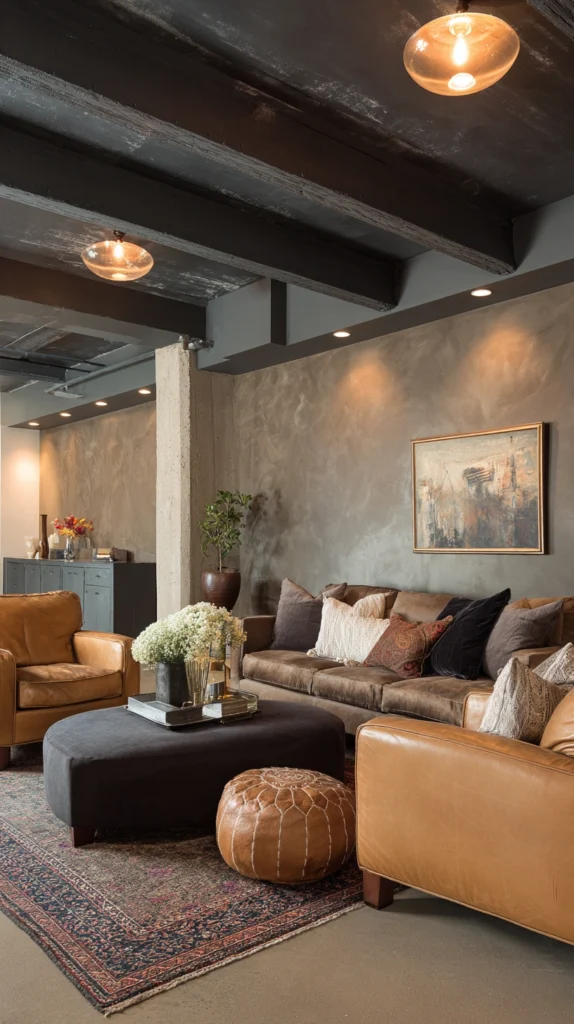
The basement ceiling is the element that most clearly communicates the space’s below-grade character, and its treatment has a greater impact on the finished room’s feel than any wall or floor decision.
The conventional basement ceiling treatment — suspended acoustic tile on a metal grid — is the option that most completely undermines the basement’s potential by creating a surface of institutional quality that no amount of design attention to the surrounding walls and floor can overcome.
The alternatives vary in ambition and cost: painting the existing concrete ceiling in a warm, dark color — treating the exposed structure as an industrial design feature rather than a deficiency — creates a loft-like aesthetic that suits the basement’s inherent rawness. Installing a continuous drywall ceiling to hide the structure at the lowest possible point — keeping every centimeter of headroom — and painting it in the same warm tone as the walls creates the seamless, enveloping quality of a properly finished room. Concealing structural beams within a boxed soffit painted in a contrasting tone creates an architectural feature from what was previously a visual liability.
13. Create a Music or Recording Room
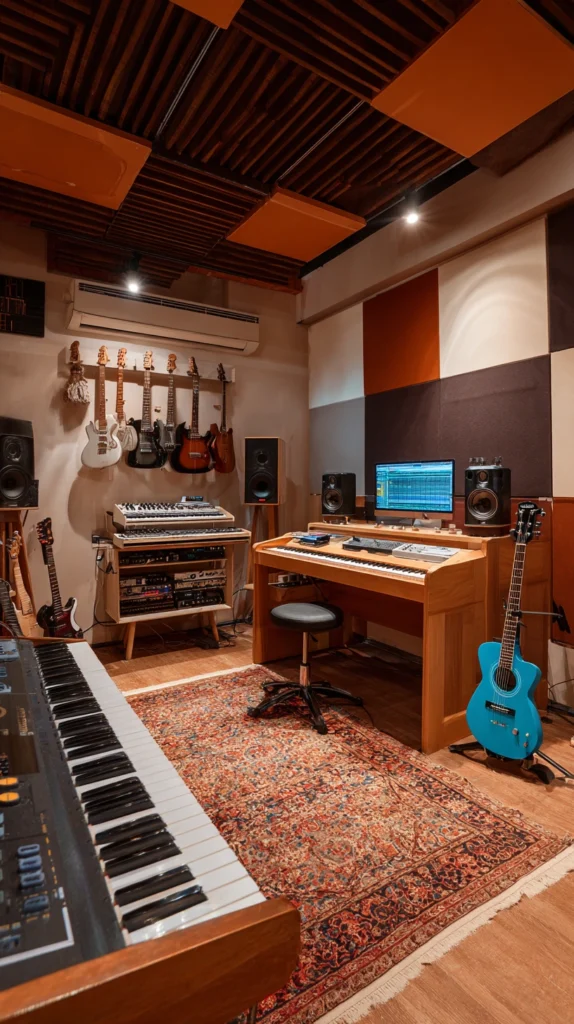
The basement’s natural acoustic isolation from the rest of the house — the physical separation of concrete and earth that surrounds the below-grade space on every side — is the property most valued by recording engineers and musicians, and the conversion of a basement into a music or recording room exploits this natural advantage more completely than any other basement use.
A basic music room — with acoustic treatment on the walls to control the reflection and reverberation that the concrete surfaces create, a quality sound system or instrument setup, comfortable seating, and the atmospheric lighting that musical listening benefits from — creates a basement space of genuine and specific excellence that the above-grade rooms cannot replicate without significant additional soundproofing investment.
A more elaborately equipped recording space — with an isolation booth for vocal or instrument recording, a mixing desk area, and professional-grade acoustic treatment — creates a facility of genuine professional quality in the one location in the home where the necessary acoustic isolation already exists as a natural property of the space.
14. Bring Nature In Through Plants and Organic Materials
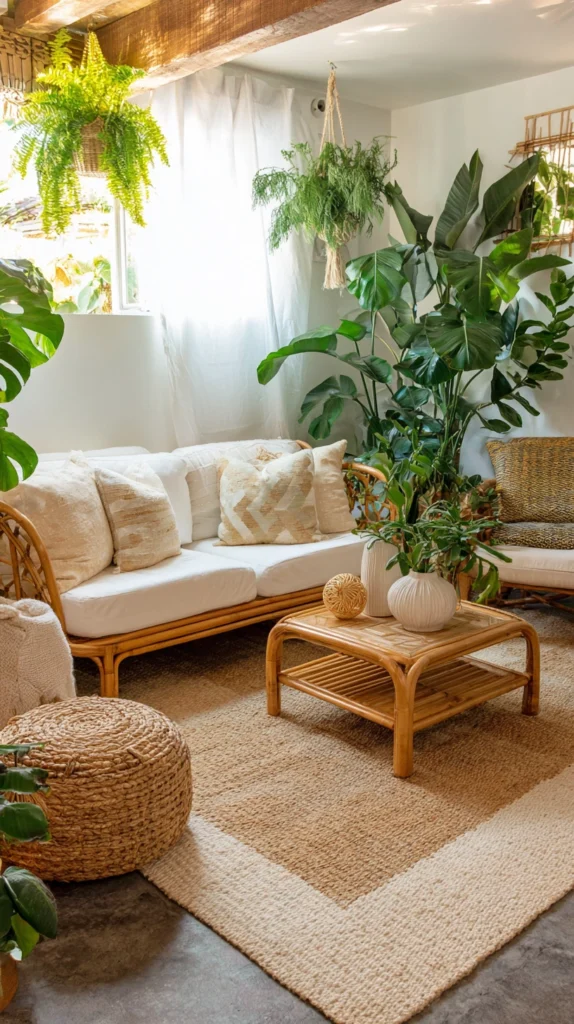
The basement’s absence of natural light creates the impression of disconnection from the natural world that contributes significantly to the underground space’s potentially oppressive quality, and the introduction of plants — specifically those capable of thriving in low-light conditions — creates a living, organic presence in the space that connects it to the natural world despite the absence of the windows and daylight through which that connection is usually established.
Snake plants, ZZ plants, cast iron plants, pothos, and peace lilies are among the most resilient low-light indoor plants available, and their inclusion in a basement room introduces the specific visual and psychological benefit of living plant material that even the most beautifully designed purely inorganic space cannot replicate.
Supplement the live plants with organic materials throughout the room — a timber floor, rattan furniture, linen upholstery, ceramic accessories, natural stone surfaces — that create the material warmth and biological connection that the basement’s concrete structure inherently lacks.
15. Design the Basement Around Its Best Quality
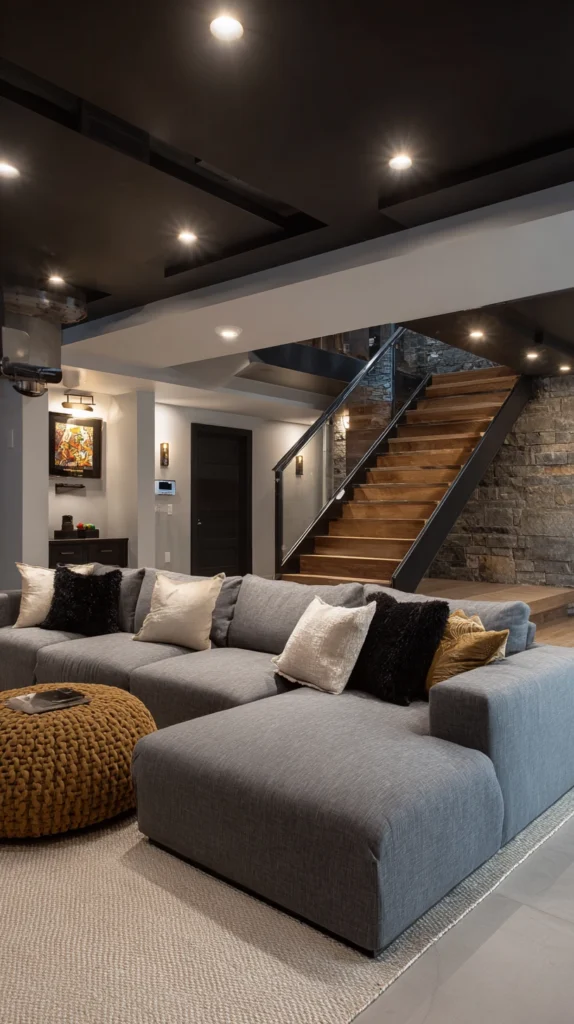
The final basement makeover idea is the most important design principle of all: identify the basement’s single best quality — the quality that makes it specifically excellent for a particular use — and design the entire space around that quality rather than attempting to address all its deficiencies simultaneously. The basement’s best qualities are consistent across most examples: its quiet, its thermal stability, its enclosure, its acoustic isolation, and the specific privacy of being below the rest of the house’s activity. These qualities make the basement specifically excellent for cinema, music, sleep, creative practice, exercise, and the social intimacy of a bar or games room. They make it specifically poor for the activities that depend on natural light and visual connection to the outside world.
The basement makeover that focuses entirely on making the space work brilliantly for a single use that plays to its strengths — rather than creating a general-purpose room that addresses all the basement’s weaknesses without exploiting any of its genuine advantages — produces a basement room that is not merely adequate but genuinely the best room in the house for its specific purpose.